


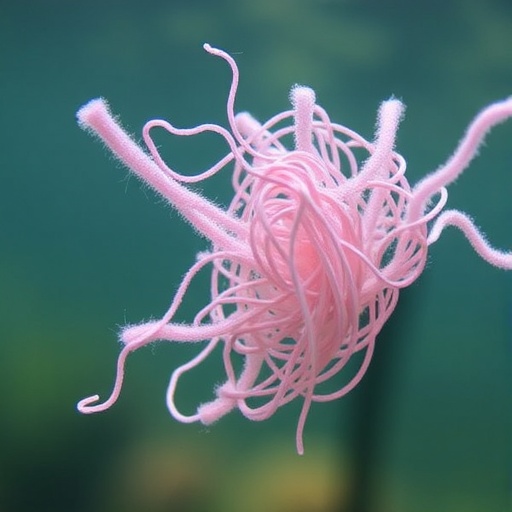
In recent years, the presence of microfibers in marine and freshwater environments has garnered increasing attention within the scientific community. These microscopic fibers, often deriving from synthetic materials, pose significant ecological challenges. A groundbreaking study has revealed that natural microfibers may degrade at different rates compared to their synthetic counterparts when exposed to simulated sunlight, a finding that carries profound implications for aquatic ecosystems and their inhabitants.
The research, conducted by an international team from Italy and Austria, utilized advanced small- and wide-angle X-ray scattering techniques to delve into the structural changes that microfibers undergo in various aquatic environments. This innovative approach allowed the researchers to observe the degradation processes in real time, highlighting the distinct behaviors of natural versus synthetic fibers when subjected to environmental stressors such as sunlight and water chemistry.
Microfibers enter aquatic systems through various pathways, including wastewater discharge, runoff from landfills, and the washing of synthetic clothing. Understanding how these fibers degrade can inform strategies for mitigating their impact on aquatic life. The study unequivocally demonstrates that natural microfibers, derived from sources like cotton or wool, exhibit a greater propensity for breakdown under the influence of simulated sunlight compared to oil-based synthetic materials such as polyester or nylon.
The implications of these findings are twofold. Firstly, the differential degradation rates mean that natural microfibers may pose less long-term risk to aquatic organisms, potentially allowing for a more rapid return to ecosystem equilibrium after pollution events. On the other hand, synthetic microfibers may persist, accumulating in food chains and introducing hazardous chemicals into the bodies of marine life, a phenomenon that could have far-reaching consequences for biodiversity, food safety, and human health.
Climate change further complicates the situation. Increased solar radiation, compounded by atmospheric changes, may accelerate the degradation processes of certain materials. The researchers simulated various freshwater and seawater conditions, observing that environmental factors such as temperature, salinity, and pH profoundly affect microfiber longevity. This research reveals the intricate relationships between climate, pollution, and ecology, emphasizing the urgency for further studies in this domain.
A critical aspect of environmental science is not only understanding the materials that pollute our waters but also exploring innovative solutions to combat pollution. This study could pave the way for developing eco-friendly textile innovations and better waste management practices. The findings suggest a need for industries to transition towards biodegradable alternatives or fibers sourced from natural materials, which may enhance sustainability efforts while reducing microplastic contamination in water bodies.
Moreover, public awareness and education play vital roles in mitigating microfiber pollution. Consumers often remain unaware of the environmental impacts of their clothing choices and washing habits. The study underscores the importance of informed consumerism as a tool for promoting sustainable practices. Making choices that support environmentally friendly products can significantly alleviate the burden of microfibers on aquatic ecosystems.
Monitoring and regulating microfiber pollution requires collaboration between scientists, policymakers, and industry leaders. Regulations need to be informed by the latest research findings such as this study, enabling officials to create standards that effectively address the environmental and health risks posed by microfibers. Such interdisciplinary efforts will be crucial to safeguarding aquatic biodiversity while promoting a circular economy.
This research is vital not only for advancing scientific understanding but also for informing public policy and driving change in industrial practices. The collaborative effort that led to these findings showcases the importance of international cooperation in tackling global environmental challenges. Sustainable practices, informed by rigorous scientific inquiry, can lead to transformative change, promoting healthier ecosystems for future generations.
As society becomes increasingly aware of the intricate connections between human activity and environmental health, studies like this serve as critical touchstones for future research and action. By recognizing the multifaceted aspects of pollution, including the distinction between natural and synthetic fibers, the scientific community can work towards innovative solutions that resonate globally.
With the findings published in the renowned journal PLOS One, the research is positioned to reach a wide audience of scientists, environmentalists, and the general public. The study contributes to a growing body of literature that highlights the imperative need for urgent action in mitigating microplastic pollution and fostering a sustainable future.
Ultimately, the alarming persistence of synthetic microfibers in aquatic environments invites us all to reflect on our consumption habits and push for systemic changes in production and disposal practices. The road ahead requires concerted efforts, but the potential for positive change fueled by research-driven insights carries hope for the health of our planet and its precious ecosystems.
Keywords
Microfibers, Environmental Science, Aquatic Ecosystems, Synthetic Materials, Natural Fibers, Pollution, Sustainability, Climate Change, Microplastic, Eco-friendly Alternatives, Research Study, Interdisciplinary Collaboration.
Cite Scienmag News
Denise Maddox. (September 10, 2025). Natural Microfibers Degrade Differently Than Synthetics Under Sunlight: Implications for Aquatic Ecosystems. Scienmag. https://scienmag.com/natural-microfibers-degrade-differently-than-synthetics-under-sunlight-implications-for-aquatic-ecosystems/
Denise Maddox. "Natural Microfibers Degrade Differently Than Synthetics Under Sunlight: Implications for Aquatic Ecosystems." Scienmag, 10 September 2025, https://scienmag.com/natural-microfibers-degrade-differently-than-synthetics-under-sunlight-implications-for-aquatic-ecosystems/. Accessed 3 September 2026.
Denise Maddox. "Natural Microfibers Degrade Differently Than Synthetics Under Sunlight: Implications for Aquatic Ecosystems." Scienmag. September 10, 2025. https://scienmag.com/natural-microfibers-degrade-differently-than-synthetics-under-sunlight-implications-for-aquatic-ecosystems/


