

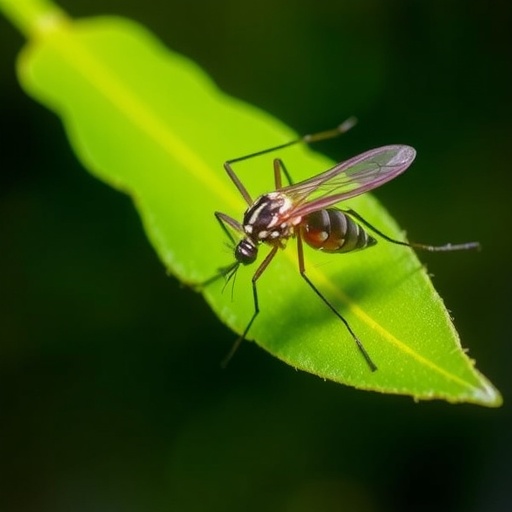
In a groundbreaking study published in Environmental Science and Pollution Research, researchers led by Hari et al. have revealed the remarkable larvicidal properties of extracts derived from Plumeria rubra, Tagetes erecta, and Thevetia peruviana. These extracts possess significant efficacy against two notorious mosquito species, Aedes aegypti and Culex quinquefasciatus, which are recognized for their role in disease transmission. This research opens new avenues for sustainable pest management strategies that could circumvent the use of synthetic pesticides.
The emergence of Aedes aegypti and Culex quinquefasciatus as vectors for diseases such as dengue fever, chikungunya, Zika virus, and lymphatic filariasis has become a global health concern. Given the limitations and environmental consequences associated with chemical pesticides, the search for alternative biocontrol methods is essential. The findings from this study indicate that plant extracts can be a viable replacement or supplement to conventional chemical larvicides, offering a greener approach to addressing public health issues.
The three plants under investigation, Plumeria rubra, Tagetes erecta, and Thevetia peruviana, have a long history in traditional medicine, but their potential as insecticides is receiving unprecedented attention. The researchers meticulously extracted phytochemicals from these plants and subjected them to rigorous testing against mosquito larvae. The results were illuminating, demonstrating that these natural compounds could significantly reduce larval survival rates, thereby hindering population growth and potentially lowering the incidence of mosquito-borne diseases.
Phytochemicals, the active compounds derived from plants, have diverse mechanisms of action that affect insects at various life stages. The study conducted in a controlled environment ensured reliability and reproducibility of the results. Parameters such as mortality rate, sub-lethal effects, and ecological compatibility were rigorously monitored, as these factors are pivotal in evaluating the feasibility of employing these botanical extracts in real-world settings.
One of the most striking aspects of the findings is the varying levels of effectiveness exhibited by the different plant extracts. For instance, extracts from Tagetes erecta, commonly known as marigold, showed an outstanding potency, leading to higher larval mortality compared to the other two species. This variance underscores the importance of bioassay-guided screening in the identification of plant species that could serve as effective biocontrol agents against mosquito larvae, thereby informing future research and application efforts.
The extraction processes utilized in this study were designed to maximize the yield of bioactive compounds. By exploring various solvents and extraction techniques, the researchers ensured the optimization of the phytochemical profiles of the extracts. Such meticulous attention to detail not only enhances the efficacy of the resultant extracts but also provides a model for future studies focused on bioactive plant compounds in pest management.
This research is timely, given the escalating concerns regarding climate change and its impact on vector dynamics and disease transmission. With rising global temperatures, the geographic ranges of mosquito species are shifting, leading to increased encounters with human populations. Therefore, the development of environmentally friendly and sustainable pest control measures, as demonstrated in this study, is more critical than ever.
In addition to the implications for public health, the study’s results could have a broader impact on agricultural practices. Farmers often grapple with pest issues that threaten crops, and the introduction of botanical insecticides provides a dual benefit: protecting crops while minimizing environmental damage. As consumers increasingly demand eco-friendly products, such alternatives could find a warm reception in both agricultural and domestic markets.
The authors also emphasized the economic advantages of utilizing plant extracts for pest control. Unlike synthetic pesticides, which can be costly and require complex regulatory approval processes, these extracts can potentially be produced at a lower cost. This affordability could empower communities in developing regions, allowing them to manage pest populations effectively without heavy financial burdens.
Furthermore, this research aligns seamlessly with the global push towards sustainable development. As outlined in the United Nations Sustainable Development Goals, there is an urgent need for innovative solutions that mitigate vector-borne diseases while promoting ecological balance. The findings of this study contribute valuable information towards achieving these goals, indicating that nature itself harbors the solutions to combat modern-day health threats.
The study also raises important questions about the safety and ecological impacts of utilizing plant-based insecticides on a large scale. Future research should investigate not only the long-term effects of these botanical extracts on non-target organisms but also their stability and effectiveness in various environmental conditions. Understanding these factors is vital to developing comprehensive pest management strategies that are both effective and environmentally sound.
Finally, the ripple effects of this research extend beyond the immediate realm of insecticide applications. By illuminating the potential of plant extracts, it encourages further exploration of the natural world for bioprospecting new compounds that could address various challenges in health and agriculture. As researchers delve deeper into the chemical libraries offered by plants, we may unveil novel solutions to longstanding issues.
In summary, the groundbreaking work by Hari et al. sheds light on an innovative approach to mosquito control that holds promise for global health. The study paves the way for future investigations into natural insecticides, supporting the paradigm shift towards sustainable pest management practices. As the quest for effective, eco-friendly alternatives to chemical pesticides continues, the larvicidal activity of Plumeria rubra, Tagetes erecta, and Thevetia peruviana represents a significant step forward in safeguarding public health.
Subject of Research: Larvicidal activity of plant extracts against mosquito larvae.
Article Title: Larvicidal activity of Plumeria rubra, Tagetes erecta, and Thevetia peruviana extracts against Aedes aegypti and Culex quinquefasciatus larvae.
Article References:
Hari, I., Mathew, N., Kumar, A. et al. Larvicidal activity of Plumeria rubra, Tagetes erecta, and Thevetia peruviana extracts against Aedes aegypti and Culex quinquefasciatus larvae. Environ Sci Pollut Res (2026). https://doi.org/10.1007/s11356-026-37470-z
Image Credits: AI Generated
DOI: https://doi.org/10.1007/s11356-026-37470-z
Keywords: Larvicidal activity, plant extracts, Aedes aegypti, Culex quinquefasciatus, biocontrol, sustainable pest management, phytochemicals, eco-friendly pesticides.


