

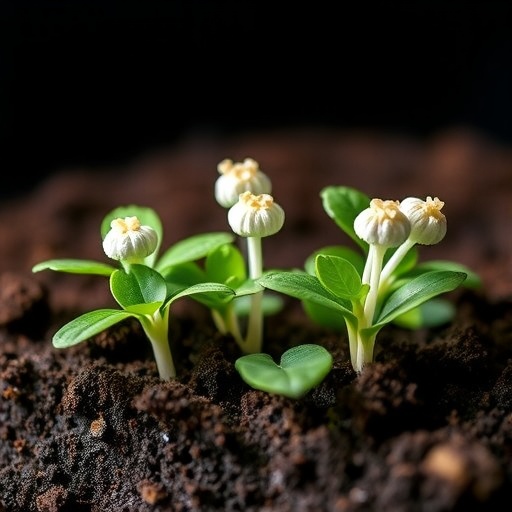
In an era where the effects of climate change are becoming increasingly pronounced, the search for sustainable agricultural practices has taken center stage. Amidst this urgent call for innovation, a groundbreaking study has emerged, shedding light on the substantial benefits of utilizing root-driven hormones and plant growth-promoting rhizobacteria (PGPR). This research underscores the promise of these natural biostimulants as potent allies in enhancing agricultural sustainability and crop productivity.
The study conducted by Giri and Virk explores the intricate relationships between plant hormones and rhizobacteria. The findings indicate that the interaction between these components can lead to amplified growth responses in crops, offering an ecologically sound method to enhance yields without the need for synthetic fertilizers. This innovative approach not only promotes optimal crop development but also encourages healthier soil ecosystems.
Root-driven hormones play a pivotal role in plant physiology by regulating various growth processes, including cell elongation, root development, and nutrient uptake. The research highlights how these hormones, when interacted with specific rhizobacteria, can trigger physiological changes that enhance the plant’s overall health and performance. This dual action has the potential to redefine our understanding of plant growth and nutrient management strategies in modern agriculture.
One of the remarkable aspects of this research is its emphasis on the dual benefits of employing PGPR. Not only do these beneficial bacteria stimulate root development and hormonal response, but they also improve soil health by enhancing microbial diversity. This fosters a robust soil ecosystem that can support crop growth in the long term, reducing reliance on chemical inputs and mitigating the negative impact of agriculture on the environment.
As farmers and agricultural scientists grapple with the pressing challenges posed by global food security and environmental sustainability, the implications of this research cannot be overstated. The integration of natural biostimulants into agricultural practices represents a transformative shift towards regenerative farming methodologies that prioritize ecosystem health while maximizing productivity.
Moreover, the effectiveness of PGPR varies depending on the crop and soil types. This variability presents a unique opportunity for tailored applications of biostimulants, specifically designed to meet the needs of specific agricultural contexts. By harnessing local microbial communities alongside root-driven hormones, farmers can formulate precise strategies that cater to their unique environmental conditions.
Additionally, the study advocates for a multi-faceted approach that combines the application of PGPR with improved agronomic practices. Techniques such as crop rotation, cover cropping, and minimal tillage can synergistically enhance the performance of these natural inputs, leading to sustainable farming systems that are resilient to climate challenges.
The potential for these biostimulants extends beyond just crop yield improvements. Enhanced plant health can lead to reduced susceptibility to pests and diseases, allowing for a diminished reliance on pesticides, which are often harmful to both the environment and human health. This aligns with a growing trend in agriculture toward integrated pest management practices that focus on ecological balance.
Furthermore, the research highlights the importance of education and outreach in expanding the adoption of biostimulant technologies among farmers. Providing resources and knowledge on how to effectively implement these practices will be crucial in fostering a transition towards sustainable agriculture. Workshops, extension programs, and field demonstrations can facilitate this exchange of information, empowering farmers to adopt innovative solutions.
As further studies are conducted, understanding the mechanisms behind the interactions of root-driven hormones and PGPR will allow researchers to optimize their use in various agricultural systems. This could lead to the development of new products or treatments that harness these natural interactions for maximum effect, paving the way for next-generation biostimulants.
The environmental benefits of utilizing these biostimulants also extend to the mitigation of climate change. Sustainable practices that enhance soil carbon sequestration can play a vital role in reducing greenhouse gas emissions. By focusing on soil health and fertility through the lens of ecological interactions, the agriculture sector can contribute positively to climate initiatives, further justifying the shift towards sustainable practices.
In conclusion, the exploration of root-driven hormones and plant growth-promoting rhizobacteria presents a promising avenue for enhancing agricultural sustainability and productivity. This research serves as a clarion call for the agricultural community to embrace natural biostimulants in their farming practices. As the world continues to face the challenges posed by food shortages and environmental degradation, integrating innovative solutions like these into our agricultural systems will be crucial for building a resilient and viable future in food production.
The potential of biostimulants to revolutionize agriculture lies not just in their ability to improve crop yields, but also in their capacity to rejuvenate ecosystems, safeguard biodiversity, and promote environmental health. As we move forward, the commitment to advancing these methods will be imperative in fostering a sustainable agricultural landscape for generations to come.
Subject of Research: Root-driven hormones and plant growth-promoting rhizobacteria as natural biostimulants for sustainable crop growth.
Article Title: Root driven hormones and plant growth promoting rhizobacteria as natural biostimulants for sustainable crop growth.
Article References:
Giri, S., Virk, V. Root driven hormones and plant growth promoting rhizobacteria as natural biostimulants for sustainable crop growth.
Discov. Plants 2, 360 (2025). https://doi.org/10.1007/s44372-025-00390-2
Image Credits: AI Generated
DOI: https://doi.org/10.1007/s44372-025-00390-2
Keywords: Sustainable agriculture, biostimulants, root-driven hormones, plant growth-promoting rhizobacteria, crop productivity, soil health.


