


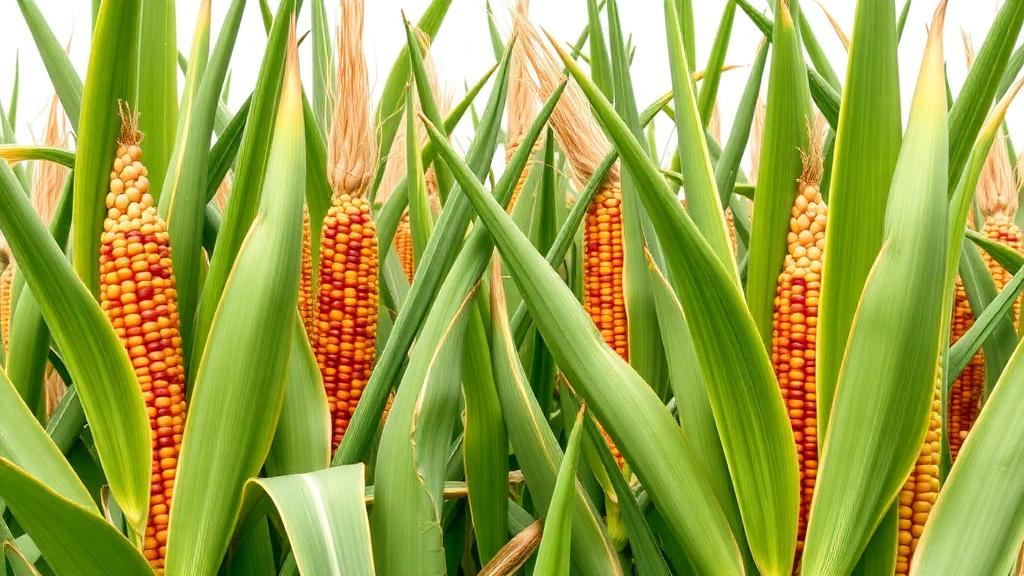
In the maize fields and grain stores of sub-Saharan Africa, two insect pests wage a relentless, season-long war on the region’s most important food crop. The spotted stem borer, Chilo partellus, chews through leaves and tunnels into stalks during the growing season, cutting yields by 12 to 17 percent. Then, once the harvest is bagged, the maize weevil, Sitophilus zeamais, takes over, devouring another 15 to 30 percent of the grain in storage. For decades, breeders have attacked each pest separately, producing hybrids resistant to one or the other but never both. A new study published in Frontiers in Agronomy reports that this barrier has finally been crossed: researchers have bred maize hybrids that combine resistance to both insects while out-yielding commercial checks by up to 41 percent.
The research, led by Regina Mumbua Tende of the Kenya Agricultural and Livestock Research Organization together with colleagues at the University of KwaZulu-Natal, the International Institute of Tropical Agriculture, CIMMYT and partner institutions, set out to answer a deceptively simple question. Could elite tropical maize lines, each carrying resistance to only one of the two pests, be crossed to produce offspring that resist both without sacrificing yield? Until now, no maize hybrid with documented dual resistance to a field pest and a storage pest had been reported anywhere in the literature, making the question both scientifically open and agronomically urgent.
The team’s experimental design was methodical. Forty inbred lines from CIMMYT’s Kenya breeding program were sorted into two camps: twenty lines resistant to the stem borer but susceptible to the weevil, and twenty resistant to the weevil but susceptible to the stem borer. The lines were divided into groups of five, and a North Carolina Design II mating scheme was used to generate eight sets of 25 hybrids each, with stem borer resistant lines serving as females and weevil resistant lines as males. Ten crosses failed, leaving 190 F1 hybrids with enough seed for rigorous evaluation. These hybrids, along with five commercial checks, were then tested across four environments in Kenya, spanning sites at Kirinyaga, Embu and Kakamega during the 2013B and 2014A seasons.
Field evaluation of stem borer resistance followed established protocols. Plots were split three weeks after planting, with one section artificially infested with neonate C. partellus larvae and the other protected with insecticide. Leaf damage was scored on a one to nine scale at two and four weeks after infestation, with the second rating serving as the determinant score. At harvest, the researchers recorded grain yield adjusted to 12.5 percent moisture, along with exit holes and cumulative tunnel length in the stalks. Harvested grain from each hybrid then went into controlled laboratory assays, where weevils were allowed to feed and the team measured percent grain weight loss and the proportion of undamaged kernels.
The statistical backbone of the study was the North Carolina Design II analysis nested within sets and evaluated across environments, which cleanly partitions genetic variation into general combining ability, or GCA, effects attributable to each parent, and specific combining ability, or SCA, effects arising from particular parental combinations. The results were unambiguous. Hybrids differed significantly for grain yield under both protected and infested conditions, and for leaf damage, grain weight loss and undamaged kernels. GCA effects associated with both male and female parents were highly significant for every trait measured, pointing to a strong additive component in the inheritance of resistance. SCA effects, by contrast, were significant for grain yield and undamaged kernels but not for leaf damage or weight loss, indicating that non-additive gene action matters for some traits but not others.
The partitioning of variance revealed striking patterns in how each parent shapes the hybrid. For grain yield under protection, male effects accounted for 60.34 percent of the total variation among crosses, with females contributing 25.30 percent and the female-by-male interaction 14.37 percent. A nearly identical pattern held under infestation. For leaf damage, the interaction term dominated at 40.60 percent, followed closely by male effects at 38.08 percent. The picture flipped for weevil resistance: female effects explained 65.48 percent of the variation in undamaged grain, dwarfing the male contribution of 16.05 percent. Total GCA accounted for roughly 77 percent of the variation in grain weight loss, confirming that additive gene action predominates for storage resistance, while the SCA share of 18 percent for undamaged grain shows that dominance effects cannot be ignored.
Individual parents emerged as valuable donors. Female parent 3 showed consistently favorable GCA effects across sets for grain yield, low leaf damage, reduced weight loss and high undamaged grain. Male parent 22 was favorable for all traits in one set but lost its advantage for undamaged kernels when paired with different females, illustrating how a parent’s breeding value depends on the genetic company it keeps. Female parent 12 delivered the highest positive GCA for grain yield, reaching 1.37 and 0.85 tonnes per hectare under protected and infested conditions respectively, though its contribution to insect resistance was limited, making it best suited for crossing with strong resistance donors. Parents 6, 31, 33, 36 and 38 offered useful additive alleles for resistance traits, and the authors note that such complementary parent selection is central to stacking both resistances in a single hybrid.
Among the 190 hybrids, roughly 8 percent exhibited resistance to the stem borer, and the distribution of resistance scores followed a normal curve, a classic signature of quantitative, polygenic inheritance. Several hybrids showed markedly reduced grain weight loss from weevil feeding. Standard heterosis over commercial checks ranged from 26 to 41 percent for grain yield under protection and 26 to 37 percent under infestation. The standout, hybrid 17 x 40, yielded 29 to 37 percent above checks and 154 percent above the population mean, while combining favorable SCA effects for yield, low leaf damage and high undamaged grain. Three other hybrids, 19 x 40, 3 x 25 and 2 x 23, also paired dual resistance with superior yield, and the authors recommend them for advancement into preliminary yield trials and eventual release.
One of the more intriguing findings came from the set-level analysis. Hybrids in set 7, whose parents were both susceptible to the stem borer yet resistant to the weevil, produced the most resistant and highest yielding offspring of any set. The authors interpret this as evidence of linkage disequilibrium between resistance genes and unfavorable yield alleles in some parental populations, which breaks apart upon crossing and allows resistance to be expressed in the F1 generation without the yield penalty. This observation carries a practical lesson: germplasm developed for one pest should be screened against others, because hidden resistance alleles may lurk in populations never targeted for that purpose.
The broader implications reach well beyond the experimental plots. Smallholder farmers, who depend on maize for food security and lack the resources for repeated pesticide applications or hermetic storage on a large scale, stand to gain the most from varieties that defend themselves across the entire production chain, from seedling to stored grain. The study demonstrates that conventional hybrid breeding, using native genetic variation already present in tropical germplasm, can simultaneously improve yield and resistance to pests attacking at different stages of the crop cycle. As climate change pushes C. partellus into higher altitudes and post-harvest losses continue to erode hard-won harvests, the four dual-resistant hybrids identified here offer a template for breeding programs across the region, proving that the genetic raw material for resilient maize already exists and awaits only the right crosses to be unleashed.
Subject of Research: Breeding tropical maize hybrids with combined resistance to stem borer and maize weevil
Article Title: Harnessing native genetic variation for resistance to field and storage insects pests in tropical maize
Article References: Tende, R. M., Derera, J., Mugo, S., Mukiti, H. M., Gasura, E., & Muungani, D. (2026). Harnessing native genetic variation for resistance to field and storage insects pests in tropical maize. Frontiers in Agronomy, 8, Article 1858394. https://doi.org/10.3389/fagro.2026.1858394
Image Credits: AI Generated
DOI: 10.3389/fagro.2026.1858394
Keywords: maize, stem borer, maize weevil, host plant resistance, combining ability, heterosis, sub-Saharan Africa, plant breeding, food security, hybrid maize, insect resistance, North Carolina Design II
Cite Scienmag News
Alan Morgan. (October 16, 2026). Native Genes Deliver Dual Insect Resistance in Tropical Maize Hybrids. Scienmag. https://scienmag.com/native-genes-deliver-dual-insect-resistance-in-tropical-maize-hybrids/
Alan Morgan. "Native Genes Deliver Dual Insect Resistance in Tropical Maize Hybrids." Scienmag, 16 October 2026, https://scienmag.com/native-genes-deliver-dual-insect-resistance-in-tropical-maize-hybrids/. Accessed 16 October 2026.
Alan Morgan. "Native Genes Deliver Dual Insect Resistance in Tropical Maize Hybrids." Scienmag. October 16, 2026. https://scienmag.com/native-genes-deliver-dual-insect-resistance-in-tropical-maize-hybrids/


