


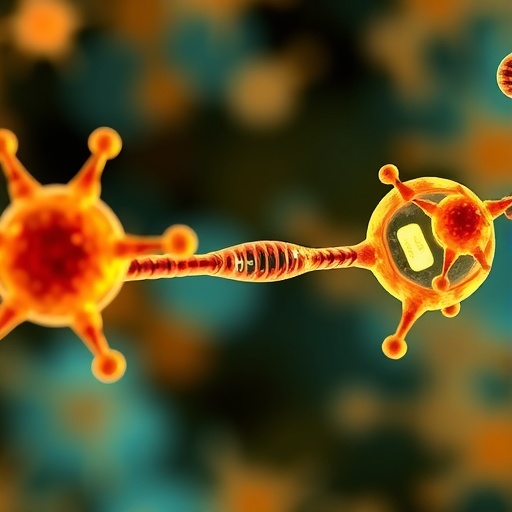
In the rapidly evolving landscape of oncology, the integration of nanotechnology has opened promising avenues for the diagnosis and treatment of a spectrum of cancers. Among these, placental cancers, notably choriocarcinoma and placental site trophoblastic tumor, represent a critical area where early detection and targeted therapy are paramount. Recent advances spearheaded by researchers Barik and Acharya have illuminated a transformative approach using nanotechnology to redefine how these rare and aggressive tumors can be managed more effectively and less invasively.
Nanotechnology, at its core, exploits the unique physicochemical properties of materials at the nanoscale, typically between 1 to 100 nanometers. This dimension range confers a high surface-area-to-volume ratio and quantum mechanical effects that enable unprecedented interaction with biological molecules. In placental cancers, this translates to the ability to design nanoscale agents that navigate the complex biological milieu, precisely homing in on tumor cells while sparing healthy tissue, thereby reducing systemic toxicity and improving therapeutic outcomes.
The traditional challenges in placental cancer management arise from the difficulty in detecting tumors at an early stage and the nonspecific nature of current therapies. These cancers often secrete biomarkers into the bloodstream, but conventional assays lack sensitivity, leading to delayed diagnosis. Nanotechnology addresses this through the development of highly sensitive nanosensors capable of detecting minute concentrations of specific placental cancer biomarkers non-invasively. Such nanosensors leverage properties like surface plasmon resonance and fluorescence quenching to amplify detection signals, thus enabling real-time monitoring with remarkable accuracy.
In targeted therapy, nanoparticles can be functionalized with ligands that specifically bind to receptors overexpressed on placental cancer cells. This molecular targeting ensures that therapeutic agents are delivered directly to malignant cells, minimizing collateral damage. Nanocarriers such as liposomes, dendrimers, and polymeric nanoparticles have been engineered to carry chemotherapeutics, genes, or immunomodulators. Their surface can be coated with antibodies or peptides that confer selective affinity, promoting receptor-mediated endocytosis and enhancing intracellular drug delivery.
One of the most groundbreaking aspects of nanotechnology in this context is its potential to overcome drug resistance, a major impediment in placental cancer treatment. Nanoparticles can co-deliver multiple drugs simultaneously or incorporate agents that inhibit resistance pathways. Moreover, they can be designed to release their payload in response to specific stimuli in the tumor microenvironment, such as acidic pH or elevated enzyme activity, thus ensuring drugs act precisely when and where needed.
Safety and biocompatibility remain critical considerations. Advances in nanomaterial synthesis have prioritized biodegradable and non-toxic components to mitigate adverse effects. For instance, gold nanoparticles, known for their inertness, have been extensively studied for their capability to serve both diagnostic and therapeutic roles without eliciting significant immune responses. Similarly, the use of natural polymers like chitosan and hyaluronic acid has improved the compatibility of drug delivery systems.
The diagnostic potential of nanotechnology extends beyond mere detection. Imaging techniques enhanced by nanomaterials have revolutionized tumor visualization. Contrast agents incorporating quantum dots or iron oxide nanoparticles provide high-resolution images in modalities such as MRI, PET, and CT scans. These nanoparticle-based contrast agents facilitate precise tumor mapping and staging, critically informing treatment planning.
From a translational standpoint, the integration of nanotechnology into clinical workflows promises to shorten the timeline from diagnosis to treatment. Point-of-care devices embedded with nanosensors could allow for routine screening of at-risk women, especially in regions with limited access to sophisticated medical infrastructure. This accessibility is integral to improving survival rates globally.
An intriguing frontier is the application of theranostics, where a single nanoparticle platform combines therapeutic and diagnostic functions. Such systems can monitor drug delivery in real-time, assess treatment response, and adjust therapeutic regimens dynamically. In placental cancers, this might translate to personalized medicine approaches that adapt to tumor heterogeneity and evolutionary dynamics.
Importantly, regulatory pathways and ethical considerations accompany these technological advances. The complexity of nanoparticle behavior in vivo necessitates rigorous preclinical and clinical evaluation to establish safety profiles. Collaborative efforts among oncologists, nanotechnologists, and regulatory agencies will be critical to advancing these innovations responsibly.
Moreover, the adaptability of nanotechnology platforms offers hope for tackling metastatic disease, which often marks the most challenging phase of placental cancers. Functionalized nanoparticles can be engineered to cross biological barriers, targeting disseminated tumor cells and micrometastases that evade conventional treatment, thereby potentially reducing recurrence rates.
Looking ahead, the convergence of nanotechnology with other cutting-edge disciplines such as genomics, proteomics, and artificial intelligence could further revolutionize placental cancer care. AI-driven design of nanoparticles could optimize their physicochemical traits for maximal efficacy, while omics data could identify novel biomarkers for nanotechnology-based diagnostics and treatments.
The promise of nanotechnology in placental cancer brings a beacon of hope, transforming a once bleak prognosis into one manageable with precision and minimal invasiveness. Continued research and clinical validation will define the trajectory of this convergence, potentially setting a precedent for its application in other rare and complex cancers.
Ultimately, the work of Barik and Acharya substantiates the immense potential of nanotechnology not just as a treatment modality but as a holistic approach encompassing early detection, targeted therapy, and continuous patient monitoring. As these innovations transition from bench to bedside, they could herald a new era in cancer management—a future where precision, safety, and efficacy coalesce to conquer the challenges of placental malignancies effectively.
Cite Scienmag News
Nathaniel Bowman. (October 29, 2025). Nanotechnology Revolutionizes Placental Cancer Diagnosis and Treatment. Scienmag. https://scienmag.com/nanotechnology-revolutionizes-placental-cancer-diagnosis-and-treatment/
Nathaniel Bowman. "Nanotechnology Revolutionizes Placental Cancer Diagnosis and Treatment." Scienmag, 29 October 2025, https://scienmag.com/nanotechnology-revolutionizes-placental-cancer-diagnosis-and-treatment/. Accessed 5 September 2026.
Nathaniel Bowman. "Nanotechnology Revolutionizes Placental Cancer Diagnosis and Treatment." Scienmag. October 29, 2025. https://scienmag.com/nanotechnology-revolutionizes-placental-cancer-diagnosis-and-treatment/


