


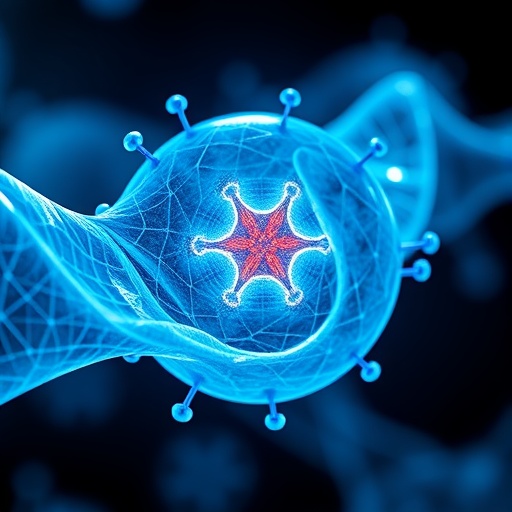
In recent years, photodynamic therapy (PDT) has emerged as a luminary approach to cancer treatment, harnessing the synergistic power of light and chemistry to eradicate malignant cells with remarkable precision. The essence of PDT lies in the intricate interplay among a photosensitizing agent, specific wavelengths of light, and molecular oxygen within tumor tissues. Upon illumination, the photosensitizer absorbs photons and transitions to an excited state, subsequently transferring energy to surrounding molecular oxygen molecules. This transfer results in the production of cytotoxic reactive oxygen species (ROS), which selectively induce apoptosis or necrosis in targeted cancer cells, sparing the surrounding healthy tissue. This process, akin to a smart missile guided exclusively to its target, has positioned PDT as a promising modality in oncology.
Yet, despite its specificity and non-invasiveness, conventional PDT faces substantial limitations, chiefly the inefficient delivery and premature degradation of photosensitizers en route to the tumor microenvironment. Enter liposomal nanotechnology — a revolutionary platform that encapsulates photosensitizers within nanoscale lipid bilayer vesicles, known as liposomes. These carriers not only protect photosensitive drugs from enzymatic degradation and immune clearance in the bloodstream but also leverage the enhanced permeability and retention (EPR) effect intrinsic to tumor vasculature. Consequently, liposomes facilitate heightened accumulation and retention of photosensitizers within the tumor interstitium, optimizing therapeutic efficacy while minimizing systemic toxicity.
The recent publication from the collaborative team led by Professor Heidi Abrahamse at the Laser Research Centre, University of Johannesburg, titled “Recent trends in liposomal drug efficiency of nanotechnology in photodynamic therapy for cancer,” highlights groundbreaking advances in this arena. Their experimental studies meticulously dissect the physicochemical properties, surface modifications, and controlled-release profiles of liposomal formulations engineered to surmount the biological barriers posed by the tumor microenvironment. By fine-tuning lipid composition, particle size, and surface charge, the researchers enhanced liposome stability in circulation and improved tumor-targeting specificity.
One of the cornerstone innovations discussed in the study is the development of stimuli-responsive liposomes. These smart liposomes remain quiescent during systemic circulation but undergo triggered release of photosensitizers upon encountering specific tumor-related stimuli, such as acidic pH, enzymatic activity, or even external light irradiation. This spatiotemporal precision guarantees that the active therapeutic agents are liberated exclusively within the malignant milieu, amplifying local reactive oxygen species generation while sparing non-target tissues. The findings underscore the potency of integrating nanotechnology with photomedicine to revolutionize cancer therapeutics.
Moreover, the exploration into multifunctional liposomes that co-deliver photosensitizers alongside complementary therapeutics, such as chemotherapy drugs or immunomodulators, opens exhilarating avenues for combination therapy. Such nanoplatforms can orchestrate synergistic anti-cancer effects, overcoming resistance mechanisms and enhancing overall treatment outcomes. The efficient encapsulation, protection, and targeted release capabilities of liposomes empower clinicians with unprecedented tools to customize therapies according to tumor heterogeneity and patient-specific pathophysiology.
This study also addresses crucial challenges in clinical translation, such as large-scale reproducibility, biosafety, and regulatory compliance, offering strategic insights into optimizing formulation protocols and pharmacokinetics. The liposomal PDT platform from the University of Johannesburg transcends conventional paradigms, exemplifying how a multidisciplinary approach encompassing physics, chemistry, biology, and engineering can foster innovative solutions to complex oncological problems.
The global burden of cancer necessitates continuous refinement of therapeutic modalities that maximize efficacy while curtailing adverse effects. Liposome-assisted photodynamic therapy epitomizes this goal by combining the inherent advantages of nanocarriers — biocompatibility, reduced immunogenicity, and selective tumor targeting — with the minimally invasive and spatially controlled nature of PDT. Such integration is poised to redefine the standard of care, improving patient quality of life and survival rates.
In addition, the precise mechanistic insights elucidated in this body of work shed light on intracellular trafficking pathways, endosomal escape mechanisms, and subcellular localization of photosensitizers delivered via liposomes. Understanding these molecular underpinnings enables rational design of next-generation constructs that exploit intracellular vulnerabilities of cancer cells. The enhancement of singlet oxygen generation efficacy and photostability of photosensitizers within liposomal environments further potentiates therapeutic success.
These advancements underscore the transformative potential of nanotechnology-driven photomedicine. As the field ventures into personalized cancer care, the ability to tailor liposomal PDT formulations according to tumor phenotype and genetic profiles becomes increasingly feasible. The adoption of artificial intelligence and machine learning tools to predict optimal treatment parameters and formulation architecture will further accelerate clinical implementation.
The pioneering research spearheaded by Professor Abrahamse and her multidisciplinary team serves as a testament to the power of integrating diverse scientific domains to tackle cancer’s complexity. Their efforts catalyze a paradigm shift from conventional chemotherapy and radiotherapy towards more selective, less toxic, and highly efficient treatment regimens. The ongoing evolution of liposomal nanotechnology in photodynamic therapy illuminates a future where precision oncology is not merely aspirational but a clinical reality.
While challenges remain — including long-term safety assessments, immunological impacts of repeated liposomal administration, and patient-specific delivery kinetics — the strides made in this study provide a robust framework for overcoming these obstacles. Continued interdisciplinary collaboration and technological innovation are paramount to fully realize the promise of liposome-enabled photodynamic cancer therapies.
In conclusion, the convergence of liposomal nanotechnology and photodynamic therapy heralds a new era in targeted cancer treatment. By shielding photosensitizers within intelligent lipid carriers and releasing them precisely under light activation at tumor sites, this strategy maximizes therapeutic efficiency and mitigates collateral damage. With cancer incidence steadily rising worldwide, such advancements represent hope not only for improved cure rates but also for enhancing the quality of life for millions of patients globally. The future of oncological care is brightened by these light-activated, nanoparticle-enhanced therapies that promise safer, smarter, and more effective cancer eradication.
Cite Scienmag News
Nathaniel Bowman. (March 27, 2026). Nanotech Boosts Breakthrough Light-Activated Cancer Therapy. Scienmag. https://scienmag.com/nanotech-boosts-breakthrough-light-activated-cancer-therapy/
Nathaniel Bowman. "Nanotech Boosts Breakthrough Light-Activated Cancer Therapy." Scienmag, 27 March 2026, https://scienmag.com/nanotech-boosts-breakthrough-light-activated-cancer-therapy/. Accessed 4 September 2026.
Nathaniel Bowman. "Nanotech Boosts Breakthrough Light-Activated Cancer Therapy." Scienmag. March 27, 2026. https://scienmag.com/nanotech-boosts-breakthrough-light-activated-cancer-therapy/


