

Tuesday, October 27, 2026
Science
No Result
View All Result
  • Login
  • HOME
  • SCIENCE NEWS
  • CONTACT US
  • HOME
  • SCIENCE NEWS
  • CONTACT US
No Result
View All Result
Scienmag
No Result
View All Result
Home Science News Technology and Engineering

Nanoscale Oxide Particles Could Make Steel Interconnects Last Longer in Fuel Cells

October 27, 2026
in Technology and Engineering
Victoria Harrison
By Victoria Harrison Scienmag Editorial Profile - Fuel Cells
Reading Time: 2 mins read
0
Nanoscale Oxide Particles Could Make Steel Interconnects Last Longer in Fuel Cells

Nanoscale Oxide Particles Could Make Steel Interconnects Last Longer in Fuel Cells

65
SHARES
587
VIEWS
Share on FacebookShare on Twitter
ADVERTISEMENT

A comprehensive review published in the journal Ionics examines how oxide dispersion strengthened (ODS) ferritic stainless steels are emerging as candidate interconnect materials for intermediate-temperature solid oxide cells, covering both solid oxide fuel cells and solid oxide electrolysis cells. The review, led by Asad Ullah Khan and Muhammad Zubair Khan with colleagues, was published on 26 October 2026 and consolidates existing knowledge on how nanoscale oxide particles influence material behavior, microstructural development and long-term performance under operating conditions relevant to these devices. According to the review, metallic interconnect systems face major durability challenges, and ODS ferritic stainless steels are being investigated as a way to address them.

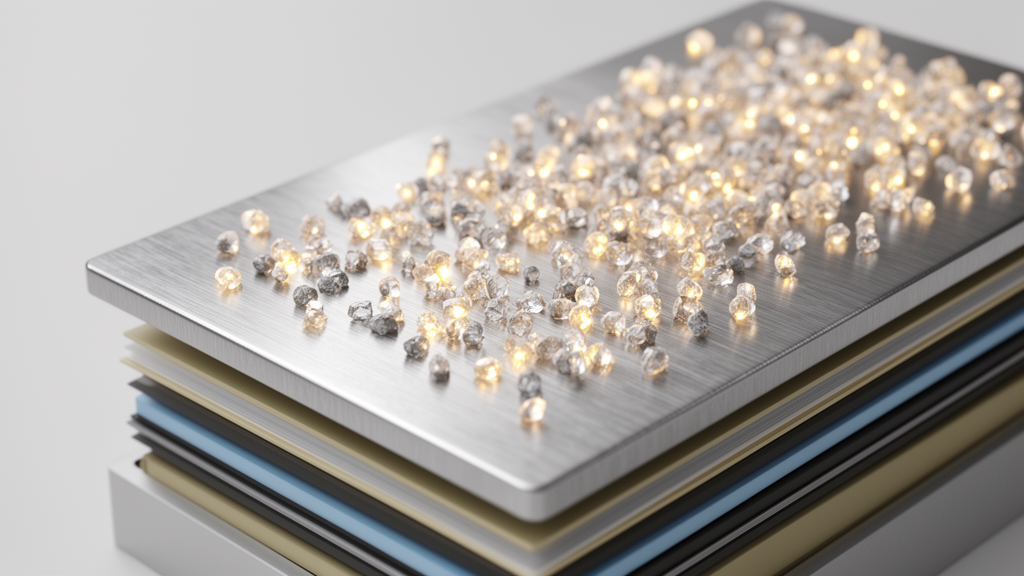
The central idea is that finely dispersed nanoscale oxide particles act as pinning centers within the steel microstructure, suppressing grain coarsening and cation diffusion during high-temperature service. The review reports that these dispersoids also promote the formation of stable, adherent oxide scales on the steel surface. This microstructural effect is described as reducing oxidation kinetics, suppressing chromium volatilization, and preserving electrical conductivity during prolonged operation, which are the degradation pathways that limit interconnect lifetime in solid oxide cell stacks.

To organize the field, the authors develop a structured framework linking materials design, processing strategies and degradation mechanisms through a rigorous structure-processing-performance relationship. Three main processing routes are critically discussed: mechanical alloying, powder metallurgy and in-situ synthesis. The review identifies trade-offs among these routes with respect to microstructural uniformity, manufacturability and scalability, noting that the choice of processing pathway shapes whether the intended nanoscale dispersion can be achieved reliably and at industrial scale.

The authors caution that the benefits are not universal. Although selected ODS systems demonstrate improved oxidation behavior and stability of area-specific resistance, these improvements depend on composition and processing conditions. The review also stresses that long-term evidence under realistic dual-atmosphere conditions remains limited, particularly for solid oxide electrolysis cell operation, meaning that performance data collected in fuel-cell-relevant settings cannot simply be assumed to carry over to electrolysis modes.

Beyond the laboratory scale, the review highlights major unresolved issues of scalability, cost optimization and stack-level validation. The authors identify future research directions needed to close these gaps, positioning ODS ferritic stainless steels as promising but not yet commercially proven interconnect materials for next-generation solid oxide cells. As a review article, the work synthesizes and evaluates existing literature rather than presenting new experimental results, and its conclusions reflect the current state of published evidence on these materials.

Subject of Research: Oxide dispersion strengthened ferritic stainless-steel interconnects for solid oxide fuel cells and electrolysis cells

Article Title: Advanced oxide dispersion strengthened ferritic stainless-steel interconnects for next-generation solid oxide cells: A comprehensive review

Article References: Khan, A. U., Raza, M. A., Shams, S. S. A., Ishfaq, H. A., Hassan, M. H., Ullah, A., Koh, J.-H., Saleem, M., Song, R.-H., & Khan, M. Z. (2026). Advanced oxide dispersion strengthened ferritic stainless-steel interconnects for next-generation solid oxide cells: A comprehensive review. Ionics. https://doi.org/10.1007/s11581-026-07604-x

Image Credits: AI Generated

DOI: 10.1007/s11581-026-07604-x

Keywords: solid oxide cells, interconnects, ODS steels, ferritic stainless steel, chromium volatilization, mechanical alloying, powder metallurgy, SOFC, SOEC, materials review, degradation mechanisms, scalability

Cite Scienmag News

Victoria Harrison. (October 27, 2026). Nanoscale Oxide Particles Could Make Steel Interconnects Last Longer in Fuel Cells. Scienmag. https://scienmag.com/nanoscale-oxide-particles-could-make-steel-interconnects-last-longer-in-fuel-cells/


Victoria Harrison. "Nanoscale Oxide Particles Could Make Steel Interconnects Last Longer in Fuel Cells." Scienmag, 27 October 2026, https://scienmag.com/nanoscale-oxide-particles-could-make-steel-interconnects-last-longer-in-fuel-cells/. Accessed 27 October 2026.

Victoria Harrison. "Nanoscale Oxide Particles Could Make Steel Interconnects Last Longer in Fuel Cells." Scienmag. October 27, 2026. https://scienmag.com/nanoscale-oxide-particles-could-make-steel-interconnects-last-longer-in-fuel-cells/

Tags: cation diffusion suppression in high-temperature steelschromium volatilizationchromium volatilization prevention in steel interconnectsdegradation mechanismsdurability of solid oxide fuel cell componentsferritic stainless steelgrain coarsening suppression in steel microstructuresinterconnectslong-term performance of interconnect materialsmaterialsmaterials reviewmechanical alloyingmicrostructural development in high-temperature alloysNanoscale oxide particles in steel interconnectsODS steelsoxidation kinetics reduction in solid oxide cellsoxide dispersion strengthened ferritic stainless steelsoxide scale formation and stability in fuel cellspowder metallurgyrole of dispersoids in enhancing electrical conductivityscalabilitySOECSOFCsolid oxide cells
Share26Tweet16
Previous Post

Research report: Epidemiological characterization of avian influenza virus circulation in pigeons and quail across different production systems in Chattogram, Bangladesh

Next Post

Soybean genome study pinpoints leaflet shape genes across leaf positions

Related Posts

Loosening the Rim: Peripheral Flexibility Boosts a Cellulase’s Catalytic Power
Science News

Loosening the Rim: Peripheral Flexibility Boosts a Cellulase’s Catalytic Power

October 27, 2026
Enzyme-Induced Carbonate Precipitation Strengthens Red Clay Against Wetting–Drying Damage
Technology and Engineering

Enzyme-Induced Carbonate Precipitation Strengthens Red Clay Against Wetting–Drying Damage

October 27, 2026
Optimizing Epoxy Nanocomposites for Stronger, Water-Resistant Electrical Insulation
Technology and Engineering

Optimizing Epoxy Nanocomposites for Stronger, Water-Resistant Electrical Insulation

October 27, 2026
Metasurface tames spreading of orbital angular momentum beams
Technology and Engineering

Metasurface tames spreading of orbital angular momentum beams

October 27, 2026
Curated hydrogen database links storage capacity to release pressure
Technology and Engineering

Curated hydrogen database links storage capacity to release pressure

October 26, 2026
New Kinetic Model Predicts Natural Gas Hydrate Growth Using Chemical Potential
Science News

New Kinetic Model Predicts Natural Gas Hydrate Growth Using Chemical Potential

October 26, 2026
Next Post
Soybean genome study pinpoints leaflet shape genes across leaf positions

Soybean genome study pinpoints leaflet shape genes across leaf positions

  • Mothers who receive childcare support from maternal grandparents show more optimized

    Mothers who receive childcare support from maternal grandparents show more parental warmth, finds NTU Singapore study

    27656 shares
    Share 11059 Tweet 6912
  • University of Seville Breaks 120-Year-Old Mystery, Revises a Key Einstein Concept

    1061 shares
    Share 424 Tweet 265
  • Bee body mass, pathogens and local climate influence heat tolerance

    682 shares
    Share 273 Tweet 171
  • Researchers record first-ever images and data of a shark experiencing a boat strike

    546 shares
    Share 218 Tweet 137
  • Groundbreaking Clinical Trial Reveals Lubiprostone Enhances Kidney Function

    531 shares
    Share 212 Tweet 133
Science

Embark on a thrilling journey of discovery with Scienmag.com—your ultimate source for cutting-edge breakthroughs. Immerse yourself in a world where curiosity knows no limits and tomorrow’s possibilities become today’s reality!

RECENT NEWS

  • Loosening the Rim: Peripheral Flexibility Boosts a Cellulase’s Catalytic Power
  • Soybean genome study pinpoints leaflet shape genes across leaf positions
  • Nanoscale Oxide Particles Could Make Steel Interconnects Last Longer in Fuel Cells
  • Research report: Epidemiological characterization of avian influenza virus circulation in pigeons and quail across different production systems in Chattogram, Bangladesh

Categories

  • Agriculture
  • Anthropology
  • Archaeology
  • Athmospheric
  • Biology
  • Biotechnology
  • Blog
  • Bussines
  • Cancer
  • Chemistry
  • Climate
  • Earth Science
  • Editorial Policy
  • Marine
  • Mathematics
  • Medicine
  • Pediatry
  • Policy
  • Psychology & Psychiatry
  • Science Education
  • Science News
  • Social Science
  • Space
  • Technology and Engineering

Subscribe to Blog via Email

Enter your email address to subscribe to this blog and receive notifications of new posts by email.

Join 5,151 other subscribers

© 2025 Scienmag - Science Magazine

Welcome Back!

Login to your account below

Forgotten Password?

Retrieve your password

Please enter your username or email address to reset your password.

Log In
No Result
View All Result
  • HOME
  • SCIENCE NEWS
  • CONTACT US

© 2025 Scienmag - Science Magazine

Discover more from Science

Subscribe now to keep reading and get access to the full archive.

Continue reading