


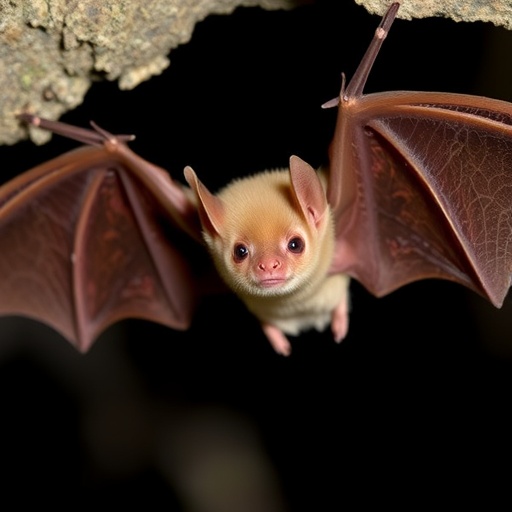
In a groundbreaking discovery just in time for Halloween, researchers from the Royal Ontario Museum (ROM), the Field Museum in Chicago, and Lawrence University in Wisconsin have identified six previously unknown species of bats in the Philippines. This significant advancement enriches our understanding of one of the planet’s most diverse and ecologically vital mammalian groups. Bats, often cloaked in mystery and folklore, play indispensable roles in ecosystems worldwide, and uncovering these new species adds a critical layer to biodiversity science.
These six new species belong to the genus Murina, commonly known as tube-nosed bats. They were distinguished based on a meticulous examination of both morphological traits and genetic markers. Scientists employed advanced molecular systematic techniques, analyzing nucleotide sequences alongside detailed studies of tooth morphology, skull configuration, fur banding, and other unique physical features. This integrative taxonomic approach ensured that these bats are truly distinct from previously identified species, correcting past misclassifications.
Prior to this study, only two species of the tube-nosed Murina bats were known to inhabit the Philippine archipelago. Dr. Burton Lim of ROM explained that their research confirmed the presence of one recognized species plus another closely related species never before documented by science. Intriguingly, what was once considered a single common species was found to be a complex masquerading as five deceptive look-alikes, revealing profound underestimations in bat species richness within the region.
The newly described bats—Murina alvarezi, Murina baletei, Murina hilonghilong, Murina luzonensis, Murina mindorensis, and Murina philippinensis—are small creatures weighing between 4 and 14 grams. These lightweight bats were collected over decades of scrupulous fieldwork dating back to 1988, much of it conducted in collaboration with the Biodiversity Management Bureau of the Philippines and protected area authorities. Their elusive behavior has made such extensive sampling and identification a challenging endeavor.
The Philippines, recognized for its extraordinary biological diversity due to its island ecosystems, already boasted 79 bat species prior to this discovery. These new additions underscore the archipelago’s status as a global biodiversity hotspot, especially given that Murina bats depend heavily on forested habitats for roosting. The ongoing threat of deforestation poses significant risks to their survival, emphasizing the critical need for targeted conservation strategies informed by accurate species data.
Integrating genetic analyses played a pivotal role in this research. The ROM Laboratory of Molecular Systematics employs DNA sequencing to unravel evolutionary relationships and species boundaries. By depositing the nucleotide sequences of these new species in the GenBank database, the study provides an invaluable resource for future phylogenetic research and biodiversity monitoring. This transparency enhances global collaboration and accelerates discoveries in chiropteran systematics.
Beyond biological insights, these bats carry cultural significance in the Philippines and worldwide. While Halloween is less prominent in the Philippines, local folklore about the aswang—a shape-shifting monster often inspired by bat imagery—reflects deep cultural associations with bats. Globally, bats symbolize good fortune in some cultures, wealth in others, and even divinity in various Indigenous traditions, highlighting the complex interplay between biodiversity and human cultural heritage.
Dr. Judith Eger, Curator Emeritus at ROM, emphasized how this discovery exemplifies the vast knowledge gaps still present in natural history, even for relatively well-studied groups such as mammals. The identification of these six species reveals an overlooked reservoir of cryptic diversity, reinforcing the fundamental importance of museum collections, field expeditions, and integrative taxonomy for deepening our understanding of life on Earth.
Another poignant aspect of this research is the honoring of individuals who contributed to bat biology and conservation. Murina alvarezi was named in memory of James Alvarez, a young Filipino bat biologist whose promising career was tragically cut short during fieldwork. Additionally, Murina baletei commemorates Danilo Balete, a prominent biodiversity scientist deeply involved in Philippine mammal research. Such dedications highlight the human stories intertwined with scientific discovery.
Looking toward the future, this study paves the way for further investigations into the ecological roles, behavioral adaptations, and sensory biology of these tube-nosed bats. Of particular interest is their distinctive tubular nostril structure, hypothesized to facilitate directional olfactory detection, a trait that may confer unique navigation or foraging advantages. Unraveling these mysteries will augment ecological knowledge and inform conservation priorities in an era of accelerating environmental change.
The Field Museum’s involvement through the longstanding Philippine Mammal Project highlights over three decades of collaborative fieldwork and specimen collection. The transfer of reference specimens to the National Museum of the Philippines ensures that local researchers have access to essential materials for continued taxonomic and ecological studies. Such international partnerships are vital for sustaining biodiversity research in the face of rapid habitat loss.
Published in the September 8, 2025 edition of Zootaxa, the paper entitled “Systematics and biogeography of tube-nosed bats, Murina (Mammalia, Chiroptera, Vespertilionidae), from the Philippines with descriptions of six new species” details the comprehensive systematic framework underpinning these discoveries. This contribution not only expands our species catalog but also exemplifies rigorous scientific methodologies integrating morphology, genetics, and biogeography.
Ultimately, the revelation of six new Murina bat species reshapes our understanding of Philippine chiropteran diversity and underscores the archipelago’s status as a mammalian biodiversity powerhouse. As ecosystems face unprecedented threats, illuminating hidden biodiversity remains a scientific and conservation imperative. These newly described bats remind us that even familiar groups hold secrets waiting to be uncovered, and that continuous exploration is essential for safeguarding the delicate balance of our natural world.
- Zootaxa: https://mapress.com/zt/index
- GenBank: https://www.ncbi.nlm.nih.gov/genbank/
References: DOI: 10.11646/zootaxa.5691.1.1
Image Credits: J. Sedlock
Keywords: Evolutionary biology
Cite Scienmag News
Margaret Porter. (October 27, 2025). Museum Researchers Excited by the Discovery of Six New Bat Species. Scienmag. https://scienmag.com/museum-researchers-excited-by-the-discovery-of-six-new-bat-species/
Margaret Porter. "Museum Researchers Excited by the Discovery of Six New Bat Species." Scienmag, 27 October 2025, https://scienmag.com/museum-researchers-excited-by-the-discovery-of-six-new-bat-species/. Accessed 4 September 2026.
Margaret Porter. "Museum Researchers Excited by the Discovery of Six New Bat Species." Scienmag. October 27, 2025. https://scienmag.com/museum-researchers-excited-by-the-discovery-of-six-new-bat-species/


