


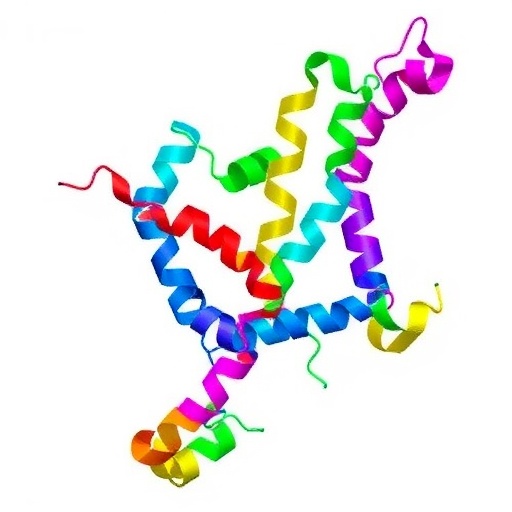
In a groundbreaking study that promises to reshape our understanding of cellular regulation, researchers have unveiled the intricate structural dynamics of O-GlcNAcase (OGA), a pivotal enzyme responsible for modulating protein function via O-GlcNAcylation. The detailed multi-domain structures described in this investigation shed light on previously elusive allosteric mechanisms, thereby providing a molecular framework that could revolutionize therapeutic strategies for a host of human diseases.
O-GlcNAcylation—the reversible attachment of N-acetylglucosamine (GlcNAc) to serine and threonine residues on nuclear and cytoplasmic proteins—is a crucial post-translational modification playing essential roles in cellular signaling, stress response, metabolism, and transcription regulation. The enzyme OGA catalyzes the removal of these sugar moieties, thereby maintaining cellular homeostasis and fine-tuning protein activity. Dysregulation of this delicate balance has been implicated in neurodegenerative disorders, cancer, and diabetes, underscoring the importance of deciphering the molecular underpinnings of OGA’s regulation.
The study utilized cutting-edge cryo-electron microscopy and X-ray crystallography to resolve the architecture of OGA in unprecedented detail. The enzyme was revealed to adopt a complex multi-domain conformation that facilitates nuanced interdomain communication. This structural plasticity enables OGA to precisely recognize and process its substrates in response to fluctuating cellular conditions. The elucidation of these multi-domain interactions represents a significant advancement over previous models that portrayed OGA as a relatively static catalyst.
Central to the researchers’ findings is the identification of an allosteric regulatory site located distal to OGA’s catalytic core. This site acts as a molecular switch, capable of modulating the enzyme’s activity through subtle conformational changes transmitted across domains. By binding small molecules or protein partners at this allosteric locus, the enzyme can either be activated or inhibited, offering exquisite control over its function. Such an allosteric mechanism exemplifies nature’s capacity to regulate enzymatic activity with remarkable precision.
Further analysis demonstrated how the flexible interdomain linkers function as dynamic hinges, facilitating the transmission of allosteric signals. These linkers enable concerted structural rearrangements, effectively coupling the allosteric site to the active center. This coordinated movement ensures that substrate processing is tightly regulated, preventing aberrant removal of O-GlcNAc groups that could disrupt vital signaling cascades. The insights into these intramolecular communication pathways provide a blueprint for the rational design of modulatory agents targeting OGA’s regulatory domains.
These structural revelations also have profound implications for drug discovery. Traditional inhibitors of OGA predominantly target the catalytic site; however, they often lack selectivity and can compromise physiological functions. The newfound allosteric pocket offers an alternative target that could enable the development of highly specific modulators that fine-tune OGA activity without complete inhibition. This strategy may mitigate side effects and enhance therapeutic efficacy, particularly for conditions such as Alzheimer’s disease where aberrant O-GlcNAcylation is a hallmark.
The study’s authors performed extensive biochemical and biophysical assays to validate the functional relevance of the allosteric site. Mutagenesis experiments disrupting key residues within the regulatory domain resulted in marked alterations in enzymatic kinetics, confirming the domain’s critical role in activity modulation. Additionally, binding assays with candidate allosteric effectors demonstrated their ability to induce conformational shifts, further consolidating the mechanistic model proposed.
Intriguingly, the multi-domain structure of OGA shares features with other glycoside hydrolases, suggesting evolutionary conserved principles underpinning their regulation. Nonetheless, the unique arrangement of allosteric elements and flexible linkers endows OGA with specialized control tuned to the complexity of intracellular signaling networks. This highlights the enzyme’s adaptability and significance as a regulatory hub in cell biology.
The researchers also explored the interface between OGA and its natural substrates, revealing how domain arrangements facilitate selective substrate engagement. The synergy between substrate recognition and allosteric regulation ensures that OGA activity is temporally and spatially coordinated within the cellular milieu. This level of control is vital given the diverse array of substrates modified by O-GlcNAcylation, each with distinct functional consequences.
Beyond fundamental science, these discoveries pave the way for translational applications. By exploiting the structural insights into OGA’s regulatory mechanisms, pharmaceutical efforts can be directed toward precision targeting of disease-relevant pathways influenced by aberrant O-GlcNAc cycling. For instance, modulating OGA function could restore normal signaling in insulin resistance or prevent the pathological aggregation of tau protein in neurodegeneration.
The allosteric paradigms revealed in this report also contribute to the broader field of enzyme regulation, illustrating how multi-domain architectures act as sophisticated molecular machines. These findings accentuate the importance of studying enzymes as integrated entities where distal regions collaborate to define overall function. Such perspectives could inspire innovative approaches in synthetic biology and enzyme engineering.
In conclusion, the elucidation of OGA’s multi-domain structural ensemble marks a transformative milestone in glycobiology and enzymology. By deciphering the allosteric control mechanisms governing this essential enzyme, the research unlocks new frontiers for understanding cellular complexity and devising targeted interventions. As we continue to unravel the layers of regulation embedded in protein structures, studies like this exemplify the remarkable synergy between structural biology and therapeutic innovation.
The implications of these findings extend beyond OGA, as they underscore the necessity of incorporating allosteric considerations into drug design pipelines. By moving away from simplistic active-site targeting toward more holistic approaches accounting for enzyme dynamics and regulation, future therapies may achieve unprecedented specificity and efficacy. This paradigm shift holds the promise to transform treatment landscapes across myriad health challenges.
Ultimately, the study of multi-domain enzymes such as O-GlcNAcase reinforces the intricate choreography underpinning cellular life. Each domain, linker, and interface participates in an elegant dance of molecular interactions directing biological outcomes. Illuminating these processes not only enriches our scientific understanding but also equips us with powerful tools to manipulate biology for human benefit.
Cite Scienmag News
Ophelia Keating. (October 3, 2025). Multi-Domain O-GlcNAcase Unveils Allosteric Mechanisms. Scienmag. https://scienmag.com/multi-domain-o-glcnacase-unveils-allosteric-mechanisms/
Ophelia Keating. "Multi-Domain O-GlcNAcase Unveils Allosteric Mechanisms." Scienmag, 3 October 2025, https://scienmag.com/multi-domain-o-glcnacase-unveils-allosteric-mechanisms/. Accessed 4 September 2026.
Ophelia Keating. "Multi-Domain O-GlcNAcase Unveils Allosteric Mechanisms." Scienmag. October 3, 2025. https://scienmag.com/multi-domain-o-glcnacase-unveils-allosteric-mechanisms/


