

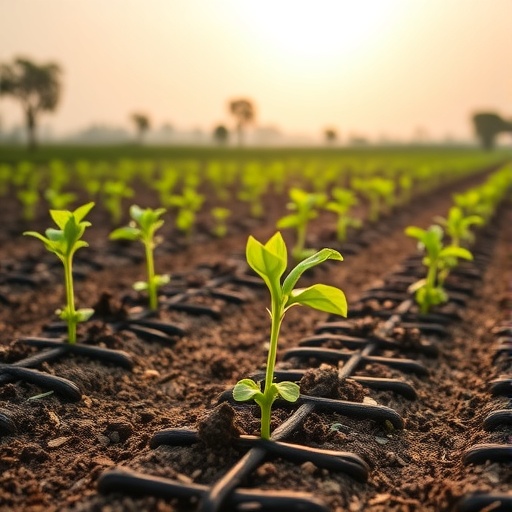
In an era where climate change presents growing challenges to agriculture, innovative practices and solutions become crucial for ensuring food security and sustainable farming. A pertinent study investigates mulching materials as a potential way to enhance seedling survival and growth, particularly in the dry-lowland and frost-prone highland agroecologies of Eastern Amhara, Ethiopia. The research highlights how appropriate mulch can transform the persistence of young plants in extreme climatic conditions, which is vital for promoting agricultural productivity in vulnerable areas.
Mulching, a method involving the application of organic or inorganic materials on the soil surface, serves multiple functions including moisture retention, temperature regulation, and weed suppression. These benefits are particularly essential in regions like Eastern Amhara, where erratic rainfall patterns and frost events pose significant risks to newly planted seedlings. The findings of this study could pave the way for enhanced agricultural practices that support both local farmers and the ecological health of the region.
The study’s authors, Wudu, Redae, Getachew, and their team, meticulously evaluated various mulching materials to determine their effectiveness in supporting seedling diversity and survival rates. By conducting rigorous field trials, they gathered data that sheds light on the specific conditions under which certain mulching materials outperformed others. Such evidence-based approaches are critical for developing scalable solutions tailored to the diverse agroecological zones within Ethiopia.
Researchers prepared several experimental plots featuring different types of mulches, including straw, wood chips, and synthetic materials. Each type of mulch was assessed based on parameters such as soil moisture retention, temperature fluctuations, and their overall impact on seedling growth rates. As a result, the team uncovered specific combinations that provided optimal support for young plants, demonstrating how tailored approaches to mulching can lead to significant improvements in survival and overall health.
An analysis of the temperature regulation provided by various mulching materials revealed how effectively they can mitigate frost risks. In the frost-prone highlands, even a slight decrease in temperature can lead to devastating losses for farmers. By maintaining higher soil temperatures during critical growth phases, the appropriate mulch type can offer crucial protection, thus safeguarding food supplies and farmers’ livelihoods in a challenging climate.
Moreover, the research also considered the economic feasibility of adopting these mulching practices among local farmers. Cost-benefit analyses indicated that investing in quality mulching materials can lead to substantial returns in terms of increased crop yields and reduced water usage. The synergistic effect of mulching practices creates a compelling argument for their integration into standard agricultural techniques in the region.
Nonetheless, the successful adoption of such practices necessitates broader educational efforts aimed at local farmers. Workshops and training programs can equip farmers with the necessary skill sets regarding effective mulching techniques and materials. These initiatives can help foster a deeper understanding of sustainable practices that not only improve crop resilience but also contribute positively to soil health and biodiversity.
The significance of the findings extends beyond mere agricultural improvements; they also underline the importance of resilience-building as a systemic response to climate change. Sustaining agriculture amid evolving environmental challenges requires a multifaceted approach, and the implementation of mulching strategies represents a valuable piece of the puzzle. Strategies that enhance the viability of crops in adverse conditions can also inspire similar innovations in other regions facing climatic challenges.
Overall, the keen insights derived from this study showcase the potential for transforming agricultural practices in Eastern Amhara. They advocate for a shift toward embracing sustainable methodologies that account for the complexities of local climate patterns. The call to action is clear: empowering farmers with the knowledge and materials for effective mulching will not only support individual success but also contribute to larger community resilience.
As scientists continue to explore the intricate relationships between mulching, soil health, and plant vitality, promising avenues for future research and innovation appear on the horizon. This study underscores the critical importance of local research initiatives in informing global agricultural practices and responses to ongoing environmental changes. The journey toward sustainable agriculture is a collective effort, highlighting the need for collaboration among researchers, policymakers, and farmers alike.
In summary, as this research illuminates the multifaceted benefits of mulching in improving seedling survival and growth amid challenging ecological conditions, it invites stakeholders across the agricultural spectrum to rethink and innovate current practices. The encouragement of sustainable methods that not only protect crops but also nurture the environment may well be the key to resilient agricultural futures.
The collaborative nature of this research exemplifies the progress that can be made when scientific inquiry meets local agricultural needs. In embracing the lessons learned from this study, communities in Eastern Amhara—and potentially beyond—can harness innovative practices that stand the test of time in the face of an uncertain ecological future. Here lies an opportunity for growth, resilience, and a thriving agricultural landscape, thanks to the power of knowledge and collaboration.
Ultimately, the ongoing study of mulching materials sets the stage for a future wherein agriculture adapts and thrives despite adverse conditions. As we witness these advancements in agriculture, the sector can look forward to a more sustainable and equitable future for farmers globally.
Subject of Research: Evaluation of mulching materials for enhancing seedling survival and growth in Eastern Amhara agroecologies
Article Title: Evaluating mulching materials to enhance seedling survival and growth in dry-lowland and frost prone highland agroecologies of Eastern Amhara Ethiopia.
Article References:
Wudu, D., Redae, T., Getachew, G. et al. Evaluating mulching materials to enhance seedling survival and growth in dry-lowland and frost prone highland agroecologies of Eastern Amhara Ethiopia. Discov. For. 2, 10 (2026). https://doi.org/10.1007/s44415-025-00065-6
Image Credits: AI Generated
DOI: https://doi.org/10.1007/s44415-025-00065-6
Keywords: mulching, seedling survival, agricultural practices, Eastern Amhara, climate resilience


