


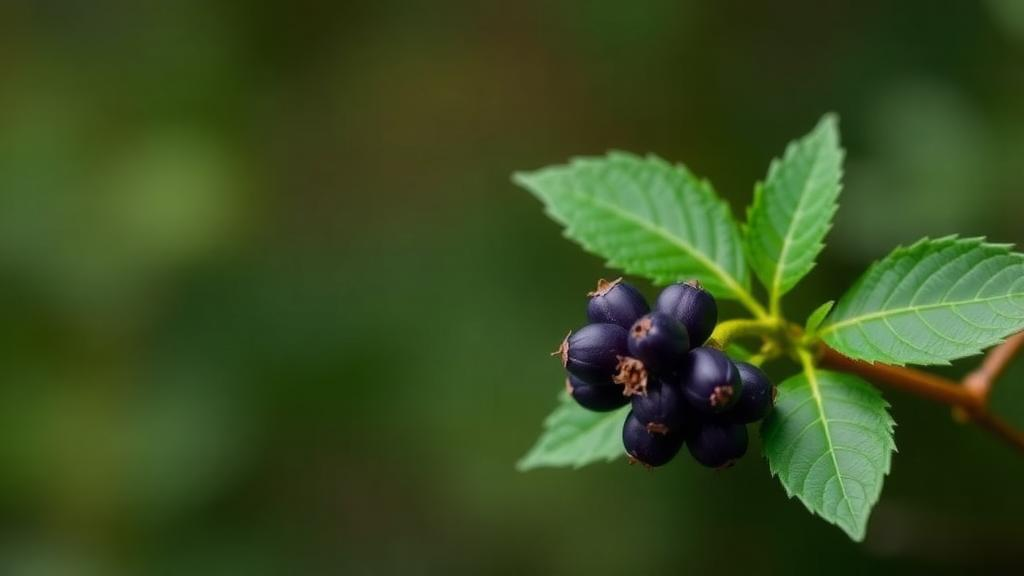
Compounds extracted from the white mulberry tree, Morus alba, may hold untapped potential as inhibitors of one of cancer’s most critical molecular gatekeepers. A new computational study published in Discover Chemistry reports that benzofuranoid phytochemicals from mulberry bind the cyclin-dependent kinase 1, or CDK1, more tightly in silico than dinaciclib, the most clinically advanced CDK1-targeting drug. The work, led by S. Abdullah and colleagues, combines molecular docking, pharmacokinetic prediction, 200-nanosecond molecular dynamics simulations, binding free energy calculations, and quantum chemical analysis into a single screening pipeline designed to flag the most promising natural candidates for laboratory follow-up.
The biological rationale for targeting CDK1 is compelling. CDK1 is the master regulator of the G2-to-M transition in the cell cycle, the moment when a cell commits to dividing. Paired with cyclin B, it forms the M-phase promoting factor that phosphorylates the proteins responsible for chromosome condensation and spindle assembly. Unlike CDK2, CDK4, and CDK6, which show functional redundancy, CDK1 has no substitute at this checkpoint. Many tumors, particularly those carrying p53 mutations that cripple the G1 checkpoint, become dangerously dependent on CDK1 to enter mitosis even when DNA is damaged. Blocking CDK1 can therefore trigger mitotic catastrophe and apoptosis selectively in cancer cells, while normal cells with intact checkpoints pause and repair instead.
Despite this therapeutic logic, no CDK1 inhibitor has yet been approved by the FDA. Early pan-CDK inhibitors such as flavopiridel, now known as alvocidib, showed activity against leukemia and multiple myeloma but failed on selectivity, producing toxicity, diarrhea, nausea, and hepatotoxicity. Roniciclib trials in small-cell lung cancer were halted after severe adverse effects. Dinaciclib, which targets CDK1, CDK2, CDK5, and CDK9, remains the most clinically advanced agent, but the field continues to search for molecules with cleaner safety profiles. Natural products, which often carry lower intrinsic toxicity and can engage multiple pathways simultaneously, have emerged as an attractive hunting ground.
The research team turned to the NPACT database, a curated collection of plant-derived anticancer compounds, and focused on benzofuranoid phytochemicals from Morus alba. Rather than screening millions of synthetic molecules, they performed a targeted virtual screen of compounds with documented anticancer relevance. The CDK1 crystal structure, resolved at 2.33 angstroms and retrieved from the Protein Data Bank under the identifier 6GU6, was prepared in UCSF Chimera, and ligands were energy-minimized with the MMFF94 force field before docking with AutoDock Vina through the PyRx interface.
The docking results were striking. Mulberrofuran L bound CDK1 with a score of minus 8.5 kilocalories per mole, followed by mulberrofuran X at minus 8.2, mulberrofuran Y at minus 8.0, and euparin and 6-methoxy-tremetone at minus 7.7 each. Dinaciclib, the reference drug, scored only minus 6.6 kilocalories per mole. The docking protocol was validated by redocking the co-crystallized dinaciclib into the binding pocket, yielding a root-mean-square deviation of 1.38 angstroms, well below the 2-angstrom threshold that confirms a docking method reproduces known binding poses reliably.
Drug-likeness and pharmacokinetic filtering narrowed the field further. All five top compounds largely satisfied Lipinski’s Rule of Five, with the single exception of elevated lipophilicity: mulberrofuran L, X, and Y each showed logP values above 5, a violation the authors note may compromise aqueous solubility and oral bioavailability but does not automatically disqualify a compound. Predicted potency, estimated with the CODD-PRED server using machine learning models trained on curated bioactivity data, ranged from 5.28 to 5.48 in pIC50 terms, with mulberrofuran L scoring highest. The decisive filter was toxicity. ADMET profiling with the Deep-PK server flagged mulberrofuran Y, euparin, and 6-methoxy-tremetone for carcinogenicity and hepatotoxicity concerns, leaving mulberrofuran L and mulberrofuran X as the only candidates with clean toxicity profiles.
Those two survivors, along with dinaciclib as a benchmark, were then subjected to 200-nanosecond all-atom molecular dynamics simulations in GROMACS using the CHARMM36 force field. The mulberrofuran X complex proved the most stable of the three, showing the lowest and most consistent root-mean-square deviation at roughly 0.25 to 0.32 nanometers, the tightest radius of gyration at 2.32 to 2.36 nanometers, and the lowest solvent-accessible surface area, all signs of a compact, well-behaved protein-ligand complex. Mulberrofuran L fluctuated more, with RMSD values between 0.35 and 0.55 nanometers, though its excursions settled over time. Principal component analysis reinforced the picture: mulberrofuran X formed a tight conformational cluster, while mulberrofuran L sampled a broader range of motion along the first two principal components, and the free energy landscape confirmed that both compounds occupied well-defined low-energy minima rather than drifting into unstable states.
The energetic verdict was perhaps the study’s most eye-catching result. MM-GBSA binding free energy calculations, performed on frames extracted from the equilibrated trajectories, gave minus 15.66 kilocalories per mole for mulberrofuran X and minus 11.82 for mulberrofuran L, compared with just minus 2.31 for dinaciclib. Since more negative values indicate stronger binding, both mulberry compounds appeared to outperform the clinical reference by a wide margin in this metric. Density functional theory calculations added an electronic dimension: dinaciclib showed the smallest HOMO-LUMO gap at 2.894 electron volts, indicating the highest chemical softness and reactivity, while mulberrofuran L, at 2.943 electron volts, sat close behind, and mulberrofuran X, at 3.832 electron volts, was the most electronically stable of the three.
The authors are careful to frame these findings as hypothesis-generating rather than proof of therapeutic value. Every result in the study is computational, and the pipeline’s predictions, from pIC50 estimates to CYP450 inhibition flags for the mulberrofuran compounds, all require experimental confirmation. The team recommends in vitro kinase inhibition assays and cell viability tests such as MTT or CCK-8 to verify that mulberrofuran L and X actually suppress CDK1 in living cells, followed by cytotoxicity, selectivity, and mechanistic studies in cancer cell lines and eventually animal models. Predicted CYP inhibition in particular raises potential drug-drug interaction risks that only dedicated laboratory pharmacokinetics can resolve.
Even with those caveats, the study adds mulberry phytochemicals to a growing list of plant-derived CDK modulators, joining curcumin, wogonin, honokiol, and atractylenolide I, all of which have shown cell cycle arrest effects in preclinical cancer models. What distinguishes this work is the depth of the computational validation: a multi-level workflow spanning docking, dynamics, free energy, and quantum chemistry that converged on the same two candidates from different angles. If laboratory experiments bear out the simulations, the humble mulberry, a tree better known for feeding silkworms than fighting tumors, could yield lead structures for a class of cancer drugs that has long eluded medicinal chemists: selective, tolerable inhibitors of CDK1.
Subject of Research: Computational screening of Morus alba phytochemicals as CDK1 inhibitors for cancer therapy
Article Title: In silico investigation of mulberry phytochemicals targeting CDK1 in cancer using molecular docking and computational approaches
Article References: Abdullah, S., Nisar, S., Irshad, M., Saini, R. S., Alam, M., Ansari, I., & Junaid, M. (2026). In silico investigation of mulberry phytochemicals targeting CDK1 in cancer using molecular docking and computational approaches. Discover Chemistry, 3(1), Article 562. https://doi.org/10.1007/s44371-026-01020-w
Image Credits: AI Generated
DOI: 10.1007/s44371-026-01020-w
Keywords: CDK1, Morus alba, molecular docking, molecular dynamics simulation, phytochemicals, cancer, drug discovery, MM-GBSA, ADMET, DFT, mulberrofuran, cell cycle
Cite Scienmag News
Nathaniel Bowman. (October 5, 2026). Mulberry Compounds Outdock a Clinical Cancer Drug in CDK1 Simulation Study. Scienmag. https://scienmag.com/mulberry-compounds-outdock-a-clinical-cancer-drug-in-cdk1-simulation-study/
Nathaniel Bowman. "Mulberry Compounds Outdock a Clinical Cancer Drug in CDK1 Simulation Study." Scienmag, 5 October 2026, https://scienmag.com/mulberry-compounds-outdock-a-clinical-cancer-drug-in-cdk1-simulation-study/. Accessed 5 October 2026.
Nathaniel Bowman. "Mulberry Compounds Outdock a Clinical Cancer Drug in CDK1 Simulation Study." Scienmag. October 5, 2026. https://scienmag.com/mulberry-compounds-outdock-a-clinical-cancer-drug-in-cdk1-simulation-study/


