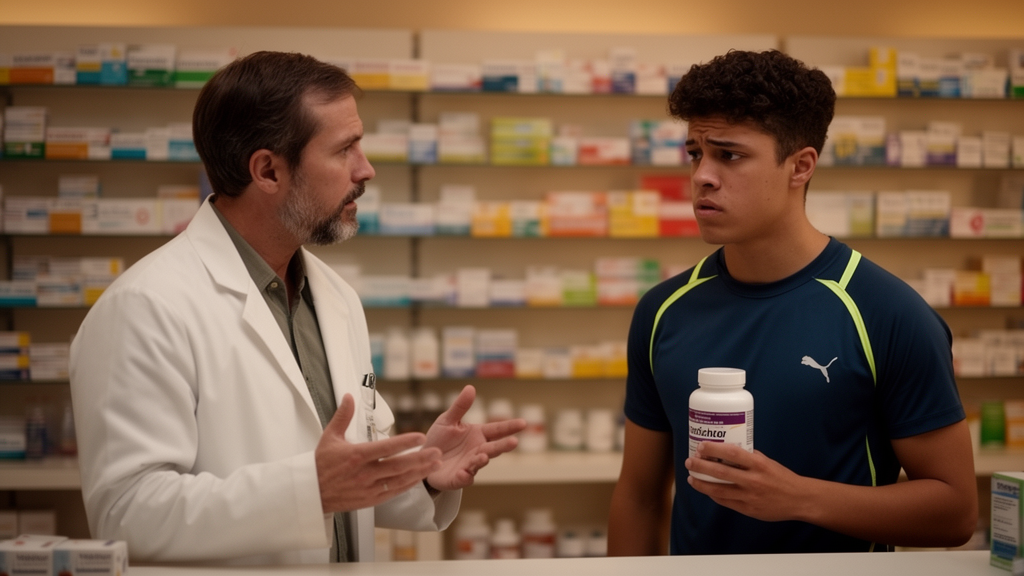
When a professional athlete telephones a community pharmacy to ask whether a medication is allowed in competition, the answer can determine whether that athlete inadvertently breaks anti-doping rules. A new study suggests that, in Croatia at least, the answer is often wrong. In a simulated-patient telephone study conducted in July 2024, only 10% of pharmacists provided fully accurate, comprehensive advice consistent with World Anti-Doping Agency regulations.
The research, published in Harm Reduction Journal, involved calls to 99 randomly selected community pharmacies across Croatia. A trained professional athlete made the calls, asking about the permissibility of continued inhaled salbutamol use in international competition. Valid interactions were completed with 80 of the pharmacies.
The findings point to a gap between policy and practice. Under the World Anti-Doping Code, pharmacists are formally recognised as Athlete Support Personnel, yet the study found that most pharmacists failed to elicit clinically relevant patient information, with 70% not asking such questions. Referral-based responses were common, used by 57.5% of pharmacists, predominantly directing athletes to physicians (37.0%).
Statistical analysis of the responses revealed patterns in which approaches were associated with better advice. Referral was associated with lower odds of adequate advice (OR = 0.2, p = 0.046), while asking patient-related questions showed a borderline positive association (OR = 4.9, p = 0.051). Group differences were analysed using χ²/Fisher tests, and exploratory predictors of adequate advice were examined using binary logistic regression. As an exploratory analysis of a single simulated scenario, these associations indicate tendencies rather than established causal effects.
The authors conclude that the study identifies a critical gap between anti-doping policy and its execution in pharmaceutical care. Although pharmacists are strategically positioned to safeguard athletes from unintentional doping, limited clinical engagement and inconsistent application of regulatory rules constrain their effectiveness, according to the paper. The study was conducted as a simulated-patient design in one country and one medication scenario, so the results reflect that specific context.
The paper argues that systematic integration of anti-doping responsibilities into pharmacy education, professional training, and routine practice is essential to reduce preventable doping risk and strengthen athlete support systems. The article was published open access on 17 October 2026 as a peer-reviewed, accepted research version carrying a permanent DOI, subject to further edits before the final Version of Record.
Subject of Research: Pharmacists' anti-doping counselling in community pharmacy practice
Article Title: Anti-doping counselling as an unimplemented professional responsibility: a potential paradox in community pharmacy practice
Article References: Petričević, M., & Gujinović, D. (2026). Anti-doping counselling as an unimplemented professional responsibility: a potential paradox in community pharmacy practice. Harm Reduction Journal. https://doi.org/10.1186/s12954-026-01561-4
Image Credits: AI Generated
DOI: 10.1186/s12954-026-01561-4
Keywords: anti-doping, pharmacists, community pharmacy, World Anti-Doping Code, salbutamol, simulated patient, Croatia, athlete support personnel, doping prevention, pharmacy education, Harm Reduction Journal, referral
Cite Scienmag News
Glenn Wilkins. (October 28, 2026). Most pharmacists fail to give athletes accurate anti-doping advice, study finds. Scienmag. https://scienmag.com/most-pharmacists-fail-to-give-athletes-accurate-anti-doping-advice-study-finds/
Glenn Wilkins. "Most pharmacists fail to give athletes accurate anti-doping advice, study finds." Scienmag, 28 October 2026, https://scienmag.com/most-pharmacists-fail-to-give-athletes-accurate-anti-doping-advice-study-finds/. Accessed 28 October 2026.
Glenn Wilkins. "Most pharmacists fail to give athletes accurate anti-doping advice, study finds." Scienmag. October 28, 2026. https://scienmag.com/most-pharmacists-fail-to-give-athletes-accurate-anti-doping-advice-study-finds/