


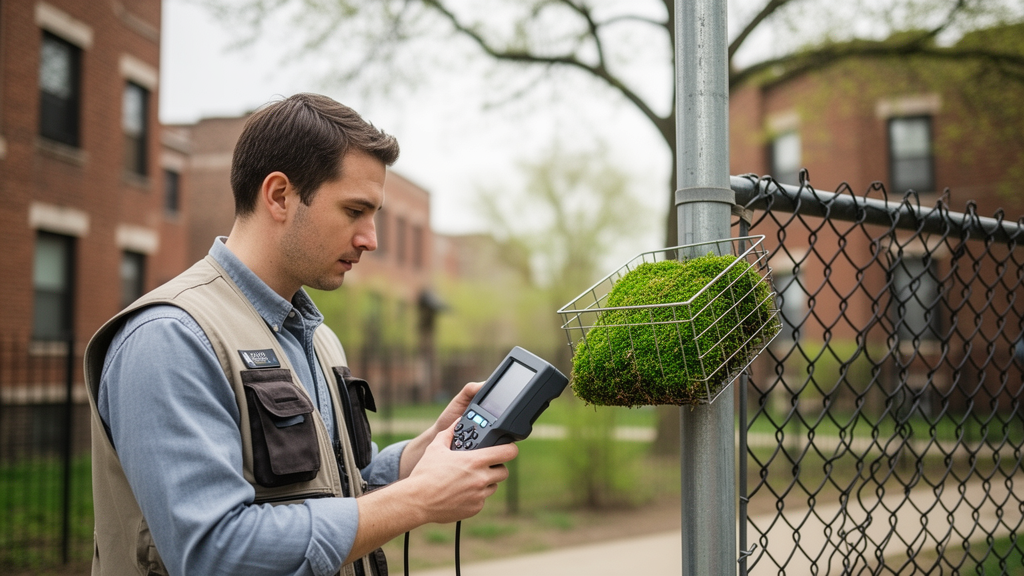
Air pollution is one of the single largest environmental causes of premature death worldwide, and its particulate component, which carries metals such as iron, copper, nickel, zinc, titanium, and manganese, is among the most concerning for human health. A new exploratory study conducted in and around Chicago, Illinois, suggests that an unlikely ally, humble Sphagnum moss, paired with a portable X-ray fluorescence instrument, could offer a rapid, inexpensive, and surprisingly accurate way to track where these metallic particles settle in the urban landscape. The research, published in the journal BioRisk, positions mosses as potential low-cost biomonitors for cities that cannot afford dense networks of conventional monitoring stations.
The health stakes are considerable. The 2018 Lancet Commission on pollution and health identified air pollution as the largest environmental cause of disease and premature death globally, accounting for roughly 16 percent of all deaths. Particulate matter is a complex mixture of nitrates, sulfates, polycyclic aromatic hydrocarbons, endotoxins, and metals, and exposure to it is linked to cardiovascular and respiratory damage. Urban environments are particular hotspots, yet the exact extent of health effects at the city level remains largely unknown, a gap that is especially alarming in a heavily urbanized country like the United States, where urban sprawl expanded by 11 percent between 2001 and 2011.
Mosses have a long pedigree in pollution science. Researchers have used them for more than five decades to estimate atmospheric heavy metal deposition, and since 1990 an ongoing moss survey has mapped spatial and temporal trends in metal pollution across Europe. Bryophytes are ideal biomonitors for several reasons: they are small, they survive in highly polluted areas, they lack true roots and instead acquire nutrients directly from wet and dry deposition, and they tolerate many substances that are toxic to other organisms. Because they accumulate particles over time, they integrate pollution levels in a way that a single air sample cannot, effectively acting as living recorders of long-term exposure.
The Chicago study, led by researchers working in collaboration with local volunteers and the Field Museum, took advantage of two well-established biomonitoring strategies: passive monitoring with naturally growing moss and active monitoring with transplanted moss. The team chose the active approach, deploying standardized one-gram samples of Sphagnum in small mesh bags hung at strategically chosen sites. Two moss sources were used, a commercially purchased Sphagnum squarrosum and Sphagnum fallax collected in Maine, and the material was carefully cleaned of invertebrates and debris, air-dried, screened, and washed in three sequential treatments of Chicago tap water before deployment.
The site selection read like a map of hypothesized urban pollution sources. Moss bags were placed near a metals recycling facility, at Indian Ridge Marsh adjacent to industrial and transportation infrastructure, at the Des Plaines railroad station, and in a semi-natural reference area in Lake County. In a particularly eye-catching experiment, bags were also taped to the exhaust of a 2006 Ford F-350 diesel truck. Control samples were kept at the Field Museum under both sealed and exposed conditions, and bags were retrieved after one, three, and four weeks of exposure during June and July 2024.
Analysis relied on a Bruker Tracer 5 portable X-ray fluorescence spectrometer. Retrieved moss was frozen with liquid nitrogen, ground into a homogeneous powder, packed into sample cups sealed with a thin Prolene membrane, and measured with identical instrument settings across all samples. The researchers reported results as ratios of exposed sample counts to unexposed control counts, an approach that normalized differences between the two moss sources. Six replicate analyses on two to three bags per location yielded twelve to eighteen measurements per element per site, providing a reasonable statistical footing for an exploratory pilot.
The results showed clear location-specific patterns. The metals recycling facility, as expected for a multi-metal emission source, showed elevated levels of all measured elements. Indian Ridge Marsh, wedged next to industrial and transportation facilities, showed significantly increased iron and nickel. The railroad station exhibited elevated iron, plausibly reflecting particulate generation from steel rail infrastructure, a finding consistent with earlier studies linking rail transport to metal particle emissions. Most strikingly, even the semi-natural Lake County site showed elevated nickel, likely attributable to its proximity of less than one kilometer to a major highway, a demonstration of how far transportation-related emissions can reach.
The vehicle-mounted bags delivered a lesson in temporal dynamics. After just three days on the diesel truck, significant increases were recorded in iron, zinc, copper, titanium, and manganese compared with controls. But after four days, metal levels dropped, coinciding with significant rainfall in the Chicago area, suggesting that rain washed accumulated particulates off the moss. This observation underscores how strongly meteorological factors shape biomonitoring outcomes and points to the need for moss bag designs that mitigate wash-off, as well as standardized exposure durations and the incorporation of weather data into future protocols.
The broader implications extend beyond Chicago. North America lacks the kind of established moss survey network that Europe has maintained for decades, and this study addresses that gap while indicating strong potential for adoption in other US cities. Perhaps most compelling is the prospect of community-based monitoring: because moss bags and portable XRF instruments are inexpensive and accessible, resource-limited communities that are disproportionately affected by pollution could document contamination themselves and advocate for remediation. The authors also suggest that historical herbarium moss specimens could be retrospectively analyzed with pXRF, opening a window onto past pollution profiles and the effectiveness of remediation efforts.
The study is candid about its limitations. Sample sizes and temporal coverage were limited, systematic meteorological evaluation was not conducted, and commercially sourced moss may introduce baseline contamination variability compared with locally gathered material. The washing water and even the newspaper used for drying are potential contamination sources, and pXRF provides semi-quantitative results with detection limits that may be unsuitable for low-level contamination. Still, as a proof of concept, the work makes a persuasive case: standardized Sphagnum moss bags coupled with portable X-ray fluorescence offer a practical, cost-effective, and community-accessible tool for urban air pollution biomonitoring, one that could help cities and their residents see, quite literally in green, the metallic fingerprints of the air they breathe.
Subject of Research: Moss-based biomonitoring of urban metal air pollution using portable X-ray fluorescence in Chicago
Article Title: Green guardians: Mosses as potential low-cost biomonitors of air pollution in urban Chicago
Article References: Green guardians: Mosses as potential low-cost biomonitors of air pollution in urban Chicago. (n.d.). https://doi.org/10.3897/biorisk.24.180507
Image Credits: AI Generated
DOI: 10.3897/biorisk.24.180507
Keywords: air pollution, biomonitoring, moss, Sphagnum, portable X-ray fluorescence, heavy metals, particulate matter, Chicago, urban pollution, environmental justice, pXRF, bryophytes
Cite Scienmag News
Russell Cooper. (October 16, 2026). Moss Bags and Handheld X-Ray Scanners Reveal Chicago’s Hidden Metal Air Pollution. Scienmag. https://scienmag.com/moss-bags-and-handheld-x-ray-scanners-reveal-chicagos-hidden-metal-air-pollution/
Russell Cooper. "Moss Bags and Handheld X-Ray Scanners Reveal Chicago’s Hidden Metal Air Pollution." Scienmag, 16 October 2026, https://scienmag.com/moss-bags-and-handheld-x-ray-scanners-reveal-chicagos-hidden-metal-air-pollution/. Accessed 16 October 2026.
Russell Cooper. "Moss Bags and Handheld X-Ray Scanners Reveal Chicago’s Hidden Metal Air Pollution." Scienmag. October 16, 2026. https://scienmag.com/moss-bags-and-handheld-x-ray-scanners-reveal-chicagos-hidden-metal-air-pollution/


