

Wednesday, July 29, 2026
Science
No Result
View All Result
  • Login
  • HOME
  • SCIENCE NEWS
  • CONTACT US
  • HOME
  • SCIENCE NEWS
  • CONTACT US
No Result
View All Result
Scienmag
No Result
View All Result
Home Science News Policy

Mosquitoes’ Potent Weapon Against Insecticide Discovery Reveals New Defense Mechanism

July 29, 2026
in Policy
Reading Time: 2 mins read
0
Mosquitoes’ Potent Weapon Against Insecticide Discovery Reveals New Defense Mechanism

Mosquitoes’ Potent Weapon Against Insecticide Discovery Reveals New Defense Mechanism

65
SHARES
587
VIEWS
Share on FacebookShare on Twitter
ADVERTISEMENT

Chemical insecticides have long been the backbone of mosquito control, but the strategy is under pressure. As repeated exposures select for survival traits, some mosquito populations begin to withstand common compounds, making control programs progressively less effective.

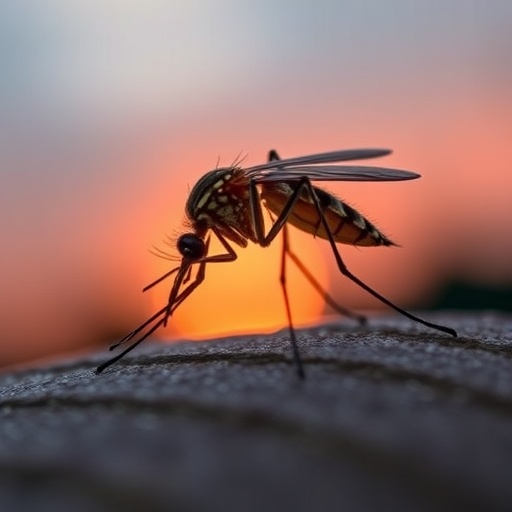
A new study in Frontiers in Tropical Diseases from researchers in India investigates the early biological roots of tolerance to α-cypermethrin, a widely used insecticide. The work focuses on Aedes aegypti, a key vector for disease transmission, and asks which internal defenses are mobilized when mosquitoes encounter the chemical.

In laboratory tests, an Indian Ae. aegypti population showed a 97.91% mortality rate after exposure to the recommended diagnostic dose of α-cypermethrin. While this still indicates substantial insecticide killing, the finding is framed as an early warning that resistance mechanisms may be emerging.

To explain how mosquitoes survive at the molecular level, the team examined detoxification enzymes—proteins that respond rapidly to toxic threats. When insecticide molecules enter the mosquito body, they trigger cellular alarm pathways that increase production of defensive proteins.

The researchers then highlighted β-esterase as the most responsive enzyme. After exposure, β-esterase activity rose more than 21-fold, and molecular docking predicted strong binding between the enzyme and α-cypermethrin. Together, these results suggest β-esterase is likely the primary mechanism for detoxifying this insecticide.

Other enzyme families also contributed. Cytochrome P450 (CYP450), known for handling diverse foreign chemicals, and glutathione S-transferases (GST) showed the next strongest reactivity patterns, indicating a broader detoxification network is involved.

A key insight is that enzyme performance depends on fit and efficiency: generalist detoxification systems may show weaker action if they are not optimized for that specific insecticide structure. The study links differences in binding and biochemical responsiveness to why some enzymes react more dramatically than others.

Importantly, the authors emphasize that this is not evidence of stable, long-lasting resistance. Instead, it represents a biochemical “warning stage,” which matters because mosquitoes can develop cross-resistance when insecticides share similar chemical targets.

The work also notes that resistance varies across regions, depending on local exposure history and control practices. While β-esterase appears central here, future monitoring in other populations will be necessary to determine how widespread the biochemical pattern may be under field conditions.

Overall, the study argues that resistance management should begin early. By using molecular and biochemical evidence to anticipate failure, public health authorities may be able to adjust strategies—such as rotation of insecticides, disruption of breeding habitats, and targeted interventions—before α-cypermethrin becomes ineffective.

Subject of Research: Animals
Article Title: Molecular docking analysis and biochemical characterization of metabolic detoxification enzymes in adults of Aedes aegypti L. (Diptera: Culicidae) exposed to α-Cypermethrin
News Publication Date: 29-Jul-2026
Web References: http://dx.doi.org/10.3389/fitd.2026.1882408
References: Frontiers in Tropical Diseases. 10.3389/fitd.2026.1882408
Image Credits: Chetan Kashyap

Keywords: α-cypermethrin; Aedes aegypti; insecticide resistance; β-esterase; detoxification enzymes; molecular docking; CYP450; GST; vector control; resistance management

Tags: cellular alarm pathways in mosquitoesdetoxification enzymes in mosquitoesemerging insecticide resistance in disease vectorsinsecticide efficacy and resistance monitoringinsecticide resistance evolutionmolecular docking in insecticide studiesmosquito control challengesmosquito defense mechanisms against insecticidesmosquito insecticide resistance mechanismsvector-borne disease transmissionα-cypermethrin tolerance in Aedes aegyptiβ-esterase role in insecticide resistance
Share26Tweet16
Previous Post

How Organisms Balance Memory, Thought, and Sensing Costs

Next Post

AI may help repair agriculture’s broken nitrogen cycle

Related Posts

Expert Panel Issues Recommendations for VA to Address Intimate Partner Violence
Policy

Expert Panel Issues Recommendations for VA to Address Intimate Partner Violence

July 29, 2026
US HIV Funding Cuts Rapidly Disrupted HIV Care Across East Africa
Policy

US HIV Funding Cuts Rapidly Disrupted HIV Care Across East Africa

July 28, 2026
Global North-South Income Gap Widens Sharply, New Analysis Finds
Policy

Global North-South Income Gap Widens Sharply, New Analysis Finds

July 28, 2026
New Treatment for Hepatitis C in Former Medical Experiment Chimpanzees
Policy

New Treatment for Hepatitis C in Former Medical Experiment Chimpanzees

July 27, 2026
Global partnership launches Lancet Public Health series advancing sex workers’ health equity
Policy

Global partnership launches Lancet Public Health series advancing sex workers’ health equity

July 27, 2026
New report examines US role in allies’ wars and conflicts
Policy

New report examines US role in allies’ wars and conflicts

July 27, 2026
Next Post
AI may help repair agriculture’s broken nitrogen cycle

AI may help repair agriculture’s broken nitrogen cycle

  • Mothers who receive childcare support from maternal grandparents show more

    Mothers who receive childcare support from maternal grandparents show more parental warmth, finds NTU Singapore study

    27656 shares
    Share 11059 Tweet 6912
  • University of Seville Breaks 120-Year-Old Mystery, Revises a Key Einstein Concept

    1061 shares
    Share 424 Tweet 265
  • Bee body mass, pathogens and local climate influence heat tolerance

    682 shares
    Share 273 Tweet 171
  • Researchers record first-ever images and data of a shark experiencing a boat strike

    546 shares
    Share 218 Tweet 137
  • Groundbreaking Clinical Trial Reveals Lubiprostone Enhances Kidney Function

    531 shares
    Share 212 Tweet 133
Science

Embark on a thrilling journey of discovery with Scienmag.com—your ultimate source for cutting-edge breakthroughs. Immerse yourself in a world where curiosity knows no limits and tomorrow’s possibilities become today’s reality!

RECENT NEWS

  • KAIST AI Uncovers Its Hidden Weaknesses, Making Generative Models Safer
  • Framework predicts how temperature affects toxic VOC emissions from paint sludge
  • Oral Semaglutide Trial Suggests Fewer Heavy Drinking Days in Alcohol Use
  • Tire Microplastics Could Speed Up Antibiotic Resistance Spread in Cities

Categories

  • Agriculture
  • Anthropology
  • Archaeology
  • Athmospheric
  • Biology
  • Biotechnology
  • Blog
  • Bussines
  • Cancer
  • Chemistry
  • Climate
  • Earth Science
  • Editorial Policy
  • Marine
  • Mathematics
  • Medicine
  • Pediatry
  • Policy
  • Psychology & Psychiatry
  • Science Education
  • Social Science
  • Space
  • Technology and Engineering

Subscribe to Blog via Email

Enter your email address to subscribe to this blog and receive notifications of new posts by email.

Join 5,147 other subscribers

© 2025 Scienmag - Science Magazine

Welcome Back!

Login to your account below

Forgotten Password?

Retrieve your password

Please enter your username or email address to reset your password.

Log In
No Result
View All Result
  • HOME
  • SCIENCE NEWS
  • CONTACT US

© 2025 Scienmag - Science Magazine

Discover more from Science

Subscribe now to keep reading and get access to the full archive.

Continue reading
