


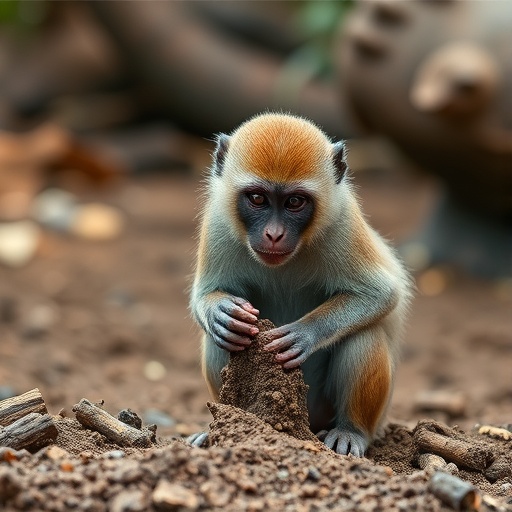
In the rocky outcrop of Gibraltar, a unique and unexpected behavioral adaptation is unfolding among the local population of Barbary macaques. These primates, well-known for their close association with human visitors in this European enclave, have recently been observed engaging in geophagy—the deliberate consumption of soil. This phenomenon, documented extensively in a recent University of Cambridge-led study, hints at a remarkable example of how animal behavior adapts under the pressures of anthropogenic environments and human influence.
The Barbary macaques of Gibraltar represent Europe’s only free-ranging monkey population, and researchers have been meticulously monitoring their interactions with humans and their environment. Over a span of 98 observation days, it became apparent that these monkeys are increasingly consuming soil, especially during the bustling peak tourism season. The pattern strongly correlates with the macaques’ access to human-derived junk foods such as chocolate, crisps, ice cream, and bread — highly processed, calorie-dense snacks that starkly contrast with their natural diets of herbs, leaves, seeds, and insects.
Geophagy, although documented in other primates such as lemurs and chimpanzees, is notably high in these macaques, with around twelve documented soil-eating events per week, a frequency rivalling those of primates in more natural habitats. The intriguing hypothesis emerging from this research suggests that the soil consumption acts as a physiological countermeasure to the digestive disturbances caused by the unnatural, human-provided foods. These foods, rich in sugars, salts, and dairy, disrupt the macaques’ gut microbiome, leading to ailments ranging from mild gastrointestinal discomfort to more severe issues like nausea and diarrhea.
Dr. Sylvain Lemoine, the study’s lead author and a biological anthropologist at Cambridge’s Department of Archaeology, emphasizes that geophagy here serves a dual role—both functional and cultural. The soil ingestion likely helps line and protect the gastrointestinal tract, absorbing harmful compounds and providing essential minerals absent in their tourist-induced diet. More fascinatingly, this behavior appears to be socially transmitted within macaque troops, revealing an emergent cultural tradition shaped by close contact with humans.
Different macaque groups display distinctive preferences for particular types of soil, a testament to culturally embedded behaviors within these primate populations. The preference for “terra rossa,” a red clay soil prevalent in Gibraltar, dominates 83% of geophagy cases, except in one troop residing in the lower Rock slopes, which favors tar-contaminated soil found in asphalt potholes. This divergence indicates localized traditions likely passed on through social learning, much like tool use variations observed in chimpanzees.
The macaques’ inclination toward junk food supplied or inadvertently left by tourists has amplified over recent years, despite official efforts to regulate feeding. While local authorities provide fresh fruit, vegetables, and water at designated stations to maintain macaque health, the monkeys often circumvent these restrictions. In fact, nearly 19% of their overall diet recorded during the study comprised of human junk food. Moreover, those troops dwelling near the top of the Rock, where human activity is densest, consumed tourist food at rates two and a half times higher than groups in less accessible areas, prompting elevated soil consumption as a coping mechanism.
Seasonal variations in behavior reinforce this relationship between dietary stress and geophagy. Both dirt-eating and junk food consumption decline significantly in the winter months when tourist numbers, and consequently picnic leftovers and snacks, decrease. Conversely, the summer months witness heightened tourist macaque interaction, escalating the frequency of junk food intake and soil consumption in tandem.
Notably, the study underscores that geophagy in Gibraltar’s macaques is not linked to physiological states such as pregnancy or lactation, a pattern often observed in other primates, including humans, where soil-eating supplements specific nutritional needs. Instead, it is predominantly a protective behavioral adaptation against the digestive challenges imposed by the human-influenced diet.
Historical context adds depth to understanding this unique primate-human nexus. Barbary macaques are believed to have been introduced to Gibraltar during medieval Moorish rule, their presence intertwined with centuries of human history on the Rock. In World War II, concerns over maintaining morale led Winston Churchill to replenish dwindling macaque populations, further embedding these primates as symbols of human heritage and identity intertwined with the natural world.
This natural experiment—wherein Gibraltar’s primates confront a landscape transformed both ecologically and socially by humans—illuminates the dynamic ways animal cultures evolve. Geophagy here exemplifies not merely an isolated survival tactic but also a culturally transmitted tradition, forged and perpetuated by proximity and interaction with people, marking a significant milestone in documenting how anthropogenic landscapes impact primate behavior.
The study’s implications extend beyond academic interest, suggesting broader consequences for wildlife conservation and management in human-dominated habitats. Understanding how primates and, by extension, wildlife adapt to human-induced dietary shifts can inform strategies aimed at reducing negative health impacts and preserving natural behavioral repertoires against the backdrop of expanding urbanization and tourism.
Future research may focus on analyzing the precise mineralogical and microbiological properties of consumed soils, and their specific therapeutic effects on the macaques’ gut flora and overall health. Experimental approaches, including offering controlled soil samples, could unravel the cognitive and social mechanisms underpinning this cultural behavior, granting insights into primate learning, adaptation, and resilience.
In conclusion, the geophagy documented in Gibraltar’s Barbary macaques stands as a compelling paradigm of primate cultural evolution influenced directly by human activity. This intricate interplay of environment, diet, health, and social learning paints a vivid picture of adaptation in an anthropocentric era, urging continued observation and multidisciplinary inquiry to decode the complex narratives emerging at the intersection of wildlife and human society.
News Publication Date: 22-Apr-2026
Web References:
10.1038/s41598-026-44607-0
Cite Scienmag News
Gavin Prescott. (April 22, 2026). Monkeys Use Soil as Natural Remedy to Digest Tourists’ Junk Food, Study Finds. Scienmag. https://scienmag.com/monkeys-use-soil-as-natural-remedy-to-digest-tourists-junk-food-study-finds/
Gavin Prescott. "Monkeys Use Soil as Natural Remedy to Digest Tourists’ Junk Food, Study Finds." Scienmag, 22 April 2026, https://scienmag.com/monkeys-use-soil-as-natural-remedy-to-digest-tourists-junk-food-study-finds/. Accessed 3 September 2026.
Gavin Prescott. "Monkeys Use Soil as Natural Remedy to Digest Tourists’ Junk Food, Study Finds." Scienmag. April 22, 2026. https://scienmag.com/monkeys-use-soil-as-natural-remedy-to-digest-tourists-junk-food-study-finds/


