


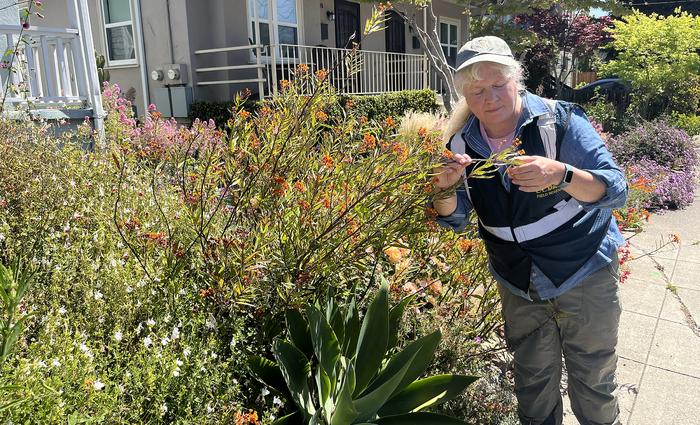
Monarch butterflies have long captivated scientists and nature enthusiasts alike with their awe-inspiring annual migrations, traveling thousands of miles from inland regions to the California coast each winter. Yet, in recent years, a striking shift has emerged within some western populations of these iconic insects. Instead of undertaking their perilous journey, many monarchs have begun forgoing migration altogether, settling into urban gardens and suburban environments around California’s San Francisco Bay Area. This phenomenon, fueled largely by the availability of non-native milkweed species in these human-dominated landscapes, challenges traditional assumptions about monarch butterfly ecology and conservation. Importantly, recent research conducted by ecologists at the University of California, Davis sheds new light on the origins, interactions, and potential ecological consequences of these sedentary monarch populations.
The study, published in the journal Ecosphere, employs an observational methodology that rigorously tracks monarch butterfly presence, breeding activity, and parasite loads across multiple seasons within urban neighborhoods of the East Bay. Researchers conducted systematic monthly surveys along fifteen designated three-mile routes, meticulously cataloging both native and non-native milkweed species and monitoring monarch life stages on these plants. Adult butterflies were captured temporarily for parasite screening, providing critical data that links butterfly health with their ecological contexts. By integrating these detailed field observations, the research team offers crucial insights into whether non-migratory monarchs interbreed or otherwise interact substantially with the traditional migratory population.
Historically, western monarch populations undertook annual migrations from interior breeding grounds that spanned various states, including California, Arizona, Nevada, Oregon, Washington, Idaho, and Utah, with coastal California serving as their sanctuary for the winter. Over the last decade, however, the migratory population has plummeted dramatically, raising alarms within conservation circles about the species’ long-term viability. This decline coincides temporally with the rising incidence of year-round, resident monarch populations localized in urban settings—most notably in the Bay Area—where monarchs exploit the winter-persistent, non-native evergreen milkweeds introduced in ornamental horticulture. These milkweeds, such as tropical milkweed (Asclepias curassavica), provide crucial larval host plants and nectar sources even when native milkweeds have long senesced.
Contrary to some initial concerns, the UC Davis team found that these urban, resident monarch populations do not appear synonymous or integrally connected to the migratory monarch circuit. Genetic and observational data suggest that non-migratory monarchs effectively constitute a distinct demographic unit, somewhat isolated from the migratory cohort. This dissociation implies that resident monarchs neither serve as a source population to replenish migratory numbers nor act as a detrimental “trap” exacerbating population declines through parasite transmission or other ecological liabilities. Infection rates with Ophryocystis elektroscirrha (OE), a common protozoan parasite linked to milkweed availability and monarch health, were closely monitored and found to follow seasonal trends reflective of resident population dynamics independent of migratory input.
An ongoing debate in conservation biology hinges on the role of non-native milkweeds in monarch health, given the potential for these plants to disrupt migratory triggers and foster year-round breeding that could increase parasite loads. In response, some jurisdictions have enacted policies banning the planting of tropical milkweed with the intent of protecting migratory monarchs. The new findings suggest, however, that blanket removal of non-native milkweeds from urban landscapes may be misplaced or premature. Instead, the study advocates for a nuanced approach that balances supporting monarch habitat with understanding metapopulation structure and disease ecology.
Urban ecosystems, once considered marginal or even hostile habitats for wildlife, are increasingly recognized as critical contributors to regional biodiversity and conservation. The vibrant presence of resident monarchs in the Bay Area demonstrates how urban gardens can sustain ecologically significant populations, providing continuous resources that facilitate breeding and survival independent of larger migratory cycles. Beyond monarchs themselves, the cultivation of native or non-native milkweeds fosters broader pollinator communities, enhancing urban ecological resilience and connecting people with nature in their daily lives.
One of the compelling implications of this research is how it reframes the role of urban residents and gardeners as active participants in conservation. By planting milkweeds, cultivating nectar sources, and engaging in butterfly stewardship, city dwellers contribute tangibly to sustaining resident monarch populations. This proximity fosters heightened public awareness, educational opportunities, and a grassroots constituency dedicated to pollinator conservation. As postdoctoral researcher Emily Erickson notes, seeing monarch butterflies in everyday settings can galvanize community support for broader environmental initiatives—a vital component in an era of accelerating biodiversity loss.
The study’s observations revealed striking seasonal fluctuations in monarch abundance, with adults peaking during summer months and declining in winter, correspondingly reflecting availability of milkweed plants. Both native and non-native milkweeds supported monarch reproduction, evident from the consistent presence of eggs and caterpillars throughout the seasons. Parasite burden assessments aligned with these population dynamics, showing decreased infection rates during winter and increases in summer and fall. Importantly, these infection patterns did not indicate spillover effects from migrating populations, reinforcing the notion of relative isolation between urban resident and migratory monarchs.
Funding for this innovative research was provided by Google, which has been actively investing in monarch butterfly habitat restoration and outreach since 2021, capitalizing on corporate environmental responsibility to bolster conservation impact. Elizabeth Crone, the study’s senior author and a professor of Evolution and Ecology, expressed enthusiasm for this partnership, underscoring the rare and invaluable opportunity to leverage private-sector resources toward butterfly conservation—an alliance not previously witnessed in her nearly three decades of academic experience.
The findings by Crone and colleagues also underscore the need for adaptive conservation strategies that fully acknowledge the complexity of monarch butterfly population structures and urban-rural interactions. While the resident monarchs of the Bay Area do not currently threaten migrating populations, future environmental changes or shifts in disease dynamics could alter this balance. Consequently, monitoring must continue, paired with research into migratory physiology, landscape connectivity, and climate-mediated variability to safeguard the species throughout its North American range.
In conclusion, the emergence of non-migratory monarch populations in urban gardens represents a fascinating, multifaceted phenomenon at the intersection of ecology, conservation biology, and human-altered environments. Far from being a detrimental anomaly, these resident populations demonstrate the potential for urbanization to create refuges for wildlife despite broader environmental challenges. By fostering informed, evidence-based management practices and nurturing community stewardship, scientists and citizens alike can work towards enhancing monarch conservation in both traditional migratory habitats and the novel urban ecosystems where these butterflies now thrive year-round.
News Publication Date: 10-May-2025
Web References:
- https://doi.org/10.1002/ecs2.70259
- https://biology.ucdavis.edu/people/elizabeth-crone
- https://www.secondnatureeco.com/team
- https://blog.google/outreach-initiatives/sustainability/monarch-butterflies-california/
References:
Crone, E.E., Erickson, E.R., Schultz, C.B. (2025). Neither source nor trap: Urban gardens as habitat for nonmigratory monarch butterflies in Northern California. Ecosphere. DOI: 10.1002/ecs2.70259
Cite Scienmag News
Margaret Porter. (May 29, 2025). Monarch Butterflies in Cities Remain Stationary. Scienmag. https://scienmag.com/monarch-butterflies-in-cities-remain-stationary/
Margaret Porter. "Monarch Butterflies in Cities Remain Stationary." Scienmag, 29 May 2025, https://scienmag.com/monarch-butterflies-in-cities-remain-stationary/. Accessed 5 September 2026.
Margaret Porter. "Monarch Butterflies in Cities Remain Stationary." Scienmag. May 29, 2025. https://scienmag.com/monarch-butterflies-in-cities-remain-stationary/


