


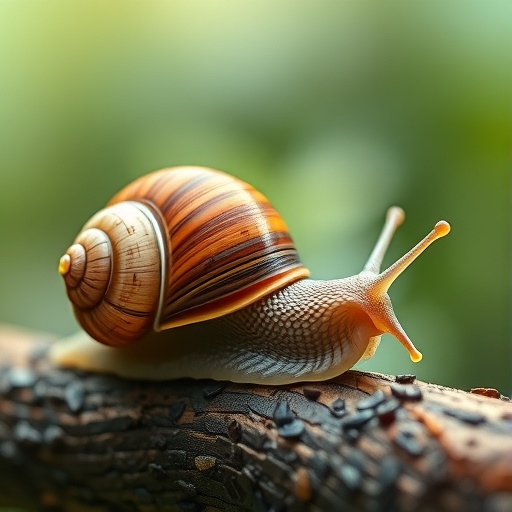
In the world of scientific nomenclature, names often appear as neutral, objective terms—labels constructed to categorize and communicate about the diversity of life. Yet, in the detailed investigation conducted by evolutionary paleontologist Dr. Taro Yoshimura of the University of Tokyo, these names reveal themselves as rich repositories of cultural history, educational status, and historical biases. By analyzing the entire collection of 773 molluscan family names, which encompass a broad array of creatures such as snails, clams, and octopuses, Yoshimura has uncovered a fascinating linguistic dominance: the overwhelming use of Ancient Greek in molluscan taxonomy.
Yoshimura’s research hinges on the observation that naming conventions are not purely scientific but carry embedded cultural signals. His work uncovers that nearly 72% of molluscan family names are derived from Ancient Greek—a remarkable linguistic hegemony that reflects historical preferences and intellectual fashions of the 18th and 19th centuries. This is more than a coincidence; it speaks to a time when European scientists used Greek not only for its linguistic flexibility but also as a marker of erudition and authority in scientific circles.
The origins of this linguistic dominance are entwined with the idealized perception of Ancient Greek as a learned and classical language, one capable of precise and elegant compounding. However, Yoshimura’s findings suggest that the use of Greek was driven as much by prestige and cultural capital as by scientific necessity. This is evidenced by the addition of superfluous letters, such as the extra ‘h’ in names like Tomichia, which served primarily to “Greekify” the name, signaling scholarly sophistication rather than providing etymological clarity.
Delving deeper, Yoshimura’s pathway into this research was seeded in early personal experience. As an avid shell collector since childhood, his curiosity about naming conventions was kindled at seventeen when he first coined a scientific name for a newly discovered species. This formative encounter sparked a career-long investigation into the intersection between language, culture, and taxonomy. Through meticulous literature review and linguistic analysis, he sought to determine whether the stylistic elements of certain molluscan names were isolated curiosities or indicative of broader historical and educational trends influencing taxonomic choices.
Historically, the rise of Ancient Greek as the dominant language for molluscan family names culminated in what Yoshimura terms a “linguistic climax” in the late 19th century. This period saw a surge in Greek-derived names, reflecting a Eurocentric view of science and its cultural language. Importantly, this surge was not merely a shift in linguistic preference but a subtle manifestation of systemic biases within scientific practice—where the authority and prestige of Western classical education shaped which languages were deemed suitable for the scientific naming of biodiversity.
Yoshimura’s work situates these patterns within a larger framework of Western influence across scientific disciplines. Similar biases have been documented in botany, entomology, astronomy, and chemistry, where nomenclatural conventions often reflect Western cultural dominance, gender imbalances, and geographic disparities. The use of Greco-Roman mythology in English planet names exemplifies this trend beyond biology, highlighting how historical Eurocentrism continues to shape the global language of science.
One crucial aspect Yoshimura emphasizes is the role of the International Code of Zoological Nomenclature (ICZN), the governing framework for naming animal species. The ICZN provides formal rules intended to standardize taxonomy globally while enabling flexibility, including the accommodation of non-Western languages. Contemporary shifts toward inclusivity have seen gradual increases in names derived from modern and Indigenous tongues, reflecting more diverse cultural inputs into scientific nomenclature.
Yet, Yoshimura warns that this evolution must be carefully balanced. Scientific names are expected to function as universal keys—allowing researchers from different linguistic and cultural backgrounds to navigate biological diversity with clarity and precision. Ideally, emerging conventions should blend local cultural context with established scientific frameworks to maintain both inclusivity and universality.
Beyond linguistic preferences, Yoshimura’s analysis suggests that choices in nomenclature encode what he describes as “epistemic values”—deeply ingrained ways of knowing and perceiving the natural world through the act of naming. The historical preference for Ancient Greek favored morphological description, emphasizing physical form and structure. While morphology is critical in taxonomy, this focus can lead to a descriptive bias that sidelines other important biological attributes such as ecological roles and behavioral patterns, thereby subtly shaping research priorities and scientific viewpoints.
Thus, naming is not merely a passive labeling exercise but a conceptual framework that directs the course of scientific inquiry. The predominance of Greek roots typifies a framework where taxonomy privileges descriptive uniformity over ecological complexity or behavioral diversity. This insight challenges taxonomists to reexamine their conventions and consider how language choices affect scientific focus and inclusivity.
As the scientific community expands in cultural diversity, Yoshimura’s study arrives at a pivotal moment. It underlines the necessity for adaptive and culturally aware taxonomic practices that reflect the global nature of contemporary science while questioning the legacies embedded in seemingly objective nomenclature. The research pushes for an integrative approach to naming—one that respects tradition but remains open to innovation and intercultural exchange.
In conclusion, Dr. Taro Yoshimura’s study on taxonomic graecism in molluscan nomenclature reveals the complex interplay between language, culture, and science embedded in the act of naming life. His research invites scientists and historians alike to reconsider how linguistic heritage influences not only classification but also the epistemology of biology. This groundbreaking perspective opens new dialogues about equity, representation, and the future of scientific language, stimulating a broader reassessment of how we catalog and comprehend the living world.
- University Museum, The University of Tokyo: https://www.um.u-tokyo.ac.jp/en/home-en
- Graduate School of Science, The University of Tokyo: https://www.s.u-tokyo.ac.jp/en/
- Dryad Digital Repository: https://doi.org/10.5061/dryad.98sf7m0wg
- MolluscaBase: https://www.molluscabase.org/
References:
Yoshimura, T. (2026). Taxonomic Graecism: the historical hegemony of Ancient Greek and cultural bias in molluscan family nomenclature. Zoological Journal of the Linnean Society. https://doi.org/10.1093/zoolinnean/zlag053
Image Credits:
©2026 Taro Yoshimura CC-BY-ND
Cite Scienmag News
Drew Townsend. (April 20, 2026). Mollusk Naming Progresses at a Snail’s Pace. Scienmag. https://scienmag.com/mollusk-naming-progresses-at-a-snails-pace/
Drew Townsend. "Mollusk Naming Progresses at a Snail’s Pace." Scienmag, 20 April 2026, https://scienmag.com/mollusk-naming-progresses-at-a-snails-pace/. Accessed 4 September 2026.
Drew Townsend. "Mollusk Naming Progresses at a Snail’s Pace." Scienmag. April 20, 2026. https://scienmag.com/mollusk-naming-progresses-at-a-snails-pace/


