


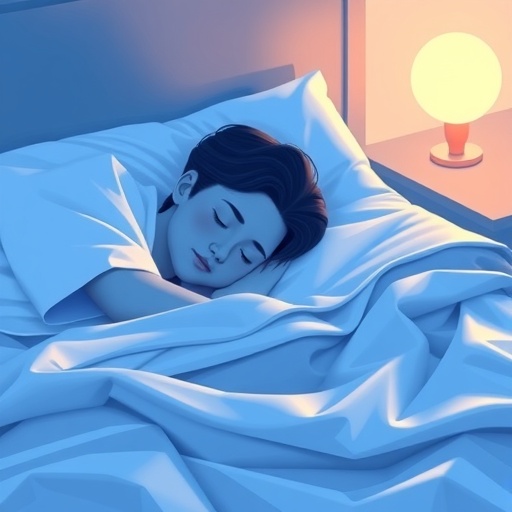
In today’s fast-paced world, we often overlook the silent struggles faced by healthcare professionals, particularly nurses. With their critical role in patient care, the consequences of sleep disturbances can be far-reaching—not only affecting their personal well-being but also impacting the quality of care provided to patients. A groundbreaking study conducted by Du et al. has illuminated this pressing issue, delivering insights into the complex interplay of factors contributing to sleep disturbances among Chinese nurses. This research takes a leap forward by utilizing explainable machine learning methods to construct an effective prediction model.
Nurses are often the backbone of healthcare systems, working long hours and facing high-stress environments. This demanding schedule frequently leads to a lack of adequate sleep, which can result in both physical and mental health problems. Approximately 36% to 68% of nurses report experiencing significant sleep disturbances, highlighting the urgent need for comprehensive strategies to address these issues. The study led by Du and colleagues seeks not only to identify the prevalence of these disturbances but also to pinpoint the specific predictive factors contributing to them.
Employing state-of-the-art explainable machine learning methods, the researchers were able to analyze extensive datasets collected from a broad sample of employed nurses across various healthcare settings in China. Using these methodologies allows for the uncovering of complex patterns in data that traditional statistical approaches might overlook. This innovative tool also provides an interpretable framework that can readily communicate findings to stakeholders, empowering healthcare administrators to develop tailored interventions.
The machine learning model created by Du et al. utilized various input variables to predict sleep disturbances effectively. Factors such as age, work schedules, physical health status, and mental health indicators were among the key components of their analysis. By integrating diverse data points, the model not only predicted sleep disturbances with high accuracy but also identified the underlying factors that contributed to these issues. Such insights are invaluable for designing initiatives aimed at improving nurses’ work-life balance and overall job satisfaction.
Understanding the profound effects of sleep disturbances on nursing performance is another significant aspect of this research. The implications extend far beyond an individual’s personal health; poor sleep quality is linked with reduced attentiveness, increased rates of medical errors, and suboptimal patient care. By tackling the root causes driving these sleep disturbances, we have the potential to enhance not only the well-being of nurses but also the safety and satisfaction of patients.
Collaboration within the healthcare sector is essential for implementing the findings of this study. By advocating for work environment improvements, healthcare organizations can play a crucial role in reducing stressors that lead to sleep disturbances. Strategies such as introducing flexible work schedules and promoting mental health resources can be derived from the study’s findings, ultimately fostering a healthier workplace culture within healthcare.
Moreover, digital health solutions hold promise in mitigating the issues of sleep disturbances among nurses. Wearable technologies that monitor sleep patterns and stress levels can provide real-time feedback, empowering nurses to take proactive measures in managing their health. These innovative tools could complement the predictive model, offering personalized suggestions that could lead to better sleep outcomes based on individual data points.
The findings of this study also invoke larger implications for nursing education and training programs. By integrating sleep health education into nursing curricula, future nurses can be better prepared to understand the importance of sleep and its ramifications on their well-being and professional conduct. Providing nurses with the knowledge to prioritize their sleep health can lead to sustained improvements in the healthcare landscape.
As the global healthcare system continues to grapple with challenges such as workforce shortages and increasing demands on nurses, the urgency to address sleep disturbances has never been clearer. The research by Du et al. serves as a call to action, urging healthcare administrators to prioritize workforce mental health by creating supportive policies that actively alleviate stressors affecting their employees’ well-being.
Moreover, achieving work-life balance can also play a transformative role in tackling the issue of sleep disturbances. Organizations that prioritize policies promoting a flexible work environment not only improve job satisfaction but also foster an atmosphere that values the mental health of their staff. This holistic approach can create a ripple effect, enhancing overall healthcare delivery by reducing burnout and encouraging retention among nursing professionals.
While much work remains to be done, the pioneering research presented by Du and colleagues represents a significant step forward in understanding the increasingly complicated relationship between nursing practices and sleep health. The deployment of explainable machine learning methods to analyze such crucial data highlights the potential of harnessing technology for better health outcomes. Future research will undoubtedly benefit from expanding upon these findings, delving deeper into the complex medical, psychological, and organizational factors that influence sleep health among nurses.
In conclusion, the critical study conducted by Du et al. not only shines a light on the issue of sleep disturbances among nurses but also paves the way for innovative solutions that could transform the healthcare sector. As we step into a new era of health management, it is essential to carry forward the findings of this research and actively foster an environment where nurses’ well-being is prioritized, ultimately leading to enhanced patient care and safety.
Du, B., Li, L., Zhang, K. et al. Construction of a prediction model for sleep disturbances in Chinese nurses and identification of predictive factors: based on explainable machine learning methods.
BMC Nurs 24, 1241 (2025). https://doi.org/10.1186/s12912-025-03803-5
Cite Scienmag News
Ophelia Keating. (October 7, 2025). Modeling Sleep Disturbances in Chinese Nurses Using AI. Scienmag. https://scienmag.com/modeling-sleep-disturbances-in-chinese-nurses-using-ai/
Ophelia Keating. "Modeling Sleep Disturbances in Chinese Nurses Using AI." Scienmag, 7 October 2025, https://scienmag.com/modeling-sleep-disturbances-in-chinese-nurses-using-ai/. Accessed 3 September 2026.
Ophelia Keating. "Modeling Sleep Disturbances in Chinese Nurses Using AI." Scienmag. October 7, 2025. https://scienmag.com/modeling-sleep-disturbances-in-chinese-nurses-using-ai/


