

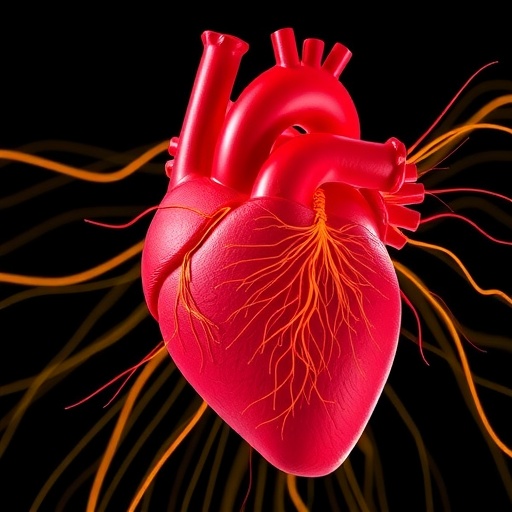
In a groundbreaking advancement poised to reshape cardiovascular medicine, researchers at the University of Missouri have engineered the first-ever humanized model to investigate aortic valve calcification. This innovative platform addresses a persistent challenge in cardiology: the progressive stiffening of heart valves due to calcium deposits, a pathological process that severely compromises cardiac function and often culminates in heart failure. By replicating this condition within a highly controllable, living system, this new model offers unprecedented clarity into the mechanisms driving valve calcification and paves the way for transformative therapeutic discoveries.
Aortic valve calcification is a degenerative condition primarily affecting middle-aged and elderly populations, wherein calcium salts progressively accumulate on the aortic valve leaflets. This accumulation causes the valve to lose its elasticity, diminishing its ability to open and close properly with each heartbeat. The impaired capacity to maintain unidirectional blood flow increases cardiac workload and can result in life-threatening complications. Presently, treatment options for this condition remain limited to invasive surgical interventions, which many at-risk patients are unable or unwilling to undergo due to age or comorbidities.
The team, led by Shiyou Chen and Dunpeng Cai from the University of Missouri School of Medicine’s Department of Surgery, sought to overcome the translational barriers that have long impeded therapeutic progress in this sphere. Their devised model integrates human aortic valve tissue into a living human artery segment, which is then surgically attached to the aorta of a mouse. Importantly, this construct includes immune cells derived from the same human donor, thereby preserving the critical elements of human immunological response within the experimental system. This sophisticated microsurgical approach, combined with immunological fidelity, marks a quantum leap in experimental cardiology.
This innovative humanized model allows researchers to monitor and characterize the dynamic progression of calcific lesions within the implanted valve tissue over time. Employing advanced imaging modalities alongside histopathological and molecular analyses, the team can dissect cellular cascades and signaling pathways underlying the pathological mineralization process. This level of resolution provides an unprecedented window into how inflammatory and immune components interact with valvular interstitial cells to drive calcium deposition and subsequent fibrosis.
A notable aspect of this work is the interdisciplinary synergy it exemplifies. Expertise from microsurgery, immunology, cardiology, and veterinary sciences converged to surmount the technical challenges inherent in such a complex experimental design. Dr. Cai’s microsurgical expertise enabled the delicate implantation and vascularization of human tissues into a murine host, while colleagues in the Division of Cardiothoracic Surgery provided essential human valve samples. This collaborative environment underscores the potential of integrated biomedical research ecosystems.
By faithfully recapitulating human valve calcification in vivo, this model sets the stage for rigorous preclinical testing of potential pharmacotherapies. Currently, no medications exist that can halt or reverse aortic valve calcification, largely due to inadequate translational models. This platform can facilitate rapid screening of candidate molecules, enabling pharmaceutical and academic researchers to identify promising compounds modulating mineralization pathways or the immune milieu influencing disease progression.
Funding from the National Institutes of Health underscores the critical importance and recognized potential impact of this research. In light of cardiovascular disease remaining the leading cause of mortality globally, innovations targeting valve pathology carry significant promise to reduce the burden of heart failure and improve lifespan and quality of life for millions. The model’s human relevance ensures findings are directly applicable to clinical scenarios compared to traditional animal or in vitro systems.
Challenges remain in fully elucidating the complex pathophysiology of aortic valve calcification, including deciphering the interplay between mechanical stresses, cellular senescence, genetic susceptibility, and immune activation. However, the tools now available courtesy of this humanized system stand as an essential foundation for comprehensive investigation into these multifaceted processes. Researchers anticipate accelerating discovery timelines markedly compared to previous models.
Looking ahead, the University of Missouri team envisions not only pharmacological screening but also testing potential gene therapies, biomaterial interventions, and personalized medicine approaches tailored to individual immune and genetic profiles. Their model’s capacity to maintain human-specific immunobiology is particularly crucial for assessing novel treatments targeting immune-mediated components of calcification.
In summation, this pioneering humanized aortic valve calcification model represents a vital breakthrough at the nexus of regenerative medicine, cardiology, and immunology. It exemplifies how innovative engineering, surgical precision, and interdisciplinary collaboration can converge to tackle intractable medical challenges. As this research unfolds, it holds the transformative potential to catalyze the development of the first non-surgical medical therapies to effectively treat aortic valve stenosis and improve patient outcomes worldwide.
Subject of Research: People
Article Title: Novel Humanized Aortic Valve Calcification Model
News Publication Date: 24-Apr-2025
Web References: 10.1161/CIRCRESAHA.124.325976
Image Credits: University of Missouri
Keywords: Clinical medicine, Biomedical engineering, Diseases and disorders, Epidemiology, Health care, Human health, Medical specialties, Pharmaceuticals, Pharmacology, Medical cybernetics, Genetics, Immunology, Microbiology, Laboratory procedures, Imaging, Modeling, Observational studies, Population studies, Applied research, Bioinformatics, Research programs, Scientific method, Research ethics, Education, Science communication, Scientific community


