


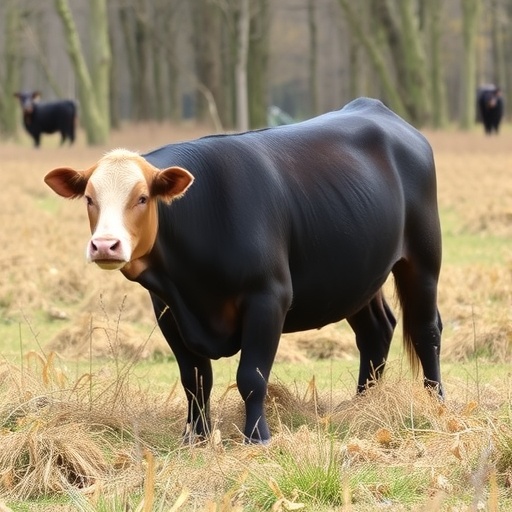
In the often turbulent and multifaceted world of agriculture, farmers juggle numerous responsibilities to sustain their livelihoods and ensure the health of their livestock. Among these crucial, albeit less glamorous tasks, is the safe and effective disposal of dead animals. Unattended carcasses present a significant biosecurity hazard, acting as vectors for infectious diseases that can decimate entire herds or flocks within a farm. Addressing this persistent challenge, researchers from the University of Missouri have embarked on a mission to educate and equip farmers around the state with advanced knowledge and practical techniques in mortality composting — a method demonstrating significant promise in mitigating disease transmission risks.
The cornerstone of this initiative hinges on the principle of pathogen inactivation through thermal composting. University researchers, including extension professor Teng-Teeh Lim and graduate student Rana Das, emphasize the creation of compost piles that reach and maintain internal temperatures of at least 131 degrees Fahrenheit (approximately 55 degrees Celsius) for a minimum duration of three consecutive days. This thermal threshold is critical, as it ensures that harmful microorganisms, including viruses responsible for outbreaks such as avian influenza, are effectively neutralized. The process harnesses naturally occurring microbial activity accelerated by carefully calibrated resource inputs.
The technical composition of these compost piles is crucial to their efficacy. The research delineates optimal ratios of nitrogen to carbon, often achieved through measured admixtures of wood chips, sawdust, and aged compost material. These materials not only provide the necessary carbon substrates required for microbial metabolisms but also promote aeration, moisture retention, and heat generation—conditions conducive to rapid and safe decomposition of animal remains. This amalgamation prevents putrefaction and minimizes odor emissions, while simultaneously reducing the environmental footprint typically associated with traditional disposal methods such as burial or incineration.
Extensive field workshops led by Lim and Das have been integral in translating these scientific insights into applicable skills for farmers. Throughout Missouri, hands-on sessions have garnered significant interest, particularly regarding precise compost pile assembly, moisture management, and understanding the biochemical underpinnings governing nitrogen-carbon balance. Farmers exhibit an eagerness not only to adopt biosecure practices but to integrate these into larger farm management systems, thereby enhancing overall animal health and safeguarding economic interests. Such community-based learning models reinforce the role of agricultural extension services as vital conduits between research and real-world application.
The ramifications of this research extend beyond immediate disease control. By enabling effective mortality management, farms reduce the environmental hazards posed by pathogens seeping into soil and water systems. Moreover, the nutrient-rich byproducts of composting can be repurposed as soil amendments, promoting sustainable agriculture through recycling of organic matter. This integrative approach aligns with growing global calls for circular economies within agroecosystems, exemplifying how scientific innovation can dovetail with environmental stewardship.
Furthermore, the University of Missouri’s efforts dovetail with broader statewide strategies implemented by collaborations involving MU Extension, the Missouri Department of Agriculture, and the Missouri Department of Natural Resources. This decade-long partnership endeavors to create robust biosecurity ecosystems, combining education, regulation, and hands-on tools that farmers can trust. Among such tools is the introduction of the Danish Entry System — a protocol emphasizing hygienic safeguards such as dedicated farm attire and comprehensive hand sanitation to prevent pathogen ingress.
Adoption of the Danish Entry System within biosecurity outreach workshops represents a holistic understanding of disease prevention, recognizing that in addition to managing deceased animals, controlling human vectors on farms is paramount. This multilayered defense strategy mitigates risks before outbreaks arise, informing a paradigm shift in farm management from reactive crisis response to proactive disease prevention through everyday practices.
The scientific community has praised the researchers’ methods for combining rigorous experimental research with practical extension education, effectively bridging the gap between the laboratory and the farm. The longitudinal nature of this work, backed by peer-reviewed evidence published in Compost Science & Utilization, helps situate composting as a scientifically validated, cost-effective alternative to conventional mortality management. By engaging directly with farmers, the researchers also contribute to a body of knowledge sensitive to regional ecological and economic contexts, enhancing the likelihood of widespread, sustainable uptake.
In sum, the University of Missouri’s work underscores how targeted education in composting techniques can profoundly impact animal health, environmental quality, and farm biosecurity at a systemic level. By emphasizing precise metrics such as temperature controls, carbon-nitrogen balance, and moisture optimization, these efforts provide a replicable framework for managing livestock mortality in ways that are both scientifically sound and pragmatically feasible. As disease threats continue to evolve globally, such integrative approaches serve as critical components in agricultural resilience.
Looking toward the future, these biosecurity and composting protocols have the potential to transform how livestock operations manage risks associated with animal death, turning what was once a hazardous waste problem into an opportunity for ecological enhancement. Expansion of these outreach programs, informed by ongoing research and farmer feedback, promises to amplify Missouri’s leadership in agricultural biosecurity, potentially serving as a model for other regions grappling with similar challenges.
The synergy between academic research and practical extension underscores the vital role universities play in fostering innovative solutions to agricultural problems. By coupling sound scientific principles with accessible training, Missouri researchers are not only advancing mortality management but also reinforcing the foundational biosecurity infrastructures necessary to protect animal agriculture in the face of emerging infectious diseases.
This dynamic interplay illustrates an essential tenet of modern agrotechnology: that knowledge dissemination and community involvement are as critical as the scientific discoveries underpinning technical innovation. As these on-farm practices gain traction, the resulting biosecurity culture will help safeguard the health of animals, farmers, and consumers alike, contributing to more secure and sustainable food supply chains.
Cite Scienmag News
William Thompson. (October 21, 2025). Mizzou Researchers Develop Solutions to Prevent and Manage Livestock Losses for Farmers. Scienmag. https://scienmag.com/mizzou-researchers-develop-solutions-to-prevent-and-manage-livestock-losses-for-farmers/
William Thompson. "Mizzou Researchers Develop Solutions to Prevent and Manage Livestock Losses for Farmers." Scienmag, 21 October 2025, https://scienmag.com/mizzou-researchers-develop-solutions-to-prevent-and-manage-livestock-losses-for-farmers/. Accessed 5 September 2026.
William Thompson. "Mizzou Researchers Develop Solutions to Prevent and Manage Livestock Losses for Farmers." Scienmag. October 21, 2025. https://scienmag.com/mizzou-researchers-develop-solutions-to-prevent-and-manage-livestock-losses-for-farmers/


