


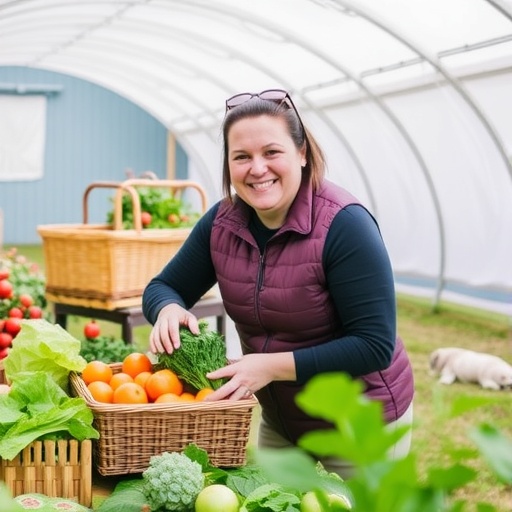
MB Mitcham, an Assistant Professor within the Department of Global and Community Health at George Mason University’s College of Public Health and Director of its esteemed Online Masters in Public Health (MPH) Program, has recently secured critical funding to advance a pioneering initiative titled “Strengthening Food as Medicine Pathways in Southwest Virginia.” This project addresses the intricate dynamics between nutrition, health care policy, and community-based interventions aiming to transform how rural populations access and utilize nutrient-dense foods for preventive and therapeutic health outcomes.
At the core of this initiative is the acknowledgment that traditional approaches to food accessibility often neglect the vital distinction between mere availability of food and the availability of nutritionally adequate, health-promoting foods. Mitcham’s leadership will be pivotal as she assumes the role of principal investigator for George Mason University’s subcontract within a larger consortium effort. This consortium seeks to create a robust, interdisciplinary network that integrates healthcare facilities, community organizations, and policy frameworks to systematically embed nutrition as a foundational component of public health strategies in Southwest Virginia.
The project will be guided by a Network Planning Group comprising stakeholders from multiple sectors, all collaborating to chart the trajectory and requisites of this ambitious effort. Their deliberations will dissect current impediments in healthcare infrastructure and operational policies, identifying opportunities for synchronization, resource allocation, and procedural innovation. This will enable more seamless service delivery and ensure that interventions are anchored in evidence-based practices that optimize patient outcomes and regional health equity.
A key element of this planning group’s mission lies in generating actionable insights through comprehensive data compilation and rigorous analysis. By crafting detailed reports and maintaining accurate documentation, George Mason partners will help trace the impact trajectories of nutrient-focused interventions and provide empirical support for policy recommendations. This iterative research process fosters a feedback loop essential for refining the program’s strategies and scaling successful models beyond the initial geographic scope.
Southwest Virginia, characterized by its rural topology and socioeconomic challenges, exemplifies regions where food insecurity and health disparities are interwoven. Experts have long highlighted issues such as food deserts—areas with limited access to affordable and nutritious food—and have discussed structural inequities under terms like food apartheid. Mitcham underscores the importance of transcending these discussions by focusing on the “food as medicine” paradigm, which not only emphasizes caloric sufficiency but prioritizes the consumption of nutrient-rich foods as a proactive mechanism to mitigate chronic disease prevalence and enhance quality of life.
The planned approach encapsulates a meticulous integration of nutrition science and public health policy. It addresses the mechanistic pathways by which diet influences metabolic health, immune function, and chronic disease progression. By embedding these insights into healthcare delivery—especially within rural clinical and community settings—the project aims to realign the health system’s treatment philosophies toward prevention and health promotion rather than reactive care.
Funding for the initiative, totaling $8,500, was awarded through a subaward from the Graduate Medical Education Consortium of Southwest Virginia, itself supported by the Health Resources and Services Administration (HRSA). This financial backing, commencing July 2025 and concluding in late June 2026, ensures the operational capacity required to marshal resources, coordinate multidisciplinary teams, and undertake the robust analytical work necessary to validate and optimize the intervention protocols.
Mitcham’s excitement about this project resonates with the broader discourse in nutritional physiology and global public health. She articulates a vision where regional healthcare infrastructures are transformed to prioritize nutrient density in food systems, tackling root causes of malnutrition-related diseases that disproportionately affect rural and underserved populations. The implications of this could extend nationally, serving as a replicable framework for integrating “food as medicine” pathways into health systems everywhere.
This endeavor is grounded in both the practical and theoretical dimensions of nutritional science—recognizing that the biochemical components of nutrients such as vitamins, minerals, phytochemicals, and macronutrients act as modulators of gene expression, inflammatory pathways, and microbiome composition. The translation of biology into actionable health system policy represents a significant challenge, one which this program aims to overcome through cross-sectoral collaboration and community engagement.
Furthermore, the program confronts systemic barriers entrenched within health care delivery—such as fragmented communication networks among providers, inconsistent policy enforcement across facilities, and limited infrastructure to support nutritional counseling and intervention. Addressing these challenges requires not only scientific rigor but also strategic organizational design, which the consortium seeks to enact through comprehensive planning and resource mapping.
In creating a concerted effort among stakeholders, the project highlights the necessity of dynamic feedback mechanisms. These will monitor program fidelity, patient adherence, and longitudinal health outcomes. The resulting data pool will not only inform immediate project goals but also contribute to the broader evidence base supporting the implementation of nutrition-focused healthcare interventions.
In sum, this initiative exemplifies a cutting-edge approach to public health challenges by reimagining the role of nutrition amid persistent social and economic inequities. It reinforces the position that food can be leveraged not merely as sustenance but as a powerful, accessible tool to promote health, prevent disease, and reduce healthcare costs—an urgent priority in rural Virginia and beyond.
News Publication Date: Not specified (Funding begins July 2025)
Web References:
http://www.gmu.edu/
Cite Scienmag News
Phoebe Ingram. (September 9, 2025). Mitcham Secures Funding to Advance Food-as-Medicine Initiatives in Southwest Virginia. Scienmag. https://scienmag.com/mitcham-secures-funding-to-advance-food-as-medicine-initiatives-in-southwest-virginia/
Phoebe Ingram. "Mitcham Secures Funding to Advance Food-as-Medicine Initiatives in Southwest Virginia." Scienmag, 9 September 2025, https://scienmag.com/mitcham-secures-funding-to-advance-food-as-medicine-initiatives-in-southwest-virginia/. Accessed 5 September 2026.
Phoebe Ingram. "Mitcham Secures Funding to Advance Food-as-Medicine Initiatives in Southwest Virginia." Scienmag. September 9, 2025. https://scienmag.com/mitcham-secures-funding-to-advance-food-as-medicine-initiatives-in-southwest-virginia/


