


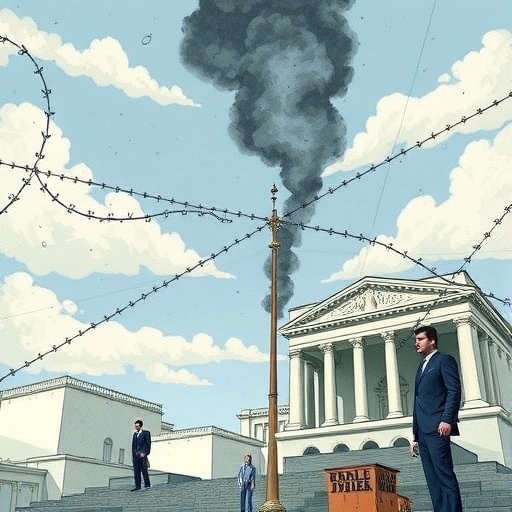
In an era marked by rapid sociopolitical changes and widespread information flux, the fabric of social trust is increasingly coming under scrutiny. Recent groundbreaking research by Estadieu and Langer, published in Communications Psychology, delves into a critical yet often overlooked facet of societal dynamics: the consequences of misplaced distrust on the resilience of social and democratic bonds. This study meticulously unpacks how erroneous suspicion and unjustified skepticism towards fellow citizens and institutions can erode the foundational glue that holds communities and democracies together.
At the core of this research lies the paradoxical nature of distrust. While healthy skepticism is essential for a functioning democracy, fostering vigilance and accountability, distrust that is misdirected or exaggerated can have a corrosive effect. Estadieu and Langer argue that misplaced distrust undermines cooperation, breeds alienation, and ultimately weakens democratic institutions. Their work highlights the delicate balance societies must maintain between necessary critique and destructive doubt.
To understand the ramifications of misplaced distrust, the authors employed a combination of large-scale survey data, experimental psychology methodologies, and advanced statistical modeling. This multifaceted approach allowed them to dissect not only the symptoms but also the underlying mechanisms through which distrust propagates and damages social cohesion. The analytical rigor of their methodology strengthens the validity of their conclusions and opens pathways for targeted interventions.
One of the pivotal findings of the study is that when distrust targets marginalized groups or critical democratic structures, it exacerbates social fragmentation. Communities begin to perceive others not as partners but as threats, fostering environments where polarization and conflict can thrive. This phenomenon manifests in decreased civic participation, lowered interpersonal trust, and heightened social anxiety, creating a vicious cycle that further entrenches division.
Moreover, Estadieu and Langer explore the psychological underpinnings of why individuals develop misplaced distrust. Their research identifies cognitive biases, misinformation, and emotional drivers as key contributors. The tendency to selectively attend to information that confirms pre-existing fears or prejudices fuels distrust, particularly when social narratives become charged with misinformation. This cognitive lens sheds light on how susceptible human cognition is to distortions in politically charged contexts.
The authors emphasize that the digital age plays a dual role in this dynamic. On one hand, digital platforms can disseminate accurate information and encourage dialogue. On the other hand, they also facilitate echo chambers where distorted or false information circulates rapidly, reinforcing misplaced distrust. The interplay between online misinformation and offline social perceptions creates a complex ecosystem of distrust that challenges democratic resilience.
Importantly, the study doesn’t stop at diagnosing the problem but offers insightful pathways toward remediation. The authors recommend broad-based educational reforms aimed at enhancing critical thinking and media literacy. By equipping citizens with the tools to discern credible information and fostering empathy across divides, societies can mitigate the spread of misplaced distrust. These interventions promise to restore trust levels and rebuild fractured social bonds over time.
At the institutional level, Estatieu and Langer advocate for increased transparency and accountability from governmental and civic bodies. Institutions perceived as opaque or unresponsive are more prone to breeding distrust, often unjustly. Instituting mechanisms that promote openness and citizen engagement can bridge gaps between the public and institutions, reinforcing democratic legitimacy and social trust.
Their research also touches upon the effects of misplaced distrust on collective action. Communities hampered by suspicion are less likely to mobilize for common causes, weakening grassroots movements essential for democratic vitality. This insight lends urgency to efforts in community-building and dialogue facilitation, aiming to revive trust and foster collective efficacy.
Broader social implications emerge when considering how misplaced distrust impacts public health, economic collaboration, and intergroup relations. The fracturing of trust hampers cooperation in critical areas such as vaccination campaigns, economic initiatives, and diversity inclusion efforts. Understanding this interconnectedness is vital for policymakers crafting holistic social strategies.
In a particularly novel contribution, the study employs a dynamic systems perspective to model how distrust flows and evolves within social networks over time. This modeling reveals tipping points where distrust can either spiral out of control or be contained and reversed. Such insights provide a valuable predictive framework for anticipating social breakdowns and preemptively applying countermeasures.
The research also distinguishes between distrust that is justified—reflecting real institutional failings or societal injustices—and that which is misplaced. Recognizing this difference is crucial to avoid dismissing legitimate grievances while addressing unfounded fears. This nuanced perspective allows democratic societies to respond adaptively to the challenges of trust management.
Estadieu and Langer’s work contributes substantially to interdisciplinary dialogues, bridging psychology, political science, and communication studies. Their findings resonate with ongoing debates about democratic backsliding, social polarization, and the role of media ecology. By framing misplaced distrust as a central threat to democratic resilience, they set the stage for future research and practical initiatives.
In conclusion, this study underscores the urgency of confronting misplaced distrust as a social malady that imperils our democratic fabric. It calls upon individuals, communities, institutions, and policymakers to collaboratively rebuild trust through transparency, education, and empathy. As societies navigate an increasingly complex information landscape, the insights offered by Estadieu and Langer illuminate a path toward sustaining the social and democratic bonds essential for collective flourishing.
Cite Scienmag News
Glenn Wilkins. (March 25, 2026). Misplaced Distrust Erodes Social and Democratic Bonds. Scienmag. https://scienmag.com/misplaced-distrust-erodes-social-and-democratic-bonds/
Glenn Wilkins. "Misplaced Distrust Erodes Social and Democratic Bonds." Scienmag, 25 March 2026, https://scienmag.com/misplaced-distrust-erodes-social-and-democratic-bonds/. Accessed 3 September 2026.
Glenn Wilkins. "Misplaced Distrust Erodes Social and Democratic Bonds." Scienmag. March 25, 2026. https://scienmag.com/misplaced-distrust-erodes-social-and-democratic-bonds/


