

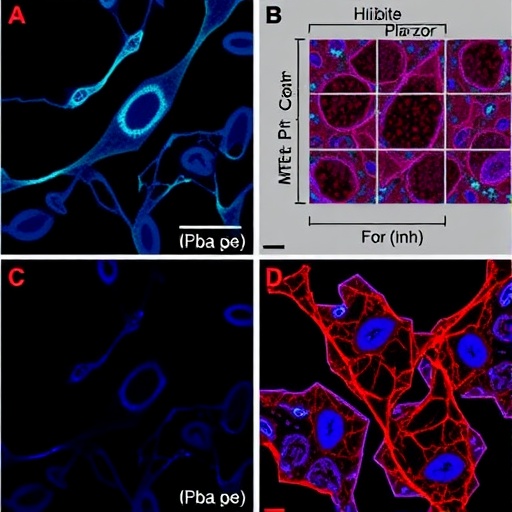
In the ever-evolving realm of cancer research, the intricate dynamics between microRNAs and gene expression regulation have emerged as pivotal focal points. A groundbreaking study conducted by Lee, Park, and Shim sheds light on the critical role of a specific microRNA, miR-193a-5p, in the context of cervical cancer. Their research unveils a novel mechanism by which Astragalin, a natural compound derived from the Astragalus plant, induces apoptosis in cervical cancer cells through the inhibition of the METTL1/COX-2 signaling axis. This revelation not only advances our understanding of cervical cancer pathogenesis but also opens new avenues for therapeutic interventions.
Cervical cancer represents a significant global health challenge, ranking as one of the most common cancers among women worldwide. Its association with persistent infection from high-risk strains of human papillomavirus (HPV) underscores the need for innovative treatments that target the underlying molecular pathways. The study investigates the potential of miR-193a-5p as a regulatory agent in this context, offering insights into how microRNAs can modulate key signaling pathways involved in cancer progression.
The research team employed a combination of cell culture experiments and molecular biology techniques to elucidate the role of miR-193a-5p in cervical cancer cell lines. Their findings reveal that Astragalin, known for its antioxidant and anti-inflammatory properties, significantly upregulates the expression of miR-193a-5p. This increase plays a vital role in the subsequent downregulation of METTL1, a methyltransferase that has been implicated in oncogenic processes. The dual nature of this compound highlights its therapeutic potential as a natural anticancer agent.
In the context of cancer biology, the METTL1/COX-2 axis represents a critical player in the inflammatory responses that promote tumorigenesis. By inhibiting METTL1, miR-193a-5p disrupts the downstream effects on COX-2, an enzyme associated with tumor progression and metastasis. The researchers demonstrated that this modulation results in increased apoptosis within cervical cancer cells, showcasing a potential mechanism through which Astragalin exerts its anticancer effects.
The study’s results are impressive in their implications for future therapeutic strategies. By harnessing the power of naturally occurring compounds and understanding their interactions with microRNAs, researchers can potentially develop novel treatments that target cervical cancer at its genetic roots. This approach aligns with the growing interest in precision medicine, which emphasizes tailored therapies based on specific molecular targets.
Moreover, the authors conducted extensive validation of their findings through various molecular techniques, including quantitative PCR and Western blotting. These methods confirmed the expression levels of miR-193a-5p and its targets, thereby solidifying the connections made throughout the study. Such rigorous methodology enhances the credibility of the results and paves the way for further investigation into the clinical relevance of miR-193a-5p in cervical cancer.
The interdisciplinary nature of the research also underscores the importance of collaborative efforts in scientific exploration. The findings contribute to a deeper understanding of the interplay between natural compounds, microRNAs, and cancer signaling pathways. This knowledge can inform drug development processes, particularly in the search for effective treatments with minimal side effects.
Despite the encouraging data, the researchers acknowledge the necessity for further studies to validate the clinical applicability of Astragalin and miR-193a-5p. The transition from laboratory findings to clinical application is fraught with challenges, and additional research will be essential to ascertain dosing, delivery methods, and potential interactions with other treatments. Nonetheless, the promise demonstrated by this study marks a significant step forward in cancer research.
In summary, the work of Lee, Park, and Shim exemplifies the potential of exploring natural compounds in the fight against cancer. Their findings regarding the miR-193a-5p-mediated inhibition of the METTL1/COX-2 axis not only elucidate a critical pathway in cervical cancer but also highlight the future directions for research aimed at translating these discoveries into clinical practice. By deepening our understanding of the molecular intricacies of cancer, studies like this pave the way for innovative strategies that may one day lead to more effective and less toxic cancer therapies.
As researchers continue to explore the role of microRNAs in cancer biology, the insights gained from such studies will undoubtedly foster the discovery of new biomarkers and therapeutic targets. The journey toward understanding cancer at a molecular level is ongoing, but with each study, we inch closer to unlocking the secrets that may one day lead to a cure.
The implications of this research extend beyond cervical cancer, suggesting broader applications for the understanding of microRNA dynamics across various malignancies. The effective targeting of such pathways could revolutionize cancer treatment, paving the way for a new era of precision oncology.
Although the study has demonstrated a significant correlation between Astragalin, miR-193a-5p, and cervical cancer, the researchers emphasize the importance of continued exploration of other microRNAs and their multifaceted roles in cancer progression. The interplay of different signaling pathways presents a complex landscape that requires further elucidation for effective therapeutic interventions.
Ultimately, it is the synergy of innovative natural compounds and a deeper understanding of gene regulation that will drive future progress in combatting cervical cancer. The research conducted by Lee, Park, and Shim underscores the value of investigating traditional medicine through a modern scientific lens, offering hope for new and effective therapies to emerge from this translational research.
In conclusion, the foundational work presented in this study not only contributes to our understanding of cervical cancer but also reinforces the necessity of continued research into the complexities of cancer biology. With new insights into the functions of microRNAs and the modulation of gene expression, the quest for effective cancer treatments remains a dynamic and hopeful field of study.
Subject of Research: The role of miR-193a-5p in the apoptosis of cervical cancer cells mediated by the inhibition of the METTL1/COX-2 axis induced by Astragalin.
Article Title: miR-193a-5p–mediated Inhibition of the METTL1/COX-2 axis is critical for Astragalin-induced apoptosis in cervical cancer.
Article References:
Lee, Y., Park, SY., Shim, BS. et al. miR-193a-5p–mediated Inhibition of the METTL1/COX-2 axis is critical for Astragalin-induced apoptosis in cervical cancer.
Sci Rep (2025). https://doi.org/10.1038/s41598-025-32320-3
Image Credits: AI Generated
DOI: 10.1038/s41598-025-32320-3
Keywords: cervical cancer, miR-193a-5p, Astragalin, METTL1, COX-2, apoptosis, microRNA, cancer research, natural compounds, therapeutic interventions.


