

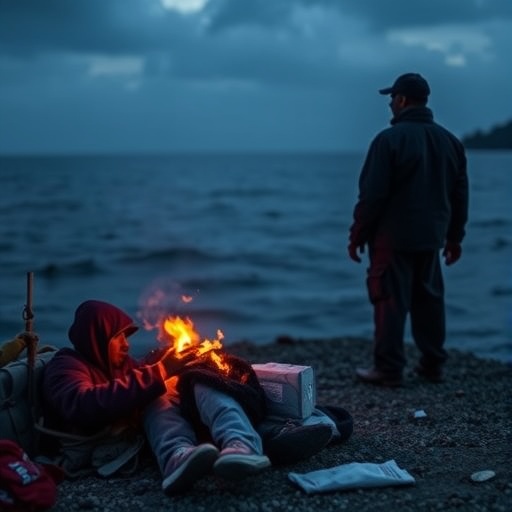
In the shadows of one of Europe’s most fortified borderlands lies a tragic and largely invisible crisis that continues to claim lives with harrowing frequency. A recent investigative study sheds light on the grim realities facing migrants who attempt to cross into Croatia, a key entry point into the European Union. The research, spearheaded by forensic expert Aleksandra Mažuranić and published in the International Journal of Legal Medicine in 2025, documents the deadly outcomes sustained by individuals desperate to reach Europe’s shores. This meticulous examination of migrant fatalities not only offers a forensic and medico-legal perspective but also starkly underscores the human cost of migration policies and border enforcement apparatus in the region.
Croatia’s rugged terrain, defined by dense forests, turbulent rivers, and fragmented borders with Bosnia and Herzegovina and Serbia, forms a formidable natural as well as political barrier. Migrants, many fleeing dire circumstances in the Middle East, Africa, and South Asia, are drawn toward this perilous crossing due to Croatia’s role as an EU member with relatively accessible routes to wealthier Western European countries. The study details how the interplay of geographical challenges and intensified border security measures creates deadly flashpoints, where migrants succumb to exposure, accidents, violence, or desperation-driven risks.
At the core of the analysis is an extensive forensic review of deaths recorded over recent years within Croatia’s border regions. The research employs autopsy reports, scene investigations, and medico-legal examinations to paint a comprehensive portrait of cause-death patterns among migrants. These data reveal a disturbing prevalence of hypothermia—migrants exposed overnight to harsh winter weather without adequate clothing or shelter—as a leading cause. Equally worrying are instances of drowning, often resulting from attempts to cross swollen rivers or other water bodies that punctuate the border landscape. This discovery challenges common perceptions that violent encounters or direct confrontations with border police are the primary causes of fatality.
The paper also highlights the complexity of distinguishing between accidental deaths and those indirectly linked to external human factors, such as neglect, inadequate rescue responses, or restrictive policies that funnel migrants into high-risk areas. Forensic evidence acquired and analyzed in this study shows injuries consistent with falls from cliffs, fractures sustained during treacherous night-time crossings, and wounds inflicted by dehydration or malnutrition. Collectively, these findings expose how the convergence of natural hazards and institutional deterrence strategies tragically compound risks faced by vulnerable people.
Importantly, Mažuranić’s research casts a critical lens on the medicolegal frameworks operating within Croatia and across Europe. The author extensively discusses the challenges local authorities encounter in conducting thorough post-mortem investigations, often hampered by limited resources, language barriers, and political sensitivities. These barriers complicate identification processes, obstruct humanitarian responses, and, crucially, hinder efforts to accurately document the scale of migrant deaths. The forensic data emerging from such studies are vital for informing international legal standards and humanitarian protections, aiming to hold accountable those responsible for policies that magnify risk rather than mitigate it.
Beyond the forensic domain, the study intermittently debates the broader geopolitical dynamics that catalyze migration flows and fatalities. Croatia’s strategic placement as a border state within the European Union situates it at the nexus of complex socio-political dynamics involving asylum policy, border control funding, pushbacks, and cooperation between Balkan and EU authorities. The research contextualizes how increased border militarization and restrictive migration measures, designed to deter arrivals, paradoxically expose migrants to greater harm. Scientists and policymakers alike are urged to reconcile safeguarding national borders with upholding human rights and dignity.
What makes this investigation particularly compelling is its reliance on robust scientific methodologies traditionally reserved for forensic casework, repurposed here for public health and human rights advocacy. Multidisciplinary approaches integrate forensic pathology with human geography, climatology, and social sciences, illustrating the multifactorial nature of migration-related mortality. The article reveals the importance of collaboration between forensic specialists and humanitarian organizations to develop more effective, humane border responses based on empirical evidence rather than reactive politics or securitization rhetoric.
Furthermore, the study’s findings echo resonant global concerns about the ethics and consequences of externalizing border controls—pushing immigration enforcement beyond traditional points of entry. Croatia’s experience exemplifies how such strategies displace hazard onto vulnerable individuals, turning natural landscapes into lethal obstacles. This resonates with similar patterns reported along the US-Mexico border, Mediterranean Sea crossings, and other precarious migration zones worldwide. By generating a detailed forensic record of deaths, Mažuranić contributes unprecedented scientific testimony that demands urgent policy reconsideration.
The human stories beneath the statistics, though inherently anonymized due to identification challenges, serve as a solemn reminder of the scale of this crisis. The study emphasizes that each data point corresponds to an individual—each lost life a tragedy of aspirations crushed by systemic failure. Recognizing these deaths as key markers of societal responsibility compels a shift towards compassionate, evidence-based migration governance that prioritizes life-saving interventions over deterrence tactics.
In tandem with national legal medicine capacities, the study advocates for enhanced international collaboration in forensic investigations related to migrant deaths. Harmonized protocols for documentation, data sharing, and identification efforts can amplify the impact of such research, facilitating accountability for neglect or human rights abuses. These measures also aim to provide families with closure and combat the invisibility that so often shrouds migrant deaths.
This research represents both a scientific landmark and a moral challenge, bridging the gap between legal medicine and humanitarian advocacy. Mažuranić’s detailed forensic insights disrupt complacency surrounding border deaths, pushing the conversation beyond political abstractions to tangible evidence regarding how and why migrants perish. It asks broader society to confront uncomfortable truths—about migration management, the human cost of protectionism, and collective responsibility.
As Europe grapples with unprecedented migration pressures fueled by conflict, environmental change, and economic disparity, the Croatian case study illuminates frontlines where policy, geography, and human vulnerability intersect with deadly consequences. This research stands as a crucial call for renewed empathy and accountability embedded within scientific rigor.
Ultimately, this integrative forensic analysis exposes the urgent need for holistic migration frameworks grounded in respect for human rights and dignity. Its revelations about the deadly toll exacted “at the gates of Europe” demand a reevaluation of how borders are policed and how migrants are treated—not merely as political problems to be managed, but as human beings with the fundamental right to life and safety.
Subject of Research: Migrant deaths at the Croatia-Europe border, forensic analysis of causes and circumstances.
Article Title: Dying at the gates of Europe – migrant deaths in Croatia.
Article References:
Mažuranić, A. Dying at the gates of Europe – migrant deaths in Croatia. Int J Legal Med (2025). https://doi.org/10.1007/s00414-025-03680-2
Image Credits: AI Generated


