

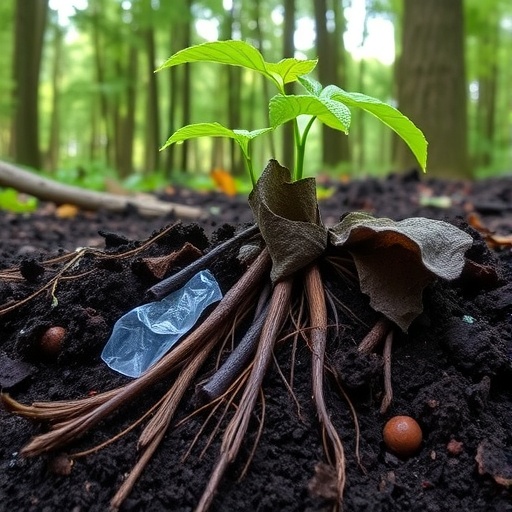
In a groundbreaking study published in Commun Earth Environ, researchers have delved into the interaction between microplastics and mycorrhizal fungi in temperate mixed forests, dramatically reshaping our understanding of soil health. The unprecedented rise in plastic pollution is raising concerns regarding its implications for soil ecology, particularly when it comes to mycorrhizal relationships—a vital component in nutrient exchange between plants and soil. The study, spearheaded by Zhou et al., reveals alarming insights that could have widespread consequences for forest ecosystems.
At the heart of the research lies the focus on polystyrene microplastics, a common form of plastic waste that finds its way into ecosystems through urban runoff and improper waste management. With a growing body of evidence linking microplastics to detrimental effects on aquatic environments, the implications for terrestrial ecosystems have yet to be fully explored. Zhou and colleagues targeted this gap by investigating the responses of rhizosphere soil properties and the traits of fine roots when subjected to an influx of polystyrene microplastics.
Mycorrhizal fungi, which form mutually beneficial associations with plant roots, play a fundamental role in enhancing plant nutrient uptake. The fungi improve the soil structure by promoting aggregation, which ultimately fosters healthier plant growth. However, the introduction of foreign substances like polystyrene microplastics can disrupt this delicate symbiosis. The team discovered that even small amounts of these microplastics could significantly alter the physical and chemical properties of the rhizosphere soil, leading to implications for both microbial communities and plant health.
Using rigorous methodologies, the researchers conducted a series of greenhouse experiments, enabling them to control various environmental variables and isolate the impact of polystyrene microplastics on soil properties. Through their careful design, they established a clear link between microplastic concentration and changes in key soil metrics such as organic matter content, soil pH, and microbial community structure. This controlled setting allowed them to observe firsthand how microplastics influenced mycorrhizal colonization rates and root traits—a critical finding that amplifies the concerns surrounding plastic pollution.
The results revealed that polystyrene microplastics significantly inhibited mycorrhizal colonization, which, in turn, impeded plant growth and nutrient uptake efficiency. Fine roots, typically adept at foraging for nutrients and water, demonstrated altered characteristics in the presence of microplastics. The researchers observed a marked decrease in root length and surface area, suggesting that plants might struggle to access the nutrients they need to thrive in contaminated soils. This inefficiency is particularly troubling given the essential role of fine roots in supporting overall plant health.
These findings also spark critical questions regarding the cascading effects that such changes may have on entire forest ecosystems. Mycorrhizal partnerships are often crucial for the establishment and growth of tree species, particularly in temperate forests that depend heavily on these relationships for nutrient acquisition. As mycorrhizal associations weaken, plants may become more susceptible to stresses such as drought and disease, ultimately leading to shifts in species composition and ecosystem dynamics.
Moreover, the introduction of polystyrene microplastics into the soil ecosystem raised concerns about the potential for these materials to interact with soil microbes differently from naturally occurring organic matter. The study highlighted that microbial communities also faced significant alterations, experiencing shifts in diversity and abundance, which could disrupt nutrient cycling processes essential to forest health. As these microbes form the backbone of soil health, any disturbance to their community could lead to long-lasting adverse effects on soil fertility.
The implications of this research extend beyond academic interest; they touch crucially on environmental policy and land management practices. Given the estimated volumes of polystyrene waste infiltrating natural landscapes, immediate attention is required to modify waste management strategies and enact more stringent regulations regarding single-use plastics. Improving public awareness and scientific understanding of the effects of microplastics on terrestrial ecosystems is essential for driving conservation efforts and legislative action.
The study by Zhou et al. emphasizes the need for an interdisciplinary approach to address plastic pollution’s environmental challenges. Scientists, ecologists, and policymakers must collaborate to establish frameworks that integrate the latest research on microplastics with practical solutions to curb their proliferation. By recognizing the link between plastic waste and soil health, stakeholders can convene to determine effective interventions and outreach programs.
In conclusion, Zhou and colleagues have illuminated the stark realities of microplastic pollution impacting soil ecosystems. By documenting the negative effects of polystyrene microplastics on mycorrhizal partnerships and soil properties, the research underscores the urgent necessity for action. Preventing further plastic intrusion into our natural habitats is paramount—our forests and the myriad life forms depending upon them are at stake. This exploration into the unseen consequences of human behavior reflects a call to reexamine our relationship with materials, reaffirming the critical need for sustainable practices and policies that prioritize environmental well-being.
Ultimately, the findings encourage readers to engage with the broader implications of plastic pollution beyond mere visual aesthetics. As scientific discourse evolves, it becomes imperative to confront the reality that our daily consumption habits directly affect ecosystems. By embracing a more mindful relationship with materials, particularly plastics, society can take tangible steps towards fostering healthier ecosystems for future generations.
Understanding the pivotal role of mycorrhizal fungi within forest ecosystems reinforces the argument for prioritizing biodiversity and resilience in land management practices. As we move forward, every action counts—whether it’s supporting conservation initiatives, participating in clean-up efforts, or advocating for change in corporate and governmental policies, individual contributions matter in the fight against plastic pollution.
As this groundbreaking research unfolds, the scientific community, policymakers, and the public must remain vigilant and proactive, ensuring that our natural landscapes are preserved for the sustenance of all life forms. The journey towards mitigating microplastic impacts begins with awareness and culminates in collective action, uniting our efforts to protect the integrity of our Earth’s diverse ecosystems.
Subject of Research: The impact of polystyrene microplastics on rhizosphere soil properties and mycorrhizal associations in temperate mixed forests.
Article Title: Mycorrhizal-specific responses of rhizosphere soil properties and fine-root traits to polystyrene microplastic addition in a temperate mixed forest.
Article References: Zhou, Y., Brunner, I., Liu, Z. et al. Mycorrhizal-specific responses of rhizosphere soil properties and fine-root traits to polystyrene microplastic addition in a temperate mixed forest. Commun Earth Environ (2026). https://doi.org/10.1038/s43247-026-03237-0
Image Credits: AI Generated
DOI: 10.1038/s43247-026-03237-0
Keywords: microplastics, soil health, mycorrhizal fungi, temperate forests, ecological impact, plastic pollution, nutrient cycling, soil properties.


