


Deep in the soils of the Qinghai-Tibetan Plateau, one of the planet’s most sensitive carbon reservoirs, a team of soil scientists has uncovered a finding that could force researchers to rethink how Earth’s largest terrestrial carbon pool is modeled. Microbial carbon use efficiency, a measure of how skillfully soil microorganisms convert the carbon they consume into new biomass rather than breathing it out as carbon dioxide, has long been treated as a reliable proxy for how much organic carbon a soil can store. The intuition seems straightforward: microbes that waste less carbon should build more of it into stable soil organic matter. But a new study published in Plant and Soil shows that this tidy relationship breaks down across the alpine grasslands of the plateau, and that the breakdown follows a troubling pattern tied to increasing aridity.
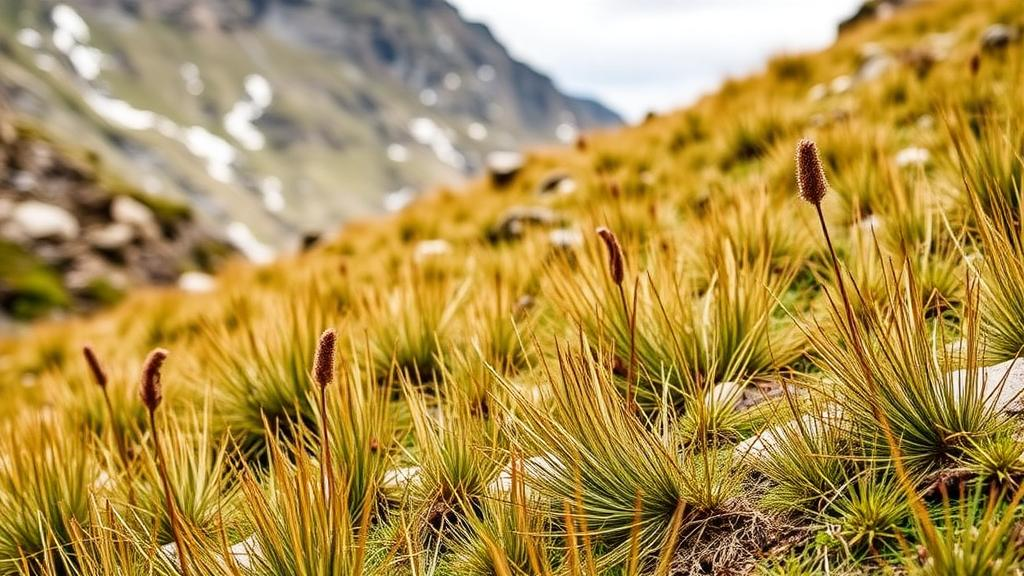
The research, led by Xiaoyu Fang and Chao Zhang of Northwest A&F University together with colleagues from the Chinese Academy of Sciences, examined sixty sites spanning three contrasting grassland types: alpine meadow, alpine steppe, and alpine desert steppe. These ecosystems form a natural aridity gradient across the plateau, moving from relatively moist, plant-rich meadows to harsh, water-limited desert steppes where vegetation is sparse and soils are thin. By sampling across this gradient, the team could ask a deceptively simple question: does the link between how efficiently microbes use carbon and how much organic carbon the soil actually holds hold true everywhere, or does it depend on where you look?
The answer, published online on 3 October 2026, is that it depends dramatically. Soil organic carbon declined by a striking 84.1 percent from alpine meadow to alpine desert steppe, reflecting the shrinking inputs of plant litter that fuel carbon accumulation in wetter systems. Yet microbial carbon use efficiency moved in the opposite direction, nearly doubling along the same gradient. In other words, the driest, most carbon-poor soils hosted microbial communities that were, in a narrow physiological sense, the most efficient. The microbes were doing more with less, even as the carbon bank beneath them emptied out.
This inverse pattern is not merely a curiosity of plateau ecology. It strikes at the heart of the Microbial Efficiency-Matrix Stabilization framework, an influential idea in soil science holding that carbon stabilized in soil depends on both the efficiency with which microbes process plant inputs and the capacity of soil minerals to protect the resulting microbial residues. Recent global syntheses, including a prominent 2023 analysis in Nature, have argued that microbial carbon use efficiency promotes soil carbon storage worldwide, and modeling efforts increasingly build this parameter into land-surface models used to project climate futures. If the efficiency-to-storage link is not universal, those projections may carry hidden errors in dry regions.
To probe where the relationship held and where it failed, the researchers quantified soil organic carbon and estimated microbial carbon use efficiency using an ecoenzymatic stoichiometric model, an approach that infers microbial carbon allocation from the activities of carbon-, nitrogen-, and phosphorus-acquiring extracellular enzymes. This method, while widely used, estimates the stoichiometric balance of microbial growth relative to respiration rather than tracking carbon atoms directly, and the authors situate their results within an ongoing methodological debate about how best to measure efficiency in soils. What the model revealed was a gradient of coupling: the relationship between efficiency and soil organic carbon was significantly negative in alpine meadows and alpine steppes, but vanished entirely, or decoupled, in the alpine desert steppe.
The negative sign of the relationship in the wetter systems is itself instructive. In alpine meadows, where plant productivity is high and organic carbon accumulates abundantly, the factors that favor carbon storage, such as plentiful plant biomass and favorable climate, tend to coincide with lower microbial efficiency, perhaps because abundant, labile substrates allow microbes to afford the luxury of rapid respiration. In alpine steppes, the team identified belowground biomass, the mass of roots threading through the soil, as a particularly important shared control: greater root biomass promoted soil organic carbon while simultaneously reducing microbial carbon use efficiency. A single ecological variable was pushing the two quantities in opposite directions, tightening the negative coupling.
In the alpine desert steppe, however, even this inverse relationship dissolved. The controls on efficiency and the controls on carbon storage diverged almost completely. Dissolved organic nitrogen, the small pool of readily available nitrogen compounds in soil solution, emerged as an important influence on microbial carbon use efficiency, while soil pH and the composition of the fungal community ranked among the major controls of soil organic carbon. When the sets of factors governing two variables no longer overlap, the variables themselves can drift apart, and that is precisely what the data show. Efficiency in the desert steppe reflects microbial nutrient physiology; carbon storage reflects geochemistry and fungal ecology, and the two speak different languages.
The broader implication, as the authors frame it, is that microbial carbon use efficiency is not a consistent predictor of soil organic carbon storage, because the overlap between their controlling factors varies across grassland types. Aridity appears to progressively separate microbial carbon allocation from ecosystem carbon storage. As water becomes scarce, plant productivity collapses and carbon inputs dwindle, while microbial communities reorganize around nutrient scarcity and stress tolerance, potentially investing more of the limited carbon they capture into biomass to survive. The result is a microbial physiology that looks increasingly efficient on paper while the soil around it grows steadily poorer in organic carbon.
For climate modelers, the finding lands at an uncomfortable moment. Soil holds more carbon than the atmosphere and vegetation combined, and small shifts in its stability translate into large feedbacks on atmospheric carbon dioxide. Earth system models are only beginning to represent microbial physiology explicitly, and the parameters they use, including carbon use efficiency, are often calibrated from datasets that blend ecosystems of very different character. The new results suggest that a single global value, or even a smooth climatic function, may misrepresent drylands, where the coupling between microbial traits and carbon storage appears weakest. The authors point to soil-plant-microbial interactions as the essential unit of analysis for predicting terrestrial carbon dynamics under global environmental change, rather than microbial physiology alone.
The study also carries a warning for the Qinghai-Tibetan Plateau itself, a region warming faster than the global average and experiencing shifting precipitation patterns. If aridity intensifies across the plateau, alpine meadows may trend toward the steppe and desert-steppe conditions documented here, weakening the very linkages that currently tie microbial activity to carbon accumulation. The raw sequence data underpinning the work, covering bacterial 16S rRNA genes and fungal internal transcribed spacer regions, have been deposited in public archives, allowing other researchers to test whether the decoupling the team observed is a plateau phenomenon or a preview of what aridifying soils worldwide will do. Either way, the message is clear: the microbes that govern Earth’s soils cannot be counted on to follow the carbon rules we wrote for them.
Subject of Research: The relationship between microbial carbon use efficiency and soil organic carbon across alpine grassland types on the Qinghai-Tibetan Plateau
Article Title: Decoupling of microbial carbon use efficiency and soil organic carbon across alpine grassland types
Article References: Fang, X., Lei, S., Zhang, L., Song, Z., & Zhang, C. (2026). Decoupling of microbial carbon use efficiency and soil organic carbon across alpine grassland types. Plant and Soil. https://doi.org/10.1007/s11104-026-09156-5
Image Credits: AI Generated
DOI: 10.1007/s11104-026-09156-5
Keywords: microbial carbon use efficiency, soil organic carbon, alpine grasslands, Qinghai-Tibetan Plateau, aridity, soil microbiology, carbon cycle, ecoenzymatic stoichiometry, fungal community composition, belowground biomass, soil pH, climate feedbacks
Cite Scienmag News
Morgan Morrow. (October 3, 2026). Microbes Defy Carbon Rules as Alpine Grasslands Turn Drier. Scienmag. https://scienmag.com/microbes-defy-carbon-rules-as-alpine-grasslands-turn-drier/
Morgan Morrow. "Microbes Defy Carbon Rules as Alpine Grasslands Turn Drier." Scienmag, 3 October 2026, https://scienmag.com/microbes-defy-carbon-rules-as-alpine-grasslands-turn-drier/. Accessed 4 October 2026.
Morgan Morrow. "Microbes Defy Carbon Rules as Alpine Grasslands Turn Drier." Scienmag. October 3, 2026. https://scienmag.com/microbes-defy-carbon-rules-as-alpine-grasslands-turn-drier/


