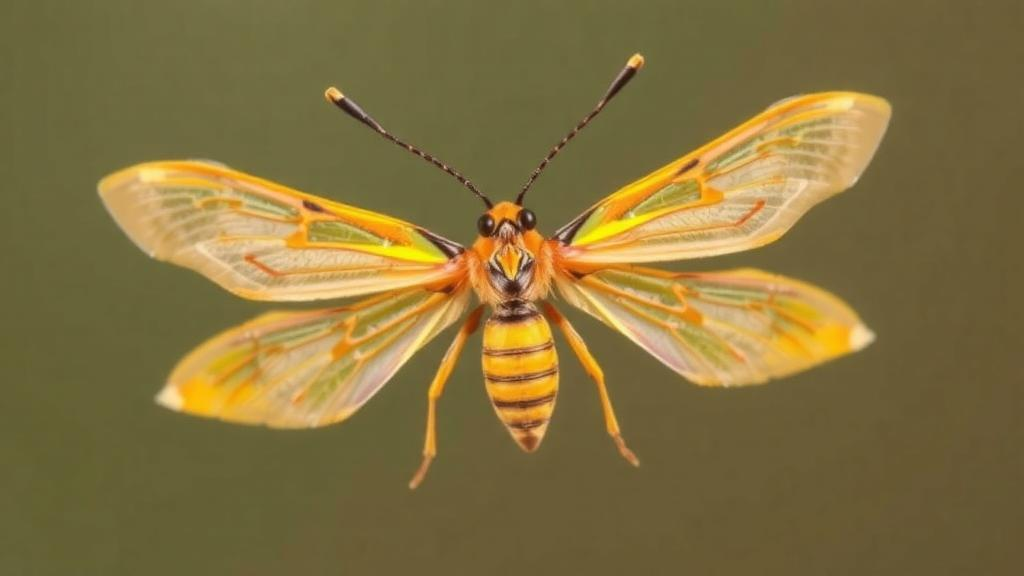
The parasitoid wasp Apanteles piceotrichosus has been documented in Mexico for the first time, establishing its first confirmed North American record. Researchers found the braconid in association with larvae of the diamondback moth, Plutella xylostella, in broccoli fields at Dolores Hidalgo and San Luis de la Paz, Guanajuato. The study combined field collection, conventional morphological identification, DNA barcoding, phylogenetic analysis and laboratory observations of development and adult survival. The Mexican specimens closely matched the original description of A. piceotrichosus, and their mitochondrial cytochrome c oxidase subunit I, or COI, sequence differed by 5.91 to 6.09 percent from the closest species in the Barcode of Life Data System. Before this record, the wasp had been reported only from Argentina, Brazil and Chile, all below 30 degrees south latitude.
The investigation followed collections of diamondback moth larvae made in Guanajuato from 2020 through 2024. These collections had repeatedly yielded an unidentified braconid that was more common than the ichneumonid parasitoid Diadegma insulare at some localities, raising the possibility that the species could have an important role in suppressing the moth. The diamondback moth is a Mediterranean-origin pest distributed around the world and responsible for substantial damage to brassica crops. More than 135 species of its parasitoids have been identified, with Diadegma, Apanteles and Microplitis regarded in some regions as particularly important genera. The research therefore addressed a practical question about natural enemies while also resolving the taxonomic identity of the newly encountered wasp.
For conventional identification, the researchers examined specimens from seven Guanajuato localities and compared them with the detailed original description of A. piceotrichosus, a 2014 revision of 205 Mesoamerican species of Apanteles, and historical records of Apanteles associated with diamondback moth. The Mexican material corresponded closely to published illustrations, measurements and descriptions of body colour, sculpture, antennae, thorax, wings, metasoma and ovipositor sheaths. Particularly useful diagnostic traits included a 15th antennal flagellomere 1.2 to 1.4 times as long as wide, a mostly pale pterostigma with thin brown margins, dark fore and middle femora, a propodeum with a weak areola confined mainly to its posterior half, and ovipositor sheaths slightly shorter to approximately equal in length to the metatibia. The first metasomal tergite narrowed strongly toward its posterior margin, and the second was trapezoidal to subtriangular and nearly smooth apart from a few weak punctures.
These characters separated the Mexican specimens from three other Apanteles species previously recorded as diamondback moth parasitoids in the New World. Apanteles alexanderi has a nearly cubic final antennal segment, a mostly parallel-sided first tergite, a second tergite bearing more evident punctures, yellow fore and middle femora, and ovipositor sheaths substantially longer than the metatibia. A. epinotiae likewise has a cubic to subcubic final antennal segment, a first tergite that is mostly parallel-sided, and a stronger, complete propodeal areola, together with different wing and vein coloration. A. sodalis has a pterostigma that is almost entirely brown apart from a pale basal spot, stronger striae on the second tergite, a subrectangular and parallel-sided second tergite, and a brown tegula. The contrasting combination observed in the Guanajuato material supported identification as A. piceotrichosus. The species had not been included in the Mesoamerican revision because it was then considered restricted to South America.
Molecular data provided a separate line of support. The investigators extracted DNA from 10 Apanteles specimens and amplified the mitochondrial 16S and COI genes and the nuclear 28S ribosomal RNA marker. The resulting amplicons were 451, 383 and 487 base pairs for 16S, COI and 28S, respectively, and each product was sequenced from both strands. A representative COI sequence, assigned to specimen CEAM-Hy-023 and deposited in BOLD, allowed the species to be recognized through DNA barcoding. It differed by 38 to 40 base pairs, or 5.91 to 6.09 percent, from the closest BOLD entries, Apanteles javiercontrerasi and Apanteles carlosguadamuzi. The analysis therefore confirmed that the parasitoid belonged to Apanteles and was consistent with the morphological determination as A. piceotrichosus.
Maximum-likelihood analyses added information about the wasp’s genetic placement, although the principal molecular aim was to determine whether the barcodes alone could characterize the species. The COI analysis included 95 sequences and 322 aligned nucleotide positions, with Agathirsia davidi used as the out-group. Under the Tamura–Nei model, the highest-log-probability tree had a value of −7297.69. A second analysis combined the 16S, 28S and COI sequences into an 865-position dataset containing eight sequences, with Alphomelon sequences serving as the out-group; the highest-log-probability tree in that analysis had a value of −1951.31. The inferred relationships placed the Mexican material near Glyptapanteles merope and Apanteles melpomene, both recorded from Malaysia. These tree-based relationships were treated as additional phylogenetic context rather than evidence that the Mexican population had originated from either Malaysian species.
Laboratory observations showed that A. piceotrichosus behaves as a solitary koinobiont endoparasitoid of diamondback moth larvae. Successful parasitism was recovered from second- and third-instar hosts, while no parasitoids were recovered from fourth-instar larvae. The egg was described as translucent, elongated and hymenopteriform, with a short pedicel. The first-instar parasitoid larva possessed a pair of jaws and an apparent anterior head region wider than the remainder of its body. From the second instar onward, an anal vesicle was visible and enlarged as development proceeded. The investigators considered five larval instars probable, but they did not determine the duration of each individual instar. The study also noted that observations involving first-instar hosts were insufficient to establish whether apparent parasitism in early hosts was successful, leaving the preferred host instar for further testing.
Under laboratory conditions of 25 ± 2 degrees Celsius, 70 percent relative humidity and a 12-hour light-to-dark photoperiod, the mean egg incubation period was 0.92 ± 0.00 days. The larval stage lasted 5.86 ± 0.01 days, and the pupal stage lasted 5.65 ± 0.02 days, giving a mean development time from egg to adult of 12.43 ± 0.01 days. As the parasitized host neared pupation, the parasitoid larva pierced the moth larva’s integument, emerged, consumed its host fluids and then spun its own cocoon. The pupa was exarate and yellowish, whereas newly emerged adults were completely black. These developmental timings were similar to an egg-to-adult period of 12.63 days previously reported for A. machaeralis and a range of 11 to 14 days reported for A. syleptae.
Adult longevity varied sharply according to the food provided. Males and females supplied with a honey solution lived an average of 17.58 ± 0.54 and 16.08 ± 0.19 days, respectively, whereas males and females given only water survived for 2.42 ± 0.51 and 3.08 ± 0.08 days, respectively. These observations establish the basic developmental and survival characteristics of the newly recorded Mexican population, but they do not measure the wasp’s ability to reduce diamondback moth damage in crops. Earlier work in another location reported parasitism of approximately 17 percent, while the broader biological information on A. piceotrichosus remained limited. The authors consequently emphasized that further work is required to determine the species’ role as a field-based natural enemy. The first Mexican and North American record expands the known geographic range of the wasp and provides a baseline for investigating its possible contribution to natural control of a major agricultural pest.
Subject of Research: First North American record and laboratory biology of the diamondback moth parasitoid Apanteles piceotrichosus.
Article Title: Apanteles piceotrichosus Blanchard ( Hymenoptera , Braconidae ), first record from México, new molecular and biological data
Article References: Rodríguez-Rodríguez, S. E., Fernández-Triana, J. L., Lomeli-Flores, J. R., Martínez-Núñez, M., Rodríguez-Leyva, E., González-Hernández, H., & Bernal, J. S. (2025). Apanteles piceotrichosus Blanchard (Hymenoptera, Braconidae), first record from México, new molecular and biological data. Journal of Hymenoptera Research, 98, 339-353. https://doi.org/10.3897/jhr.98.138425
Image Credits: AI Generated
Keywords: Apanteles piceotrichosus, diamondback moth, parasitoid wasp, Guanajuato, Mexico, DNA barcoding, molecular phylogeny, insect taxonomy, crop pest, natural pest control, Apanteles, piceotrichosus
Cite Scienmag News
Juliet Wilcox. (October 20, 2026). Mexican field and lab study documents first North American diamondback moth parasitoid. Scienmag. https://scienmag.com/mexican-field-and-lab-study-documents-first-north-american-diamondback-moth-parasitoid/
Juliet Wilcox. "Mexican field and lab study documents first North American diamondback moth parasitoid." Scienmag, 20 October 2026, https://scienmag.com/mexican-field-and-lab-study-documents-first-north-american-diamondback-moth-parasitoid/. Accessed 20 October 2026.
Juliet Wilcox. "Mexican field and lab study documents first North American diamondback moth parasitoid." Scienmag. October 20, 2026. https://scienmag.com/mexican-field-and-lab-study-documents-first-north-american-diamondback-moth-parasitoid/