


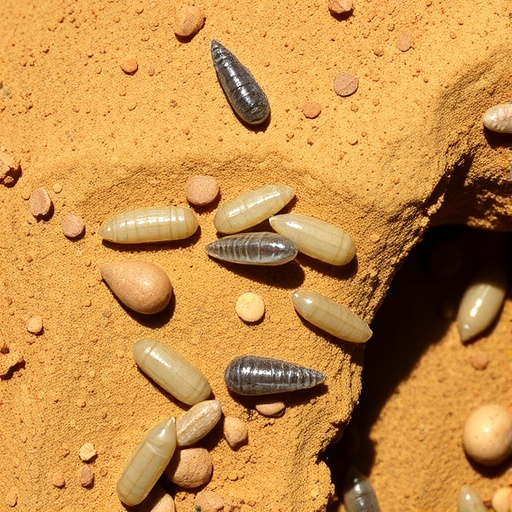
The marine ecosystems of the Mediterranean Sea have long fascinated scientists, not only for their rich biodiversity but also for the intricate host-parasite relationships that thrive within them. Recent groundbreaking research led by Abouelala, Miquel, Mabrouk, and their colleagues has shed new light on the metazoan parasites that inhabit the little tunny, scientifically known as Euthynnus alletteratus, specifically focusing on populations from the Tunisian coast of the Gulf of Gabes. This study, published in the renowned journal Acta Parasitologica, unveils the fascinating complexity of parasite diversity associated with this commercially and ecologically important fish species.
At the core of this research lies an exhaustive taxonomic survey aimed at cataloging the metazoan parasites – multicellular parasitic organisms – infecting the little tunny. The scientists employed a combination of traditional parasitological techniques and cutting-edge molecular tools to identify and characterize these parasitic species. This dual approach not only enhanced the accuracy of species identification but also allowed an unprecedented glimpse into the hidden diversity and ecological roles of these parasites in the Gulf of Gabes.
Understanding parasite diversity in marine organisms is vital because parasites exert profound influences on their hosts. They can regulate host population dynamics, affect host behavior, and even manipulate ecosystems through complex food web interactions. The little tunny, a fast-swimming pelagic fish found widely throughout tropical and temperate waters, serves as a pivotal component in Mediterranean marine food chains. Its health and population stability are indicators of the overall ecosystem integrity, making the study of its parasites especially relevant.
The research team meticulously collected specimens of Euthynnus alletteratus from various locations along the Tunisian coast, ensuring a representative sample of the Gulf’s population. Each fish was carefully dissected, and all parasitic organisms visible within different tissues and organs were extracted. This process revealed a striking diversity of metazoan parasites including various species of trematodes (flukes), cestodes (tapeworms), nematodes (roundworms), and copepods, each exhibiting specialized adaptations to their niches within the fish host.
One of the remarkable findings of this study was the identification of several previously unreported parasite species in this region. This highlights the fact that even in well-studied marine areas like the Mediterranean, significant unknown biodiversity remains hidden, especially within parasitic communities. The discovery of new parasite species not only enriches our understanding of marine biodiversity but also lays the groundwork for future studies on parasite evolution and biogeography.
The study also delved deeply into the life cycles of these parasites, many of which involve complex stages spanning multiple hosts, including invertebrates and other fish species. Understanding these life cycles is crucial for unraveling the transmission dynamics within the marine ecosystem. The Gulf of Gabes, with its unique environmental conditions and diverse habitats, provides an ideal setting to study these intricate ecological relationships.
Importantly, the research emphasized the potential implications of parasite infestations on the health and commercial viability of little tunny populations. Parasites can significantly impair fish physiology by damaging tissues, compromising immune responses, and even altering feeding behaviors. Such effects can cascade through fisheries and local economies dependent on these resources, underscoring the critical need for monitoring parasite loads in fish stocks.
From a broader perspective, this study contributes to the ongoing dialogue about the impact of environmental changes, such as pollution and climate change, on marine parasitism. Alterations in water temperature, salinity, and habitat structure can influence parasite-host dynamics, potentially leading to outbreaks or declines in certain parasite populations. The data collected from the Gulf of Gabes serve as a valuable baseline to detect and interpret such changes in the future.
Equally significant is the methodological framework established by the researchers. By integrating morphological identification with molecular genetics, they set a new standard for parasitological surveys in aquatic systems. This approach facilitates not only species discovery but also helps clarify phylogenetic relationships among parasites, offering insights into their evolutionary history and adaptation strategies.
The findings have profound implications for marine conservation strategies. Parasites often receive little attention in conservation dialogues, yet they are indispensable components of biodiversity. Protecting parasite diversity can enhance ecosystem resilience by maintaining natural regulatory mechanisms within food webs. The rich parasitic fauna uncovered in this study calls for their inclusion in marine biodiversity assessments and conservation planning.
The study also opens avenues for exploring host-parasite coevolution in a marine context. The interactions between Euthynnus alletteratus and its parasites represent a dynamic evolutionary arms race, where each adapts in response to the other’s defenses and counter-defenses. Investigating these processes can reveal fundamental biological principles and inform strategies to mitigate parasite-related fish diseases.
Furthermore, the research underscores the importance of regional studies in understanding global biodiversity patterns. While global databases on marine parasites exist, localized investigations such as this one provide granular details that help piece together the larger puzzle of parasite distribution and specialization across different marine biomes and host species.
In conclusion, the extensive survey conducted by Abouelala and colleagues provides a landmark reference point for parasite diversity associated with the little tunny in the Mediterranean. This work not only advances scientific knowledge on marine parasitology but also poses critical questions about ecosystem health, fisheries management, and conservation in a rapidly changing world. The intricate web of life between Euthynnus alletteratus and its metazoan parasites epitomizes the complexity and interconnectedness of marine ecosystems, reminding us that often the smallest organisms can have the largest ecological impacts.
As researchers continue to unravel the hidden diversity within marine hosts, future studies building on this work will likely explore the functional roles of these parasites, their responses to environmental stressors, and their potential as biological indicators. The Gulf of Gabes has emerged as a hotspot of parasitic biodiversity, and the little tunny’s microscopic companions may yet hold secrets critical to preserving the Mediterranean’s marine legacy.
Cite Scienmag News
Drew Townsend. (August 6, 2025). Metazoan Parasite Diversity in Little Tunny, Tunisia. Scienmag. https://scienmag.com/metazoan-parasite-diversity-in-little-tunny-tunisia/
Drew Townsend. "Metazoan Parasite Diversity in Little Tunny, Tunisia." Scienmag, 6 August 2025, https://scienmag.com/metazoan-parasite-diversity-in-little-tunny-tunisia/. Accessed 7 September 2026.
Drew Townsend. "Metazoan Parasite Diversity in Little Tunny, Tunisia." Scienmag. August 6, 2025. https://scienmag.com/metazoan-parasite-diversity-in-little-tunny-tunisia/


