


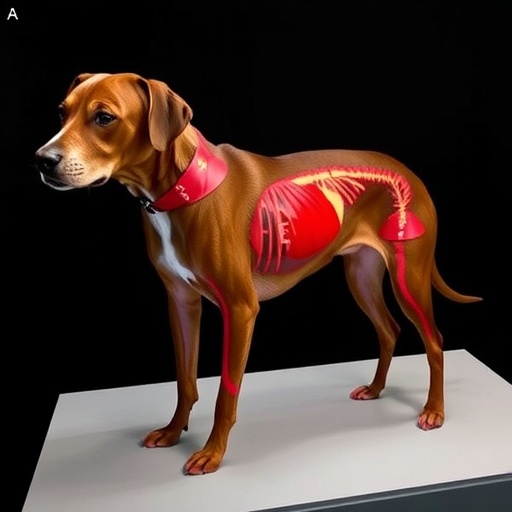
In a finding that blurs one of the sharpest diagnostic lines in endocrine medicine, veterinarians in South Korea have documented the first confirmed case in a dog of an adrenal cortex tumor that masqueraded, both clinically and biochemically, as a pheochromocytoma. The report, published in the Journal of Veterinary Internal Medicine, describes a 12-year-old castrated male Maltese whose adrenal gland carcinoma was pumping out metanephrine and normetanephrine, catecholamine metabolites long considered the biochemical fingerprint of tumors arising from the adrenal medulla.
The dog was referred after routine health screening uncovered an incidental mass on its left adrenal gland, a small but structurally complex organ perched atop each kidney. The adrenal gland contains two embryologically and functionally distinct components: the outer cortex, which produces steroid hormones such as cortisol and aldosterone, and the inner medulla, derived from neural crest cells, which produces catecholamines, the fight-or-flight hormones adrenaline and noradrenaline. Tumors of the cortex and medulla behave differently, carry different prognoses, and demand different perioperative strategies, making accurate classification far more than an academic exercise.
At presentation, the Maltese showed sustained systemic hypertension, with repeated systolic blood pressure readings ranging from 160 to 210 mmHg, well above normal canine values. This combination of an adrenal mass and persistent hypertension immediately raised suspicion of pheochromocytoma, the classic catecholamine-secreting medullary tumor. But the diagnostic team did not stop there. A low-dose dexamethasone suppression test showed appropriate cortisol suppression, effectively ruling out hypercortisolism, the most common hormonal syndrome associated with adrenocortical tumors.
The pivotal evidence came from urinary biochemistry. Using liquid chromatography–tandem mass spectrometry, a highly sensitive analytical technique capable of quantifying trace hormone metabolites, the team measured fractionated urinary catecholamine metabolites normalized to creatinine. The urinary normetanephrine-to-creatinine ratio came back at 987.6, actually exceeding the upper range typically reported in dogs with confirmed pheochromocytoma, which lies between 157.0 and 925.0. The metanephrine-to-creatinine ratio of 226.0 also fell within the pheochromocytoma range. By every biochemical measure, this was a medullary tumor.
Acting on that assumption, the clinicians initiated preoperative alpha-adrenergic blockade with phenoxybenzamine, beginning at 0.25 mg/kg once daily and escalating to 0.5 mg/kg twice daily when blood pressure control proved inadequate. This precaution is standard practice before removing suspected pheochromocytomas, because intraoperative manipulation of catecholamine-secreting tissue can trigger dangerous hypertensive crises and arrhythmias. Computed tomography revealed a well-defined, homogeneously enhancing left adrenal mass measuring approximately 13 by 9.5 millimeters, closely apposed to the caudal vena cava but without overt vascular invasion or distant metastasis.
Then came the twist. Laparoscopic adrenalectomy was performed without major complications, and the excised mass was subjected to histopathologic and immunohistochemical scrutiny. Under the microscope, the tumor showed pronounced nuclear pleomorphism, vascular invasion, and intravascular tumor emboli, hallmarks of a malignant adrenocortical carcinoma. Immunohistochemistry sealed the diagnosis: the tumor cells displayed diffuse cytoplasmic positivity for Melan-A and vimentin, markers of steroidogenic cortical origin, and complete absence of chromogranin A, the gold-standard marker of chromaffin medullary cells. Intriguingly, synaptophysin, a neuroendocrine marker, was also expressed, but this is a recognized feature of some adrenocortical tumors and does not indicate medullary lineage.
The picture that emerged was of a so-called pseudo-pheochromocytoma, an adrenocortical carcinoma capable of synthesizing catecholamine metabolites. This entity has been described only sporadically in human medicine, where it is sometimes called metanephrine-secreting adrenocortical carcinoma, and had never before been confirmed in a dog with combined biochemical and histopathologic evidence. The underlying mechanism remains unclear, but researchers have proposed that neoplastic cortical cells may aberrantly activate catecholamine-synthesizing enzymes, a form of ectopic or promiscuous hormone production seen occasionally in diverse cancers.
The postoperative course provided compelling confirmation that the cortical tumor was indeed the source of the catecholamine excess. Urinary normetanephrine and metanephrine concentrations returned to laboratory reference intervals after surgery, and phenoxybenzamine was discontinued without incident. Blood pressure stabilized at 90 to 120 mmHg within days, and monthly re-evaluations over an 11-month follow-up period documented no recurrence of hypertension without any antihypertensive therapy, strongly supporting the adrenal cortex as the origin of the preoperative biochemical and hemodynamic abnormalities.
The clinical implications extend well beyond this single patient. Elevated metanephrines, long regarded as highly sensitive and specific indicators of pheochromocytoma, are now shown to lack absolute specificity even in veterinary patients. The authors emphasize that urinary metanephrine ratios remain invaluable for detecting catecholamine excess and guiding perioperative safety planning, but should be interpreted alongside cross-sectional imaging and, ultimately, immunophenotyping. When a definitive diagnosis cannot be made before surgery, they argue, it remains reasonable to manage such patients with the precautions reserved for functional pheochromocytomas, including alpha-blockade and close intraoperative hemodynamic monitoring.
The case also carries prognostic weight. In canine adrenocortical carcinoma, vascular invasion, nuclear pleomorphism, and mitotic activity signal higher malignant potential and metastatic risk, and survival times after adrenalectomy typically range from roughly 574 to over 900 days in reported series. For this Maltese, continued oncologic surveillance remains appropriate despite the excellent blood pressure control. As veterinary endocrinology adopts ever more sensitive biochemical assays, this case serves as a vivid reminder that molecules do not always respect the boundaries of embryology, and that final answers still rest with the pathologist’s microscope.
Cite Scienmag News
William Thompson. (August 30, 2026). Metanephrine-Secreting Dog Adrenal Cancer Mimicked Pheochromocytoma, Case Shows. Scienmag. https://scienmag.com/metanephrine-secreting-dog-adrenal-cancer-mimicked-pheochromocytoma-case-shows/
William Thompson. "Metanephrine-Secreting Dog Adrenal Cancer Mimicked Pheochromocytoma, Case Shows." Scienmag, 30 August 2026, https://scienmag.com/metanephrine-secreting-dog-adrenal-cancer-mimicked-pheochromocytoma-case-shows/. Accessed 3 September 2026.
William Thompson. "Metanephrine-Secreting Dog Adrenal Cancer Mimicked Pheochromocytoma, Case Shows." Scienmag. August 30, 2026. https://scienmag.com/metanephrine-secreting-dog-adrenal-cancer-mimicked-pheochromocytoma-case-shows/


