


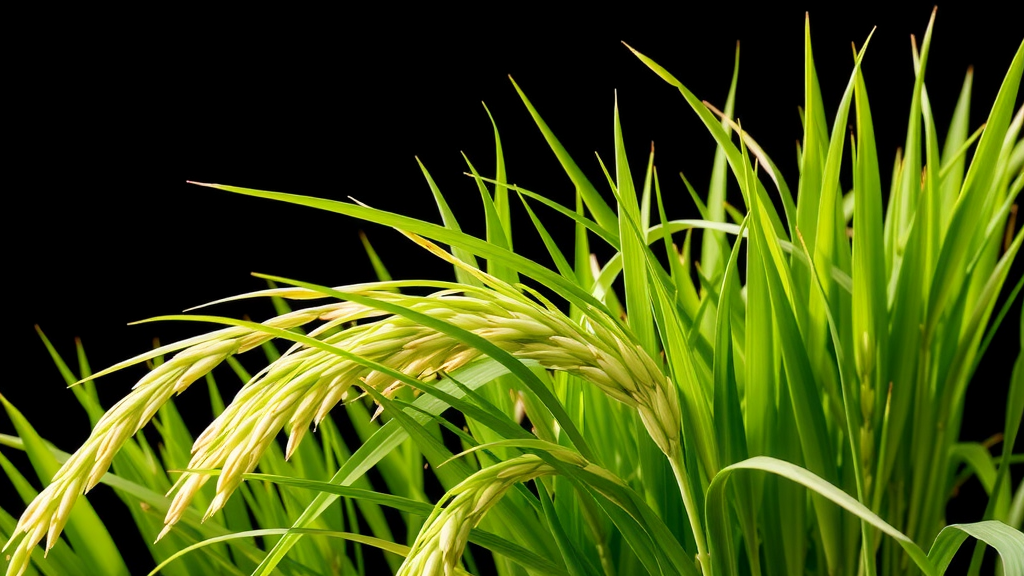
Rice feeds billions of people, yet it is remarkably fragile in the face of salt. A threshold of only about 3 deciSiemens per meter of electrical conductivity is enough to stunt the crop, and soils are classified as saline above 4 dS/m, a level increasingly common in coastal farmland as seawater intrudes into aquifers. Now a research team at Louisiana State University Agricultural Center and Louisiana State University has mapped, in fine chemical detail, exactly how one especially resilient rice line reprograms its metabolism to survive conditions that would wither its high-yielding parent. The findings, published in the journal Metabolomics, offer breeders a molecular toolkit of metabolites and candidate genes for building salt tolerance into elite varieties without sacrificing yield.
The team focused on JN100, an introgression line developed by backcrossing the salt-tolerant but low-yielding Indian landrace Nona Bokra into Jupiter, a medium-grain, high-yielding Louisiana cultivar that is vulnerable to salinity. Nona Bokra carries undesirable domestication traits such as seed dormancy, shattering, and photosensitivity, but it donates genomic segments conferring tolerance. JN100 inherits those segments while retaining most of Jupiter’s agronomic background, making it an ideal system for separating tolerance-associated chemistry from ordinary genetic noise. In greenhouse experiments, seedlings of JN100, Jupiter, and Nona Bokra were exposed to salt in a stepwise protocol, first at 6 dS/m for two days and then at 12 dS/m for three days, while untreated seedlings served as controls. Leaf tissues were harvested with three biological replicates per treatment for untargeted metabolomic analysis.
The analytical core of the study was untargeted liquid chromatography-mass spectrometry performed on a Waters Synapt XS quadrupole time-of-flight instrument coupled to an Acquity Premier UPLC system at the LSU Mass Spectrometry Facility. Metabolites were separated on a hydrophilic interaction liquid chromatography amide column, an approach chosen to maximize retention of small polar compounds such as amino acids, sugars, and tricarboxylic acid cycle intermediates. Data were acquired in MSᴱ mode, with alternating low- and high-energy scans capturing both precursor ions and fragment ions across an m/z range of 100 to 1500 in positive and negative ionization modes. Features were processed in Progenesis QI, annotated against METLIN and other spectral libraries with a 10 parts-per-million mass tolerance, and reported as putative identifications under Metabolomics Standards Initiative Level 2 criteria because authentic standards were not run in-house.
Statistical treatment was deliberately stringent. Metabolites were declared differentially accumulated only when they satisfied three conditions simultaneously: a Benjamini-Hochberg false-discovery-rate-adjusted p-value below 0.05, a fold change of at least 1.5, and a variable importance in projection score greater than 1 from an orthogonal partial least squares discriminant analysis model. This supervised model cleanly separated genotypes and treatments, with the predictive score explaining 79.7 percent of class-discriminating variance under control conditions and 91.2 percent under salt stress. Post hoc power analysis confirmed that all significant differences exceeded a power of 0.8, lending statistical weight to the biological patterns that emerged.
Those patterns were striking. In the JN100-Jupiter comparison under salt stress, the team identified 201 differentially accumulated metabolites, 89 upregulated and 112 downregulated, spanning amino acids, carbohydrates, fatty acids, purines, pyrimidines, and numerous other chemical classes. Several compounds stood out as signature markers of tolerance. Glycitin, an isoflavone, was present at roughly 20-fold higher levels under control conditions and 25-fold higher under salt stress in JN100, and it was entirely undetectable in Jupiter when the cultivars were analyzed individually under salinity. D-arabinono-1,4-lactone, a precursor in ascorbic acid biosynthesis, accumulated 23-fold more under salt stress, while the sugar alcohol ribitol rose 19-fold. Because ascorbate is a central antioxidant that detoxifies reactive oxygen species, the enrichment of its precursor suggests that JN100 boosts its capacity to neutralize the oxidative burst that accompanies salt exposure.
Equally telling were the metabolites that declined. Violanthin, a flavonoid glycoside, dropped 24-fold under salt stress, and rutin, another antioxidant flavonoid, fell by a similar margin with a VIP score above 1 only under stress, indicating a stress-specific metabolic shift. L-methionine S-oxide, an oxidized methionine derivative that serves as a substrate for methionine sulfoxide reductases, decreased 20-fold, which the authors interpret as evidence of more efficient enzymatic repair of oxidized proteins in the tolerant line. Allantoin, a purine catabolism product known to activate jasmonate signaling, was also reduced, suggesting that JN100 avoids the excessive jasmonate activation and programmed cell death that can follow unchecked stress signaling. Lysine fell 21-fold, pointing to active redistribution of nitrogen away from storage amino acids toward stress-protective pathways.
Pathway enrichment analysis in MetaboAnalyst using rice-specific KEGG pathways revealed the systemic logic behind these individual changes. Arginine biosynthesis and the metabolism of alanine, aspartate, and glutamate were the most significantly enriched pathways in the tolerant-versus-susceptible comparison under salt, with impact scores of 0.494 and 0.787 respectively. Purine metabolism, the pentose phosphate pathway, glutathione metabolism, and glyoxylate and dicarboxylate metabolism were also enriched, indicating that salt tolerance in JN100 rests on coordinated reprogramming of nitrogen assimilation, redox buffering, and energy metabolism. The susceptible parent Jupiter showed its own perturbations in arginine biosynthesis and amino acid metabolism, but Nona Bokra and JN100 displayed patterns emphasizing antioxidant defense and osmoprotection, consistent with the tolerance they share.
To connect chemistry with genetics, the researchers integrated these metabolomic profiles with differentially expressed genes from their earlier transcriptomic study of JN100, using joint pathway analysis and the STITCH gene-chemical interaction database. Ten differentially expressed genes mapped onto the metabolite network with high confidence, with combined interaction scores ranging from 0.998 to 0.999. Three glutamate synthase genes, OsGLT1, OsGLT2, and OsFd-GOGAT, formed the network’s hub, each interacting with more than a dozen metabolites of nitrogen assimilation and the TCA cycle, including glutamate, glutamine, alpha-ketoglutarate, aspartate, and reduced glutathione. Two paralogs, OsP5CS1 and OsP5CS2, which channel glutamate into proline biosynthesis, connected this nitrogen module to osmotic adjustment, since proline acts as an osmoprotectant, membrane stabilizer, and radical scavenger. OsNAGS2, which catalyzes the committed step of arginine biosynthesis, and OsDHQDT/SDH, a shikimate pathway enzyme linking carbon metabolism to aromatic amino acid and flavonoid production, completed the picture, alongside a phenylalanyl-tRNA synthetase and a pyridoxal phosphate-dependent transferase involved in cofactor metabolism.
The integrated model that emerges is one of coordinated metabolic plasticity. Shikimate-derived carbon appears to be selectively routed toward the accumulating isoflavone glycitin rather than toward the declining flavonoid glycosides violanthin and rutin, while methionine repair, NAD cofactor turnover signaled by nicotinamide ribotide, and purine catabolism converge on redox homeostasis. Nitrogen freed from lysine catabolism feeds the glutamate-proline-arginine axis, where the P5CS and GOGAT enzymes, sensitive to salt-induced disruption in susceptible plants, remain active in JN100. The authors are careful to note that these gene-metabolite associations are correlative: no transcription factors appeared in the mapping, and establishing causal regulation will require chromatin immunoprecipitation, transactivation assays, gene editing, and metabolic flux analysis. Even so, the study delivers a concrete set of metabolite markers, including glycitin, D-arabinono-1,4-lactone, and ribitol, and candidate genes, including OsP5CS1, OsFd-GOGAT, and OsDHQDT/SDH, that breeders and biotechnologists can now pursue to engineer rice capable of thriving where salt once meant failure.
Subject of Research: Metabolomic mechanisms of salinity tolerance in a rice introgression line
Article Title: Comparative metabolomic profiling reveals salinity tolerance mechanisms in a rice introgression line
Article References: Chaudhary, C. K., Guttula, P. K., Agrawal, K., Subudhi, P. K., & Gartia, M. R. (2026). Comparative metabolomic profiling reveals salinity tolerance mechanisms in a rice introgression line. Metabolomics, 22(5), Article 149. https://doi.org/10.1007/s11306-026-02525-2
Image Credits: AI Generated
DOI: 10.1007/s11306-026-02525-2
Keywords: rice, salinity tolerance, metabolomics, introgression line, Nona Bokra, Jupiter, glycitin, proline biosynthesis, redox homeostasis, nitrogen metabolism, LC-MS, abiotic stress
Cite Scienmag News
Alan Morgan. (September 12, 2026). Metabolomic Study Uncovers How a Salt-Tolerant Rice Line Rewires Its Chemistry. Scienmag. https://scienmag.com/metabolomic-study-uncovers-how-a-salt-tolerant-rice-line-rewires-its-chemistry/
Alan Morgan. "Metabolomic Study Uncovers How a Salt-Tolerant Rice Line Rewires Its Chemistry." Scienmag, 12 September 2026, https://scienmag.com/metabolomic-study-uncovers-how-a-salt-tolerant-rice-line-rewires-its-chemistry/. Accessed 4 October 2026.
Alan Morgan. "Metabolomic Study Uncovers How a Salt-Tolerant Rice Line Rewires Its Chemistry." Scienmag. September 12, 2026. https://scienmag.com/metabolomic-study-uncovers-how-a-salt-tolerant-rice-line-rewires-its-chemistry/


