


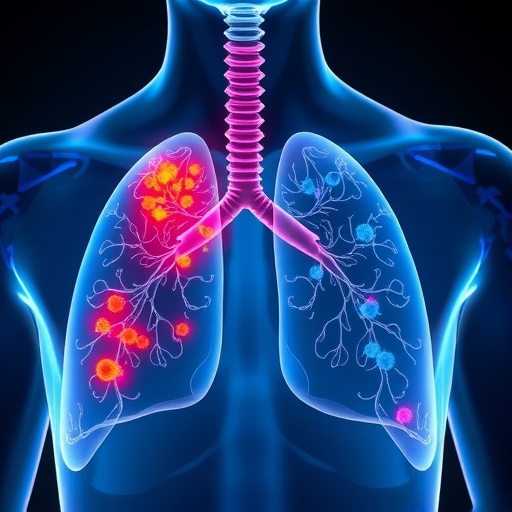
In a groundbreaking study published recently in Nature Communications, researchers have unveiled a remarkable metabolic adaptation in patients with non-small-cell lung cancer (NSCLC) that enhances antioxidative defense mechanisms and concurrently diminishes the formation of advanced glycation end-products (AGEs). This discovery sheds light on the intricate biochemical pathways cancer cells manipulate to sustain their survival and opens novel avenues for therapeutic intervention.
Non-small-cell lung cancer, accounting for approximately 85% of lung cancer cases worldwide, remains a formidable challenge due to its aggressive nature and typically late diagnosis. While targeted therapies and immunotherapies have improved outcomes for certain patient subsets, understanding the metabolic alterations underlying tumor biology is crucial for developing more effective treatments. The current research focuses on how cancer cells adapt their metabolism to counteract oxidative stress, which is known to influence tumor progression and resistance to therapy.
Oxidative stress results from an imbalance between the production of reactive oxygen species (ROS) and the body’s ability to detoxify these reactive intermediates or repair the resulting damage. ROS can damage proteins, lipids, and DNA, undermining cellular integrity. One of the harmful consequences of oxidative stress is the formation of AGEs, deleterious molecular structures formed through non-enzymatic glycation of proteins and lipids. AGEs accumulate over time, contributing to cellular dysfunction and inflammation, factors implicated in cancer progression and chemoresistance.
The study conducted by Tomin, Honeder, Liesinger, and colleagues meticulously analyzes patient-derived tumor samples and systemic metabolic profiles, unveiling a surprisingly enhanced antioxidative defense in NSCLC patients. This metabolic shift appears to mitigate ROS-mediated damage and reduce the burden of AGE formation within the tumor microenvironment. By employing advanced metabolomic and proteomic techniques, the researchers delineated how cancer cells modulate key pathways to recalibrate their redox balance and stave off toxic byproducts.
Central to this adaptation is the upregulation of antioxidant enzymes, including superoxide dismutase (SOD), catalase, and glutathione peroxidase (GPx). These enzymes catalyze the conversion of highly reactive molecules into less harmful species, thus preserving cellular function even in the face of heightened metabolic activity and oxygen consumption typical of cancer cells. The enhanced antioxidative capacity not only shields cancer cells from endogenous oxidative insults but may also reduce their susceptibility to treatment regimens that rely on oxidative damage to induce apoptosis.
Equally compelling is the observed reduction in AGE accumulation within the tumors of NSCLC patients. AGEs, through cross-linking with extracellular matrix proteins and interaction with receptors such as RAGE (receptor for advanced glycation end-products), propagate inflammatory signaling cascades that can exacerbate tumor aggressiveness. By curbing AGE formation, metabolic adaptation may blunt pro-oncogenic inflammatory pathways, potentially altering tumor-stroma interactions and metastatic potential.
Metabolic flux analyses revealed that NSCLC cells divert glucose metabolites through pathways favoring antioxidative molecule synthesis rather than energy production alone. This strategic rerouting supports the generation of nicotinamide adenine dinucleotide phosphate (NADPH), a critical cofactor in antioxidant regeneration systems. Such a metabolic shift highlights the plasticity of cancer cell metabolism, transcending the classical Warburg effect, and exemplifies a tailored redox balancing act orchestrated within the tumor niche.
The authors also explored the role of key transcription factors, such as NRF2, known to regulate the expression of multiple antioxidant genes. Their findings suggest that sustained NRF2 activation underpins the metabolic adaptation observed, driving the transcriptional programs that enhance cellular resilience against oxidative damage. This insight carries significant therapeutic implications, given ongoing efforts to develop NRF2 modulators to selectively target cancer metabolism.
Furthermore, the research investigates the clinical ramifications of this metabolic rewiring. Patients exhibiting higher antioxidative profiles within their tumors tended to have a distinct clinical trajectory, implicating the antioxidative defense status as a potential biomarker for prognosis and treatment stratification. This could enable personalized therapeutic approaches, wherein metabolic vulnerabilities uncovered in specific tumor subsets are exploited to overcome resistance.
Importantly, the study underscores the dual-edged nature of antioxidative defense in cancer biology. While heightened antioxidant capacity aids tumor survival, it also imposes dependencies that may be pharmaceutically targeted. For example, disrupting glutathione synthesis or inhibiting key antioxidant enzymes could selectively sensitize NSCLC cells to oxidative stress-induced apoptosis without harming normal tissues.
The reduction in AGE formation also opens a promising frontier linking metabolism with tumor microenvironment modulation. Interventions aiming to limit AGE accumulation or block their receptor-mediated effects might diminish inflammation-associated tumor progression. Given the systemic nature of glycation processes, such approaches could complement conventional cytotoxic therapies.
Advanced imaging and biochemical assays employed in this study reveal detailed spatial co-localization of antioxidants and diminished AGE deposits within tumor sections, corroborating systemic metabolomic findings with intratumoral biochemical milieus. These multi-modal analyses provide powerful evidence supporting the concept of a self-protective metabolic adaptation occurring at the cellular level in NSCLC.
Collectively, this research challenges the existing paradigms of cancer metabolism by emphasizing the nuanced balance between oxidative damage and antioxidant defense mechanisms. It also accentuates the complexity of metabolic rewiring as a dynamic, context-dependent phenomenon that sustains cancer cell viability amid therapeutic pressures.
Future research inspired by these findings might explore combinatorial treatment regimens incorporating metabolic modulators and traditional chemotherapy or radiotherapy to exploit the newfound vulnerabilities in NSCLC antioxidative systems. Additionally, expanding such investigations to other tumor types could reveal whether this metabolic adaptation is a common feature or unique to lung cancer pathophysiology.
The comprehensive integration of molecular biology, biochemistry, and clinical data in this study exemplifies the power of multidisciplinary approaches in unraveling cancer’s metabolic mysteries. As the scientific community continues to dissect the metabolic dependencies of tumors, studies like this pave the way toward precision oncology strategies that outsmart cancer’s adaptive prowess.
In summary, the elucidation of increased antioxidative defense paired with reduced advanced glycation end-product formation in NSCLC patients not only enhances our understanding of tumor biology but also inspires innovative avenues for diagnosis, prognosis, and treatment. The metabolic adaptation described herein represents a sophisticated survival mechanism, underscoring the incessant evolutionary arms race between neoplastic cells and therapeutic efforts.
Cite Scienmag News
Nathaniel Bowman. (June 3, 2025). Metabolic Adaptation Boosts Antioxidants, Cuts Glycation in Lung Cancer. Scienmag. https://scienmag.com/metabolic-adaptation-boosts-antioxidants-cuts-glycation-in-lung-cancer/
Nathaniel Bowman. "Metabolic Adaptation Boosts Antioxidants, Cuts Glycation in Lung Cancer." Scienmag, 3 June 2025, https://scienmag.com/metabolic-adaptation-boosts-antioxidants-cuts-glycation-in-lung-cancer/. Accessed 3 September 2026.
Nathaniel Bowman. "Metabolic Adaptation Boosts Antioxidants, Cuts Glycation in Lung Cancer." Scienmag. June 3, 2025. https://scienmag.com/metabolic-adaptation-boosts-antioxidants-cuts-glycation-in-lung-cancer/


