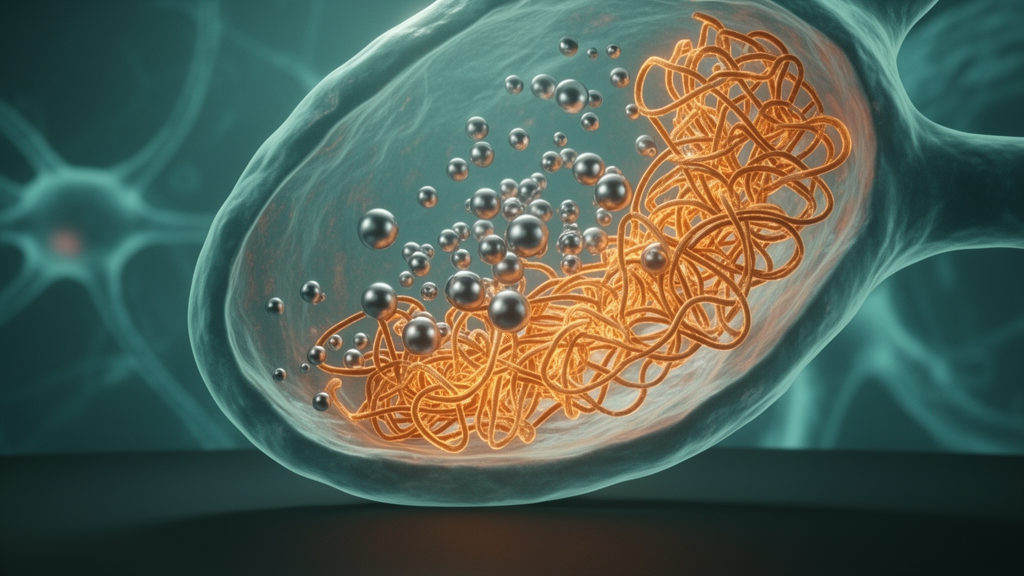
Stranded common dolphins along the northern Spanish coast are showing a striking pattern: the more mercury accumulated in their livers, the more their brains displayed a molecular signature of tau phosphorylation, the process that in humans underlies neurodegenerative diseases such as Alzheimer’s. A new study of 14 common dolphins (Delphinus delphis) that stranded on the coasts of Galicia and Cantabria during 2025 reports that a doubling of hepatic mercury corresponded to an increase of roughly 8.2 percentage points in tau-AT100 immunoreactivity in the frontal cortex, after statistical adjustment for age class.
The research team, led by Belén Alonso-Estanillo of Universidad Alfonso X El Sabio in Madrid, together with colleagues from Universidad Europea, Universidad de Murcia, and the regional stranding networks CEMMA and ReVarCa, analyzed seven males and seven females. All specimens had a decomposition index of 1, indicating high freshness at sampling, which the authors say minimizes post-mortem degradation of the tau marker. Brain and tissue samples were collected during necropsies using non-metallic implements and virgin polyethylene bags to avoid contamination, then snap-frozen and stored at minus 80 degrees Celsius without chemical fixatives. Tissues destined for immunohistochemistry were instead briefly fixed in 4 percent formaldehyde to preserve antigenicity.
The AT100 antibody recognizes tau phosphorylated at two specific sites, threonine 212 and serine 214, in a pathological conformation associated with biological aging and tauopathy progression. In the dolphins, immunoreactivity was quantified as the proportion of immunoreactive neuronal nuclei among all neuronal nuclei counted per section, with denominators ranging from 112 to 170 nuclei depending on the brain region. Two experienced pathologists, blinded to the age and sex of each specimen, counted neurons in five fields per section under a light microscope, strictly excluding glial cells, endothelial cells, and lymphocytic infiltrates. All sections were processed in the same staining batch to reduce variability. Frontal cortex and cerebellar proportions were strongly correlated, and the frontal cortex served as the primary measure.
Because the outcome was a count proportion with a known denominator, the team modeled the data using Bayesian Beta-Binomial regression with a logit link, fitted in PyMC v5 with four chains and 4,000 posterior draws per parameter. The Beta-Binomial was strongly preferred over a simple Binomial model, reflecting substantial between-animal variation beyond counting error. The authors designated a single primary hypothesis in advance—hepatic mercury versus frontal cortex AT100—and treated all other associations as secondary or exploratory. This analytical hierarchy was designed to guard against overinterpreting the many nominally credible associations that can arise when twelve relationships are estimated in a cohort of just 14 animals.
The primary result held up under scrutiny. Varying the prior standard deviation on the model coefficient from 0.25 to 2.5 moved the estimate only modestly, and the 95 percent highest density interval excluded zero in every case. Excluding individual dolphins flagged as influential—DD1, which carried extreme metal burdens across liver and brain; DD3, a necropsy case; or DD6, which had the highest AT100 value in the cohort at 96.8 percent—also left the association intact, with coefficients ranging from 0.54 to 0.90. Hepatic aluminum showed associations of comparable magnitude and similar robustness, while brain aluminum did not exclude zero once age class was included in the model.
Mercury and aluminum also tracked age. Hepatic mercury showed a positive age gradient with a coefficient of 0.49 and a 95 percent HDI of 0.06 to 0.93, consistent with lifelong dietary bioaccumulation. Brain aluminum increased with age with a coefficient of 0.69 and an HDI of 0.24 to 1.08, using a Student-t likelihood chosen for its robustness to outliers. No sex effects showed HDIs excluding zero.
The study also examined the molar ratio of mercury to selenium in the liver, since selenium is the principal endogenous route of mercury sequestration in marine mammals. In 9 of 14 animals, including every adult, molar mercury exceeded molar selenium, meaning the selenium present was insufficient to bind the mercury burden on a one-to-one basis. All three juveniles remained well below that threshold. The ratio itself was associated with frontal cortex AT100 immunoreactivity, though less strongly than total hepatic mercury. Individual DD1, the most influential animal in the sensitivity analyses, had the highest unshielded mercury burden relative to selenium in the cohort, which the authors say transforms what appeared to be an unexplainable multivariate outlier into a biologically coherent pattern of high toxicological vulnerability.
Cadmium told a different story. Although hepatic cadmium showed credible associations with AT100 in both brain regions, the coefficient increased rather than decreased when age was added to the model, a pattern the authors attribute to statistical suppression arising from moderate correlations between cadmium and the other metals rather than to any biological effect linked to senescence. Brain cadmium showed no credible association in either region and was available for only 12 animals because one value fell below the limit of detection. The authors explicitly state that cadmium is not interpreted as a tau-related biomarker, and they note that tissue concentrations remained well within typical baseline thresholds reported in previous ecotoxicological surveys of cetaceans.
The authors are careful about what the study cannot establish. The cross-sectional design—a static snapshot at the moment of stranding—precludes direct causal inference, since it is unknown whether chronic mercury accumulation triggered tau hyperphosphorylation or whether pathological processes and the physiological stress of stranding altered tissue metal redistribution before death. The stability of the AT100 epitope during the post-mortem interval is also unknown. All specimens were stranded animals, which may be biased with respect to the free-ranging population in disease status, body condition, and cause of death. AT100 immunoreactivity, the authors stress, reflects a biological aging continuum and should not be equated with a clinical diagnosis of tauopathy without complementary neuropathological data. Mercury speciation was not determined, so the relative contributions of methylmercury, inorganic mercury, and mercury-selenium complexes cannot be resolved.
Despite these constraints, the authors argue the findings support integrating neuropathological markers into ecotoxicological risk assessment frameworks for long-lived marine apex predators. Cetaceans accumulate metals throughout their lifespan and serve as sentinels of marine environmental health, yet chronic neurotoxicological risks in wild populations remain understudied. The team calls for expanded sample sizes, standardized neuropathological markers across diverse stranded odontocete populations, mercury speciation measurements, and controlled exposure experiments to determine the threshold at which environmental metal loads translate into progressive tau phosphorylation. The work, they conclude, establishes a foundational comparative baseline for understanding metal-associated tau phosphorylation in long-lived marine mammals and reinforces a One Health approach linking marine ecotoxicology with comparative neurobiology.
Subject of Research: Associations between mercury, aluminum, and cadmium burdens and tau-AT100 immunoreactivity in stranded common dolphins
Article Title: Metal accumulation as a potential modulator of tau phosphorylation in the common dolphin (Delphinus delphis): implications for marine environmental health
Article References: Alonso-Estanillo, B., Ochoa, M., Motas, M., Gómez, L., López, A., Wipf, A., Zaragoza, F., & Vásquez, F. (2026). Metal accumulation as a potential modulator of tau phosphorylation in the common dolphin (Delphinus delphis): implications for marine environmental health. Frontiers in Marine Science, 13, Article 1942901. https://doi.org/10.3389/fmars.2026.1942901
Image Credits: AI Generated
DOI: 10.3389/fmars.2026.1942901
Keywords: common dolphin, mercury, tau phosphorylation, AT100, aluminum, cadmium, marine ecotoxicology, sentinel species, stranding, Bayesian regression, neurotoxicity, Frontiers in Marine Science
Cite Scienmag News
Violet Maxwell. (October 29, 2026). Mercury linked to tau protein changes in stranded common dolphins. Scienmag. https://scienmag.com/mercury-linked-to-tau-protein-changes-in-stranded-common-dolphins/
Violet Maxwell. "Mercury linked to tau protein changes in stranded common dolphins." Scienmag, 29 October 2026, https://scienmag.com/mercury-linked-to-tau-protein-changes-in-stranded-common-dolphins/. Accessed 29 October 2026.
Violet Maxwell. "Mercury linked to tau protein changes in stranded common dolphins." Scienmag. October 29, 2026. https://scienmag.com/mercury-linked-to-tau-protein-changes-in-stranded-common-dolphins/