


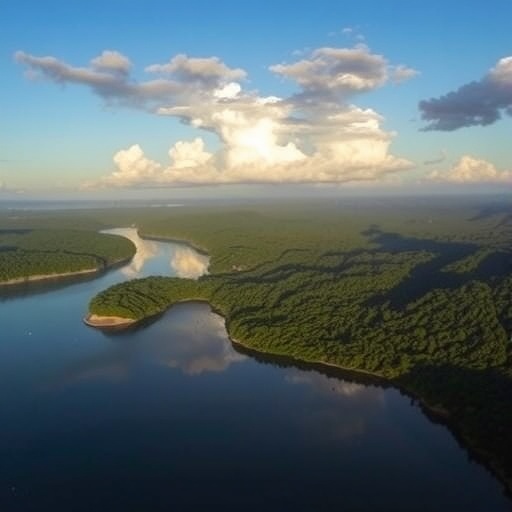
In the heart of the Amazon rainforest, a new study highlights the rising concern regarding mercury levels in aquatic ecosystems, particularly as they relate to cascade hydroelectric reservoirs. The research led by Oliveira, Kasper, and da Silva unveils an alarming trend: mercury concentrations found in seston—the fine organic and inorganic particles suspended in water—are progressively increasing downstream of hydroelectric dams within this crucial region.
The significance of mercury contamination cannot be overstated as this toxic element poses severe risks to both ecological and human health. Mercury originates from a variety of sources, including natural geologic activity and anthropogenic actions, such as mining and industrial processes. Its presence in aquatic environments raises alarm bells since it can bioaccumulate in fish and other organisms, ultimately working its way up the food chain and affecting the health of predators, including humans.
Seston acts as a critical component in aquatic ecosystems, serving as food for various microorganisms and filter-feeding organisms. Unfortunately, as the current study indicates, the rising mercury levels in seston serve as a troubling indicator of broader contamination levels in these water systems. The research utilizes samples from different locations along the cascade of hydroelectric reservoirs, mapping the gradient of mercury presence and its ecological consequences.
Indeed, the Amazon’s hydroelectric projects, while integral for energy generation, also contribute to ecological alterations that facilitate mercury mobilization. The flooding of land to create reservoirs disrupts the geological makeup and organic material decomposition processes, leading to increased mercury availability. As hydropower continues to expand, the byproduct of mercury leaching into surrounding waters becomes a pressing environmental concern.
The cascading effects of mercury in aquatic systems are multidimensional. Not only does it affect the biodiversity of the affected areas, but it also compromises the water quality and can lead to the decline in fish populations. This decline has economic repercussions for local communities that rely on fishing as a primary source of livelihood. Additionally, the health of indigenous people who live in these regions is jeopardized as they consume contaminated fish.
The study emphasizes that the downstream increase in mercury concentrations poses implications for wildlife and local populations alike. The findings signal an urgent necessity for environmental monitoring and more stringent regulations concerning mercury emissions from hydroelectric projects and other industrial sources. The integration of sustainability practices in energy production is essential, especially in ecologically sensitive regions such as the Amazon.
Further complicating the scenario is the fact that climate change exacerbates the situation. Altered weather patterns can lead to fluctuations in hydrology that may alter the distribution and availability of mercury in aquatic systems. Coupled with increasing temperatures, these changes stress ecosystems further, making it imperative for researchers to identify adaptive management strategies for local wildlife and human populations.
The researchers also argue for the importance of community involvement in monitoring mercury levels in water bodies. Engaging local communities not only raises awareness about the dangers of mercury but also empowers them with the knowledge to tackle the issue at a grassroots level, ensuring the health of future generations. Their findings advocate that participatory monitoring can be an effective tool in addressing the ongoing challenges posed by mercury contamination.
Public policy must take heed of these findings, as they underline the choices made today will echo into the future. Promoting policies that prioritize sustainability over immediate economic gain is necessary to mitigate both current and future impacts on the environment. Integrating environmental impact assessments into hydroelectric project planning processes stands out as an actionable recommendation arising from the study.
This comprehensive examination provides a valuable perspective on the intertwining of energy production and environmental health. The implications discussed call for immediate action—not just from policymakers but also from researchers, community leaders, and residents. The need for interdisciplinary collaboration encompasses ecological science, public health, and socioeconomic development, ensuring holistic solutions to these challenges.
In conclusion, the alarming findings of mercury accumulation in seston downstream of cascade hydroelectric reservoirs in the Amazon accentuate a larger environmental narrative. This ongoing predicament serves as a wake-up call to reevaluate our relationship with natural resources, advocating for a paradigm shift toward ecological integrity and sustainability that benefits both human and environmental health.
In doing so, we can ensure a safer horizon for the Amazon and its myriad inhabitants, preserving its lush biodiversity while promoting responsible energy practices. The implications of such transformations ripple outward, potentially impacting global climate health and biodiversity conservation, hence, infusing a sense of urgency into the discourse surrounding hydroelectric power and its ecological ramifications.
Oliveira, E., Kasper, D., da Silva, S.A.A. et al. Mercury in seston increases downstream along cascade hydroelectric reservoirs in the Amazon.
Environ Monit Assess 197, 1334 (2025). https://doi.org/10.1007/s10661-025-14812-x
Cite Scienmag News
Violet Maxwell. (November 13, 2025). Mercury Levels Rise Downstream in Amazon Reservoirs. Scienmag. https://scienmag.com/mercury-levels-rise-downstream-in-amazon-reservoirs/
Violet Maxwell. "Mercury Levels Rise Downstream in Amazon Reservoirs." Scienmag, 13 November 2025, https://scienmag.com/mercury-levels-rise-downstream-in-amazon-reservoirs/. Accessed 5 September 2026.
Violet Maxwell. "Mercury Levels Rise Downstream in Amazon Reservoirs." Scienmag. November 13, 2025. https://scienmag.com/mercury-levels-rise-downstream-in-amazon-reservoirs/


