


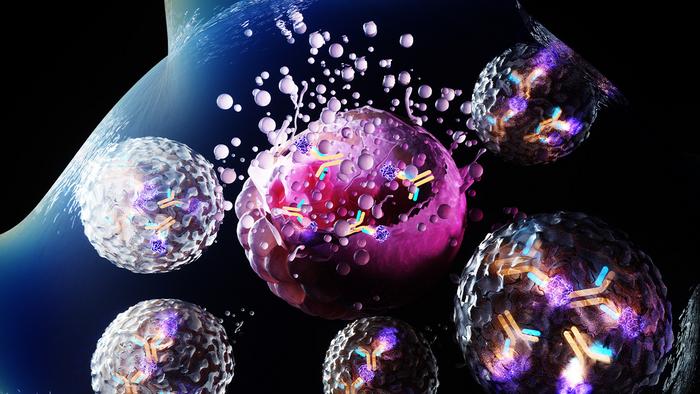
HOUSTON — At the forefront of cancer research, scientists from The University of Texas MD Anderson Cancer Center have made a significant breakthrough with the creation of a novel antibody-toxin conjugate (ATC). The ATC is designed with a unique purpose: to harness the body’s immune response as a means to eradicate tumors rather than focusing solely on direct cytotoxicity, as seen with conventional therapies. This innovative approach encourages a rethink of how we target and eliminate cancerous cells within the body by combining established treatments with a fresh perspective on immunotherapy.
Preclinical findings recently published in the esteemed journal Nature Cancer highlight a fundamental shift in the paradigm of cancer treatment. The researchers have built upon the existing framework of antibody-drug conjugates (ADCs), which have proven transformative in the oncology field. ADCs utilize a modular design to deliver therapeutic agents directly to malignant cells, capitalizing on their ability to recognize specific proteins on cancer cell surfaces. This precision fosters effective destruction of the targeted cancer cells, albeit with some limitations, including potential resistance and recurrence of the disease.
The principal investigator, Dr. Wen Jiang, a respected associate professor in Radiation Oncology, insists that the ATC takes an entirely different approach from traditional ADC design. Rather than simply undertaking the mission to annihilate tumor cells, this innovative conjugate is engineered to stimulate a robust immune response. This immune-mediated strategy promises not only to minimize side effects common with classical treatments but also to mobilize the immune system to seek out and eliminate malignant cells lurking throughout the body.
Many solid tumors express the CD47 protein, a well-characterized “don’t eat me” signal that enables them to evade detection from the immune system. The groundbreaking ATC specifically targets CD47, but instead of delivering a toxic chemotherapy agent to destroy cells immediately, it employs a bacterial toxin to instigate a systematic immune response. This strategic alteration serves to reprogram the immune system’s functionality, allowing it to recognize and target cancer cells effectively, thereby marking them for destruction.
Upon binding to the CD47 protein on cancer cells, the antibody component of the ATC marks those cells for ingestion by the body’s immune cells. Following this, the bacterial toxin is released within the immune cells, facilitating a process that allows tumor DNA and protein fragments, which typically undergo degradation, to escape. Such fragments are vital in providing the immune system with critical information to enhance its ability to recognize and respond to cancer cells.
Dr. Jiang likens the design philosophy to that of bacterial biology, wherein certain bacteria have evolved to bypass cellular destruction mechanisms while retaining the integrity and function of their host cells. By emulating this remarkable capability, the research team aims to shuttle intact tumor material to immune cells, thereby teaching the body to better recognize tumor cells rather than simply eliminating the cancerous cells’ fragments.
Intriguingly, preclinical models for breast cancer and melanoma indicate that this novel ATC approach offers multiple benefits. One of the most notable observations is how it educates the immune system to identify unique signatures of cancer cells. This essentially facilitates a more pronounced antitumor immune response, empowering immune cells to eliminate tumors wherever they may manifest within the body. The longevity of this immune response is equally impressive, as evidenced by the memory effect observed in T cells that remained active two months following treatment.
The research team believes that the implications of this groundbreaking design could forge new pathways for oncological research concerning ATCs. Dr. Benjamin Schrank, the first author of the study and a resident physician in Radiation Oncology, envisions a future where the immune system is not merely a passive observer but an active participant in combatting cancer. He emphasizes the potential for training the immune system to consistently recognize and engage cancerous cells even after the cessation of treatment.
Moreover, this groundbreaking immunotherapeutic concept reveals its potential for synergistic use alongside conventional cancer therapies, particularly radiation treatment. Solid tumors often adapt to radiation stress by upregulating protective proteins like CD47. Consequently, the ATC’s mechanism offers a unique opportunity to exploit this vulnerability, enabling it to effectively target and dismantle these cancers through a combination of radiation and immunological tactics.
As the research advancements continue, the exploration of new targets beyond CD47 is already underway. Dr. Betty Kim, a distinguished professor in Neurosurgery and co-leader of the study, expresses enthusiasm for future projects aimed at delivering ADCs that can activate the immune response across a wider array of challenging malignancies. The goal is to initiate clinical tests for these innovative therapies within the next three to five years, a milestone that could forever alter the landscape of cancer treatment.
As the team works tirelessly to push the boundaries of cancer therapeutics, their research is bolstered by grants and support from various institutions, including the National Institutes of Health (NIH) and the American Cancer Society. Significant funding through initiatives such as the SITC-Merck Cancer Immunotherapy Clinical Fellowship further underscores the promise and potential of their innovative work in the field.
The implications of this research extend far beyond the boundaries of a single study. It presents a fresh strategic avenue for the immune system’s management of cancer, and its potential ramifications could inspire a generation of new therapies designed to outwit malignant cells more effectively than ever before. As scientists unravel the complexities of tumor-immune interactions, the dream of marrying powerful drug conjugates with innovative immunotherapy comes ever closer to reality.
With growing excitement around the ATC’s potential, more invigorating research is needed to explore the breadth of possibilities that this immune-stimulating protocol presents. The field of oncology stands on the cusp of a profound transformation, where innovative therapies like the antibody-toxin conjugate can empower the immune system to combat cancer at its roots and reduce the risk of recurrence significantly.
The momentum initiated by the findings from MD Anderson could serve as a catalyst for the future of cancer immunotherapy. Collaboration among research institutions, clinicians, and pharmaceutical companies might pave the way for the realization of these innovative strategies in clinical settings, ultimately benefiting patients worldwide by offering new hope in the battle against cancer.
The excitement surrounding the development of the antibody-toxin conjugate encapsulates the ongoing quest for effective cancer treatments. As research continues to unfold, the promise of an enhanced, organized immune response against a range of solid tumors heralds an era of treatments that may change the face of oncology as we know it today.
Cite Scienmag News
Nathaniel Bowman. (February 25, 2025). MD Anderson Researchers Unveil Innovative Antibody-Toxin Conjugate. Scienmag. https://scienmag.com/md-anderson-researchers-unveil-innovative-antibody-toxin-conjugate/
Nathaniel Bowman. "MD Anderson Researchers Unveil Innovative Antibody-Toxin Conjugate." Scienmag, 25 February 2025, https://scienmag.com/md-anderson-researchers-unveil-innovative-antibody-toxin-conjugate/. Accessed 3 September 2026.
Nathaniel Bowman. "MD Anderson Researchers Unveil Innovative Antibody-Toxin Conjugate." Scienmag. February 25, 2025. https://scienmag.com/md-anderson-researchers-unveil-innovative-antibody-toxin-conjugate/


