


HOUSTON ― The University of Texas MD Anderson Cancer Center and collaborators are initiating a research project that will send T cells to the International Space Station (ISS) to study the effects of prolonged microgravity on cell differentiation, activation, memory and exhaustion. These results will be further analyzed on Earth to uncover signaling pathways and identify potential immune targets that can improve treatment strategies for patients with cancer and other diseases.

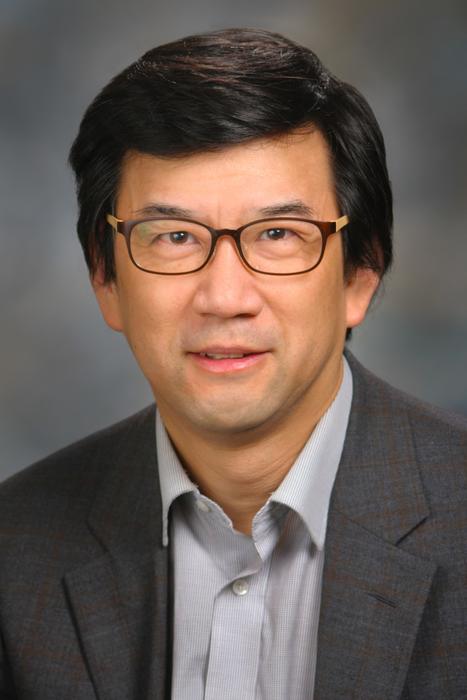
Credit: The University of Texas MD Anderson Cancer Center
HOUSTON ― The University of Texas MD Anderson Cancer Center and collaborators are initiating a research project that will send T cells to the International Space Station (ISS) to study the effects of prolonged microgravity on cell differentiation, activation, memory and exhaustion. These results will be further analyzed on Earth to uncover signaling pathways and identify potential immune targets that can improve treatment strategies for patients with cancer and other diseases.
To accomplish this work, MD Anderson researchers led by Cassian Yee, M.D., and Kunal Rai, Ph.D., will collaborate with Axiom Space, BioServe Space Technologies, Deep Space Biology and Mongoose Bio.
“We are excited to join with talented collaborators who are experienced in biological research and in delivering payloads to deep space in order to leverage the unique research environment of sustained microgravity on the ISS National Laboratory,” said Yee, professor of Melanoma Medical Oncology. “We look forward to this opportunity to study how T cells are affected by microgravity, identify novel targets and translate these findings into meaningful therapeutic strategies that can improve cellular therapies and enhance life here on Earth.”
Axiom Space and BioServe Space Technologies will act as hardware implementation partners, building upon multiple years of experience delivering and supporting biological payloads in space. The multi-flight solicitation will include two missions to the ISS, allowing for discovery research that may lead to translational phases on Axiom Space’s next-generation commercial space station, Axiom Station.
The Rai and Yee labs will use single-cell sequencing on samples cryopreserved in flight and returned to Earth to evaluate in vivo temporal and dynamic epigenetic changes and develop models for the different cell states. Their work will be facilitated using Deep Space Biology’s Yotta technology, the first artificial intelligence (AI) platform using space biology research for health discoveries on Earth. Mongoose Bio, a biopharmaceutical cell therapy company, is leveraging technology licensed from MD Anderson to translate and scale discoveries identified through this collaboration for use in future cell therapy projects and potential novel cancer treatments.
Cell therapy is a type of immunotherapy that modifies or expands immune cells so they are better able to recognize and eliminate cancer cells. Approved cell therapies include chimeric antigen receptor (CAR) T cell therapies, which are T cells engineered to recognize a specific cancer target. Yet these therapies do not work for all patients, since infused T cells can become exhausted, or the cancer can evolve to escape the immune system.
Previous studies both on Earth and in space have shown that microgravity can impact T cell biology by modifying the cytoskeleton, chromatin structure, activation and other gravity-sensitive elements, leading researchers to believe that it could also affect how these cells differentiate.
A deeper understanding of immune differentiation pathways could also spur the advancement of other cell therapies currently being developed at MD Anderson, such as endogenous T cell (ETC) therapies, T cell receptor (TCR)-based therapies and CAR natural killer (NK) cell therapies.
This research project is designed to identify transcriptional and epigenetic signatures for microgravity-induced T cell memory, effector and exhaustion states; to validate individual effects of target overexpression or knockdown on T cell states; and to optimize combinations of targets for desired T cell states on Earth.
“This multidisciplinary project bridges the intersection of space science and immunology to uncover potential breakthroughs in cell therapy research,” said Rai, associate professor of Genomic Medicine. “This work will provide new insights into immune cell epigenetic pathways that will allow us to identify targets, simulate models and develop techniques to enhance T cell memory and prevent cell exhaustion so we can improve patient outcomes.”
This project is supported by a grant awarded by the Center for the Advancement of Science in Space, Inc. (CASIS), which manages the ISS National Laboratory. CASIS and the Biological and Physical Sciences division of the National Aeronautics and Space Administration (NASA) intend to select and fund spaceflight projects that lead to defined milestones in technological innovation that are in alignment with national research and technology development priorities and with the ISS National Lab mission to benefit humanity and the U.S. economy.
Read this press release in the MD Anderson Newsroom.
Disclosure
Yee is a co-founder of Mongoose Bio, and his financial relationship with the company is managed and monitored by the MD Anderson Conflict of Interest Committee. MD Anderson has an institutional conflict of interest with Mongoose Bio and has implemented an Institutional Conflict of Interest Management and Monitoring Plan to manage this relationship.
– 30 –
Cite Scienmag News
Nathaniel Bowman. (July 31, 2024). MD Anderson and collaborators to launch project studying T cells on International Space Station. Scienmag. https://scienmag.com/md-anderson-and-collaborators-to-launch-project-studying-t-cells-on-international-space-station/
Nathaniel Bowman. "MD Anderson and collaborators to launch project studying T cells on International Space Station." Scienmag, 31 July 2024, https://scienmag.com/md-anderson-and-collaborators-to-launch-project-studying-t-cells-on-international-space-station/. Accessed 5 September 2026.
Nathaniel Bowman. "MD Anderson and collaborators to launch project studying T cells on International Space Station." Scienmag. July 31, 2024. https://scienmag.com/md-anderson-and-collaborators-to-launch-project-studying-t-cells-on-international-space-station/

