


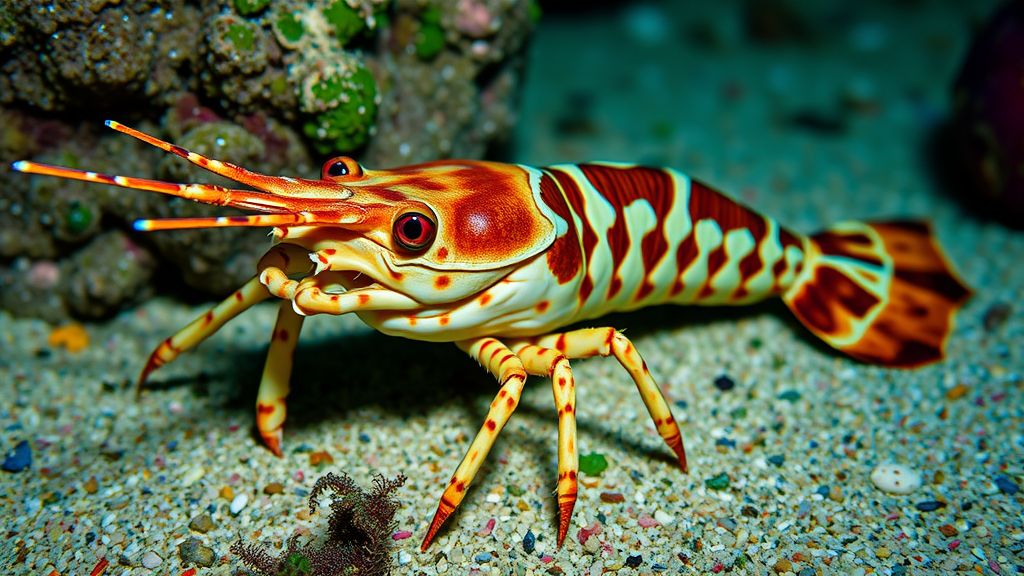
Beneath the turquoise lagoons that ring Mauritius lies an animal kingdom that scientists are only beginning to understand. A new narrative review published in Discover Oceans has pulled together more than a century of scattered records on the island’s marine crustaceans and reached a sobering conclusion: despite their enormous ecological and economic importance, these animals remain one of the least studied groups in Mauritian waters, even as the Indian Ocean warms faster than any other ocean basin. The review, led by Surroop Bhuvaneshwaree of the University of Mauritius with colleagues in Mauritius and Croatia, synthesizes historical taxonomic surveys, regional reports, and biodiversity databases to build the most complete picture to date of the island’s shrimps, crabs, lobsters, amphipods, and their relatives.
The headline finding is a stark contrast between scale and knowledge. Mauritius commands an Exclusive Economic Zone of roughly 2.3 million square kilometers and depends heavily on marine resources for food security and economic development. Yet while the island’s corals, fishes, and seagrasses have received sustained research attention, its crustaceans have not. No recent comprehensive inventory or checklist exists. The most detailed records date back to the nineteenth and early twentieth centuries, when naturalists such as H. Milne-Edwards and E. J. Miers described species from what was then known as L’Île de France. Paul Carié’s early twentieth-century work documented 147 decapod species across stomatopods, anomurans, macrurans, and brachyurans, laying a foundation that subsequent researchers have struggled to update.
The review compiles records from 61 crustacean families in Mauritius, with the crab families Xanthidae and Portunidae, the spider crabs of Epialtidae, and the hermit crabs of Diogenidae among the most frequently reported. But the authors caution that this apparent diversity should be interpreted carefully. Many records come from historical surveys whose species names and classifications may no longer align with modern taxonomy, and older literature remains incompletely digitized. Research effort has also been heavily skewed: from the late twentieth century onward, work focused largely on peracarid crustaceans, particularly amphipods and isopods. Christine Appadoo and Derek Steele’s 1998 study recorded 69 gammaridean amphipod species, including numerous new records and undescribed taxa, and later work by Guerra-García on caprellids and by other teams on isopods and hermit crabs added new species and Western Indian Ocean records.
Recent decades have seen only sporadic contributions, such as investigations of sponge-associated crustaceans, the rediscovery of the sponge crab Cryptodromia fallax, and the description of the lobster Enoplometopus holthuisi. The authors argue that the existing literature is better viewed as a historical baseline than a faithful snapshot of current diversity. They call for an updated checklist incorporating verified taxonomy, recent field surveys, molecular identification, and detailed distributional data, along with a reference library of DNA barcodes deposited in public databases such as NCBI and BOLD to support future biodiversity studies and detect whether historically reported species still persist.
Why does this gap matter so much? Globally, crustaceans are among the most functionally important animals in the ocean. They occupy nearly every trophic position, serving as primary consumers, detritivores, predators, and prey. Krill dominate the diets of mobulid rays, calanoid copepods sustain certain jellyfish, and the swimming crab Charybdis smithii feeds yellowfin tuna and pygmy sperm whales. In Mauritius, crustaceans have been reported as the dominant prey of albacore tuna, which uses Mauritian waters as a spawning ground, and decapods have turned up in the stomachs of apex predators from Mauritian and Réunion waters. Predators as large as gray whales track the abundance of benthic crustacean prey, meaning that shifts in crustacean populations can ripple through entire food webs and reshape the distribution of commercially vital fish stocks.
Crustaceans are also the ocean’s cleanup crew and its engineers. As scavengers, they process dead organic matter and can, in some ecosystems, break down up to 75 percent of available plant-derived organic material, with amphipods proving especially dominant from coastal shallows to hydrothermal vents. Burrowing thalassinidean crustaceans are considered among the most effective marine bioengineers: their bioturbation redistributes sediments and nutrients, enhances oxygenation, and stimulates microbial activity and nitrogen cycling. Evidence of these functions in Mauritius is thin but suggestive—crab burrow abundance has been used as an indicator of ecosystem recovery in the island’s mangrove forests—but the broader role of crustaceans in Mauritian nutrient cycling and sediment dynamics remains essentially unstudied.
The review also highlights the striking symbiotic lives of crustaceans, from obligate coral-dwelling trapeziid crabs that defend their pocilloporid hosts against corallivores, to coral gall crabs, to elaborate triple symbioses in which a goby, a pistol shrimp, and a porcellanid crab share a single burrow to mutual benefit. In Mauritius, however, documented symbioses are limited to scattered observations such as crabs inhabiting sponges and barnacle associations, leaving a rich field of research essentially untouched. Economically, the picture is equally lopsided. Fisheries and aquaculture contribute roughly 10.3 percent of Mauritius’s GDP excluding tourism and employ up to 10,000 people, yet in 2023 the country exported only about USD 187,000 worth of crustaceans while importing USD 16.2 million, mainly from India, Madagascar, and Vietnam—a trade imbalance that exposes the island to global price shocks and signals untapped potential for local production, aquaculture, and blue-economy growth.
Then there is chitin. Extracted from crustacean shells and processing waste, chitin and its derivative chitosan are finding applications across medicine, agriculture, and environmental technology: wound dressings and tissue-engineering scaffolds, antimicrobial and anticancer materials, plant-defense biostimulants and biopesticides, and adsorbents that strip heavy metals and arsenic from water. Crustaceans themselves serve as bioindicators, accumulating heavy metals, microplastics, and nanoplastics in ways that reveal ecosystem contamination. A systematic review has even identified Mauritius among the African countries with the highest reported use of marine animals, including crustaceans, in traditional medicine. Yet the biotechnological and pharmaceutical potential of Mauritian crustaceans remains almost entirely unexplored.
Climate change looms over all of it. Atmospheric carbon dioxide has climbed from about 278 ppm pre-industrially to over 421 ppm by 2023, driving ocean acidification projected to lower global pH by roughly 0.4 units by 2100. The Indian Ocean warmed by approximately 0.7 degrees Celsius between 1982 and 2021, faster than other basins. These stressors act on crustaceans at every level, from DNA repair and protein synthesis to haemolymph chemistry, immune function, molting, calcification, reproduction, and behavior. Flic en Flac lagoon offers site-specific warning signs: maximum sea surface temperatures rose from 29 degrees Celsius in 2000–2001 to 31 degrees by 2017–2019, while pH has become increasingly variable. Meanwhile, hard and soft coral cover in parts of Mauritius declined by roughly 40 and 83 percent respectively between 2004 and 2019, and lagoon sponges declined by up to 40.2 percent—collapses that threaten the habitat-dependent and symbiotic crustaceans relying on these structures.
Responses to acidification vary widely among species and over time. Crustaceans may tolerate acidification better than some calcifiers because their exoskeletons are largely calcite-based and rely on bicarbonate, but chronic exposure has been linked to reduced claw hardness, exoskeletal thinning in king crabs, altered mineral composition in shrimps, and delayed post-moult hardening. Behavioral changes add another layer of vulnerability: warming can push shrimps to forage recklessly in the presence of predators, acidification impairs mud crab foraging, and combined stressors disrupt the acoustic signaling of snapping shrimps. Warming and hypoxia also reshape disease dynamics, potentially raising infection risks in both wild populations and future aquaculture operations. The review’s authors are explicit about what comes next: Mauritius needs updated biodiversity inventories, integrative taxonomic and molecular research, long-term monitoring across coral reefs, seagrass meadows, and mangroves, and targeted multi-stressor studies of climate impacts. Without that effort, declines among poorly known, endemic, or economically important crustaceans could unfold silently, invisible beneath waters the nation depends upon.
Subject of Research: Marine crustacean biodiversity and climate-change vulnerability in Mauritius
Article Title: Current knowledge of marine crustaceans in Mauritius and their global importance in a changing climate
Article References: Bhuvaneshwaree, S., Nadeem, N., Sunita, F., & Mandić, J. (2026). Current knowledge of marine crustaceans in Mauritius and their global importance in a changing climate. Discover Oceans, 3(1), Article 61. https://doi.org/10.1007/s44289-026-00171-z
Image Credits: AI Generated
DOI: 10.1007/s44289-026-00171-z
Keywords: marine crustaceans, Mauritius, biodiversity, climate change, ocean acidification, ocean warming, Malacostraca, Decapoda, chitin, fisheries, ecosystem engineers, Indian Ocean
Cite Scienmag News
Violet Maxwell. (September 22, 2026). Mauritius Marine Crustaceans Face Climate Threats Amid Deep Knowledge Gaps. Scienmag. https://scienmag.com/mauritius-marine-crustaceans-face-climate-threats-amid-deep-knowledge-gaps/
Violet Maxwell. "Mauritius Marine Crustaceans Face Climate Threats Amid Deep Knowledge Gaps." Scienmag, 22 September 2026, https://scienmag.com/mauritius-marine-crustaceans-face-climate-threats-amid-deep-knowledge-gaps/. Accessed 4 October 2026.
Violet Maxwell. "Mauritius Marine Crustaceans Face Climate Threats Amid Deep Knowledge Gaps." Scienmag. September 22, 2026. https://scienmag.com/mauritius-marine-crustaceans-face-climate-threats-amid-deep-knowledge-gaps/


