


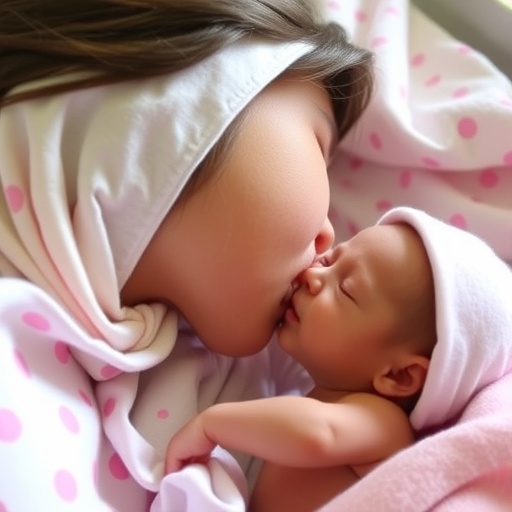
A mother’s ability to notice, interpret, and respond warmly to her child’s signals may help shape emotional and behavioral development years after birth, according to a large international study led by the University of Oulu in Finland. The research found that maternal sensitivity was associated with fewer emotional and behavioral difficulties among children born prematurely, suggesting that the quality of early parent–child interaction may soften some of the developmental risks linked to an early arrival.
Premature birth, commonly defined as birth before 37 completed weeks of pregnancy, is already known to increase the likelihood of later difficulties involving attention, social relationships, emotional control, and behavior. The risk generally rises as gestational age falls, because the brain and other biological systems are interrupted while still undergoing rapid development. Yet prematurity is not a fixed prediction of a child’s future. The new findings indicate that the child’s early social environment may influence how those biological vulnerabilities unfold.
The study used individual participant data from 2,469 mother–child pairs drawn from seven longitudinal birth cohorts in Germany, the Netherlands, Australia, New Zealand, and Israel. The children were born between 1980 and 2014 and were followed over time, allowing researchers to compare early observations of parent–child interaction with later assessments of emotional and behavioral functioning. Rather than combining only summary statistics from previous studies, an individual participant data meta-analysis brings together original participant-level information, enabling researchers to examine patterns across datasets using more consistent analytical methods.
Maternal sensitivity was central to the analysis. In developmental science, sensitivity refers to a caregiver’s capacity to detect a child’s cues, understand what those cues may mean, and respond promptly, appropriately, and emotionally attuned to the child’s needs. A sensitive response may involve soothing an overstimulated infant, adjusting play when a child loses interest, or offering reassurance when the child shows distress. It does not mean responding perfectly at every moment. Instead, it describes a general pattern of warm, contingent, and appropriately regulated interaction.
Across the participating cohorts, children exposed to higher levels of maternal sensitivity tended to show fewer emotional and behavioral problems later in childhood. This association was observed among children born preterm as well as those born at term. Importantly, the relationship remained evident regardless of how prematurely a child had been born. The finding suggests that sensitive interaction may function as a modifiable environmental factor through which the effects of preterm birth are partly expressed, rather than simply reflecting the child’s gestational age or medical history.
The researchers also examined a subgroup of 1,062 mother–child pairs who were followed into adolescence. The same broad pattern appeared: early maternal sensitivity was linked with fewer later difficulties, even as children moved beyond early childhood and entered the more complex social and emotional world of adolescence. This persistence matters because problems involving emotional regulation, peer interaction, attention, and conduct can continue from childhood into the teenage years and, for some individuals, adulthood.
The results do not mean that parenting determines a child’s outcome or that mothers are responsible for difficulties associated with premature birth. Families of preterm infants often face intensive medical care, disrupted routines, financial pressures, and significant psychological stress. Infants born early may also be harder to read because of immature neurological systems, medical complications, altered sleep patterns, or difficulties with feeding and regulation. These factors can make responsive interaction more challenging precisely when parents need the greatest support. The study instead points toward relationship-based care as one potentially valuable part of a broader developmental support system.
Researchers describe maternal sensitivity as modifiable, meaning it can potentially be strengthened through targeted support. Interventions could include coaching parents to recognize infant cues, respond to distress, support attention and engagement, and adapt interaction to a child’s developmental level. Such programs may be delivered through neonatal units, pediatric services, home-visiting initiatives, parenting programs, or Finland’s extensive child health clinic network, which reaches nearly all families with young children. The researchers emphasize that these approaches should complement, not replace, neonatal medicine, developmental monitoring, education, and mental-health services.
The study’s international design strengthens the relevance of its conclusions because the same pattern was found across cohorts from Europe, Australia, and New Zealand, as well as Israel. However, the findings remain observational: they show an association between early sensitivity and later development, not definitive proof that sensitivity alone causes improved outcomes. Maternal mental health, family resources, infant medical complications, genetic influences, and the wider caregiving environment may all contribute. Future research will need to test specific interventions, identify which forms of support work best for different families, and determine whether improvements in parent–child interaction produce measurable changes in children’s behavior and emotional well-being.
The findings arrive at a time when prematurity is increasingly understood not only as a medical event, but also as a long-term developmental experience. A fragile beginning does not erase the influence of later relationships. By showing that sensitive parent–child interaction is associated with better emotional and behavioral outcomes across both preterm and full-term groups, the international team offers a practical message for healthcare and education: supporting the relationship around the child may be as important as monitoring the child’s symptoms. The researchers argue that parenting support, early intervention, schools, pediatric care, and mental-health services should systematically promote responsive interaction from the earliest possible stage.
News Publication Date: 9 July 2026
Web References: https://doi.org/10.1111/dmcn.70387
References: Jokiranta-Olkoniemi, E., Treyvaud, K., Wolke, D., Esser, G., Woodward, L. J., Spittle, A., Cheong, J. L. Y., van Baar, A. L., Verhoeven, M., Gueron-Sela, N., Atzaba-Poria, N., Anderson, P. J., & Jaekel, J. “Emotional and behavioural problems of children born preterm and maternal sensitivity: An individual participant data meta-analysis.” Developmental Medicine & Child Neurology. Published 9 July 2026. DOI: 10.1111/dmcn.70387
Cite Scienmag News
Courtney Benton. (August 17, 2026). Maternal sensitivity shields preterm-born children from emotional and behavioral problems. Scienmag. https://scienmag.com/maternal-sensitivity-shields-preterm-born-children-from-emotional-and-behavioral-problems/
Courtney Benton. "Maternal sensitivity shields preterm-born children from emotional and behavioral problems." Scienmag, 17 August 2026, https://scienmag.com/maternal-sensitivity-shields-preterm-born-children-from-emotional-and-behavioral-problems/. Accessed 4 September 2026.
Courtney Benton. "Maternal sensitivity shields preterm-born children from emotional and behavioral problems." Scienmag. August 17, 2026. https://scienmag.com/maternal-sensitivity-shields-preterm-born-children-from-emotional-and-behavioral-problems/


