


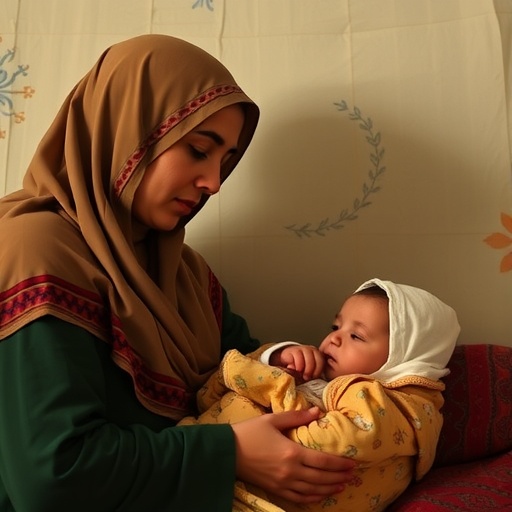
In recent years, the global refugee crisis has posed unprecedented challenges to health systems worldwide, particularly affecting vulnerable populations such as pregnant women and newborns. Among these populations, Syrian refugees in Turkey represent a crucial demographic, grappling with complex barriers to equitable healthcare access. A groundbreaking systematic review and meta-analysis conducted by Hakimi, Turfan, Allahqoli, and colleagues brings to light stark inequalities in maternal and newborn health among Syrian refugees residing in Turkey. Published in the International Journal for Equity in Health, this comprehensive study underscores the multifaceted nature of health disparities experienced within this displaced community, revealing alarming gaps that demand urgent policy intervention and health system reform.
This meticulous meta-analysis synthesizes data from multiple studies and surveillance reports to offer a nuanced portrait of maternal and newborn health outcomes among Syrian refugees. The authors delve not only into statistical disparities but also explore underlying determinants such as socio-economic status, healthcare accessibility, cultural barriers, and the protracted effects of displacement. Their findings suggest that Syrian refugee women face significantly higher risks of adverse maternal outcomes, including increased rates of preterm birth, low birth weight, maternal morbidity, and mortality when compared to the host Turkish population and global averages. The newborns within this population similarly exhibit heightened vulnerability to neonatal complications, pointing to systemic inequities in prenatal and postnatal care.
Central to the study’s analysis is the intersection of refugee status and healthcare infrastructure in Turkey, which hosts one of the largest Syrian refugee populations globally. Despite Turkey’s commendable efforts to integrate refugees into its health system, the authors highlight persistent challenges related to language barriers, legal status ambiguity, economic hardship, and cultural norms that limit the effectiveness of available maternal health services. Importantly, the paper illustrates how these challenges collectively impede timely antenatal visits, skilled birth attendance, and essential newborn interventions—components critical for ensuring positive health trajectories.
The methodology underpinning this comprehensive review involved rigorous literature searches across international databases, systematically excluding studies that did not meet stringent inclusion criteria. The meta-analytic approach allowed for the quantification of maternal and newborn health disparities through pooled effect sizes and risk ratios, thereby providing a robust statistical foundation for the authors’ conclusions. This methodological rigor is instrumental in transcending anecdotal evidence and establishing a high degree of confidence in the magnitude and consistency of observed inequalities.
Beyond the epidemiological data, the analysis contextualizes maternal and neonatal health outcomes within the broader framework of social determinants of health. Displacement disrupts traditional family and community support networks, exacerbates poverty, and precipitates psychosocial stress—all of which are intricately linked with adverse pregnancy outcomes. The study discusses how these factors compound one another, creating a cumulative risk that disproportionately affects Syrian refugee mothers and their infants. This layered understanding of health inequality enriches the discourse on refugee health to move beyond clinical indicators alone and emphasize the importance of holistic interventions.
Particularly striking is the study’s exploration of healthcare utilization patterns among Syrian refugee women. The authors report lower rates of antenatal care initiation and completion, with many women delaying their first prenatal visit until late into pregnancy or delivering without skilled birth attendants. These patterns are attributed to several factors: lack of awareness about available services, financial constraints, fear of discrimination, and logistical hurdles such as transportation difficulties. This insight into behavioral barriers underscores the critical need for culturally sensitive health promotion and community outreach programs tailored to refugee populations.
The findings also have important implications for health equity and human rights discourses. Maternal and newborn health is universally recognized as a key indicator of broader health system performance and social justice. By documenting clear inequities, the study compels policymakers, international organizations, and healthcare providers to acknowledge and address systemic failures that undermine the well-being of refugee populations. The authors advocate for scalable interventions that prioritize equitable access, financial protection, and inclusive health governance to ensure that Syrian refugee mothers and their newborns are not left behind in Turkey’s public health agenda.
Moreover, the research highlights the potential benefits of integrating refugee health data into national information systems, facilitating better resource allocation and monitoring of health outcomes. Such integration is vital for tracking progress toward Sustainable Development Goals related to maternal and child health, health equity, and universal health coverage. The study reveals gaps in data collection and reporting mechanisms, which hinder the ability to respond effectively to emerging health needs and to evaluate the impact of current interventions.
The systematic review also draws comparisons with maternal and newborn health inequalities observed in other refugee-hosting countries, situating the Turkish context within a global landscape. While challenges vary by country, common themes emerge: refugees often experience poorer health outcomes than host populations, exacerbated by social exclusion and healthcare system fragmentation. Turkey’s case study illustrates both the potential for policy innovation and the limits posed by resource constraints and socio-political factors, offering lessons for other nations coping with similar integration dilemmas.
Importantly, the authors address the long-term impact of maternal and newborn health disparities on broader societal well-being. Poor health outcomes during the perinatal period are linked with increased risks of chronic diseases, developmental delays, and intergenerational poverty. By identifying patterns of inequality early, the research underscores the urgency of interventions aimed at breaking cycles of disadvantage and promoting resilience among refugee families. This life-course perspective reinforces the notion that investing in maternal and newborn health yields significant returns not only for individuals but also for communities and host societies.
The paper additionally calls for interdisciplinary collaboration to tackle the complex nature of refugee health inequality. Public health experts, social scientists, policymakers, and refugee advocates must coordinate efforts to address both medical and social determinants of health. The authors suggest community-engaged research methodologies and participatory approaches to ensure that interventions are contextually appropriate and responsive to refugee voices. This approach aligns with emerging paradigms in global health that prioritize equity, inclusion, and sustainability.
From a technical standpoint, the study employs advanced statistical techniques in its meta-analysis to address heterogeneity across studies, handle potential publication bias, and verify the robustness of results through sensitivity analyses. Such rigorous analytics strengthen the credibility of the findings and provide a model for future research in humanitarian health settings. The explicit acknowledgment of study limitations, such as variability in data quality and regional differences within Turkey, further exemplifies the authors’ commitment to scientific transparency and nuance.
In summation, this seminal work by Hakimi and colleagues sheds critical light on profound maternal and newborn health inequalities affecting Syrian refugees in Turkey. Through a comprehensive evaluation of existing evidence and sophisticated meta-analytical techniques, the study exposes gaps in healthcare access and outcomes that must be urgently addressed. Its insights resonate beyond Turkey’s borders, informing global efforts to ensure that displaced populations receive equitable, high-quality maternal and neonatal care. As the world contemplates responses to ongoing displacement crises, this research serves as a clarion call for sustained commitment to health equity, human rights, and social justice.
The implications of these findings resonate not only in the realm of health policy but also in the ethical imperatives of hosting nations and humanitarian organizations. Syrian refugees represent a significant component of regional population dynamics, and their health status is a proxy for the inclusiveness and resilience of host societies. This study not only quantifies disparities but also challenges stakeholders to envision health systems designed to be truly universal and adaptive in the face of displacement and social upheaval. The call for equity in maternal and newborn health among refugees echoes loudly and must guide both immediate interventions and long-term strategic planning.
Cite Scienmag News
Harold Sullivan. (June 2, 2025). Maternal, Newborn Health Inequality Among Syrian Refugees. Scienmag. https://scienmag.com/maternal-newborn-health-inequality-among-syrian-refugees/
Harold Sullivan. "Maternal, Newborn Health Inequality Among Syrian Refugees." Scienmag, 2 June 2025, https://scienmag.com/maternal-newborn-health-inequality-among-syrian-refugees/. Accessed 10 September 2026.
Harold Sullivan. "Maternal, Newborn Health Inequality Among Syrian Refugees." Scienmag. June 2, 2025. https://scienmag.com/maternal-newborn-health-inequality-among-syrian-refugees/


