


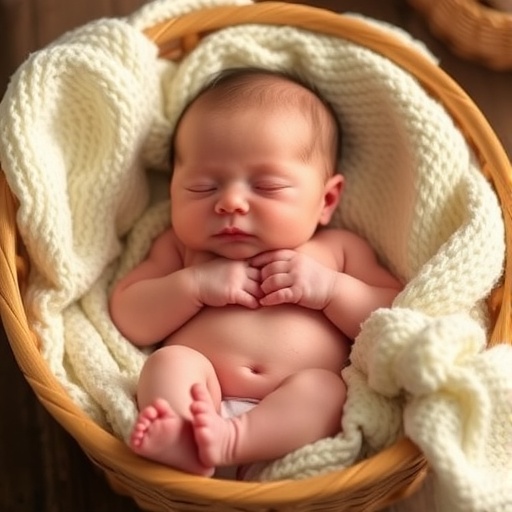
In a groundbreaking study slated for publication in the prestigious BMC Pediatrics journal, a team of researchers led by M.N. Shiadeh, H. Pasha, and O. Zare has delved into the crucial topic of managing bilirubin levels in newborns who are undergoing phototherapy. This randomized clinical trial addresses an important question that has implications for neonatal care: Can massage or a chicory bath be effective interventions in reducing bilirubin levels in term newborns?
Bilirubin, a substance produced during the breakdown of red blood cells, can accumulate to high levels in newborns, leading to jaundice, a common condition among infants. While phototherapy has long been the standard treatment for hyperbilirubinemia, the quest for supplementary methods to enhance bilirubin reduction has sparked interest in alternative therapies. This study aims to evaluate the efficacy of two non-invasive interventions: massage therapy and chicory baths.
The research involved a randomized control trial design, providing a robust framework for determining which intervention might offer better outcomes for infants affected by elevated bilirubin levels. Over several months, the team enrolled term newborns who were treated with phototherapy for hyperbilirubinemia. Participants were then randomly assigned to one of three groups: a massage group, a chicory bath group, and a control group receiving standard care.
Massage therapy, known for its ability to promote circulation and relaxation, was applied to the infants by trained professionals. The massage techniques utilized were tailored specifically for neonates, focusing on gentle strokes that adhere to infant-safe practices. As the babies received these massage therapies, researchers monitored their bilirubin levels, aiming to discern any significant differences resulting from the treatment.
Conversely, the chicory bath group was immersed in water infused with chicory, a plant known for its potential health benefits, including anti-inflammatory and detoxifying properties. The concept behind this approach is that chicory may enhance bilirubin elimination through skin absorption or other physiological pathways, thereby complementing the effects of phototherapy. The bath procedure was designed to be enjoyable for the infants, creating a serene environment conducive to relaxation and potentially lowering stress, which could further aid in bilirubin removal.
Meanwhile, the control group continued receiving standard phototherapy without any additional interventions. This group played a crucial role in the study by providing a baseline measure against which the effectiveness of the massage and chicory bath could be gauged. The comparison among these groups aimed to provide clear insights into whether either of the alternative therapies could yield better results in managing bilirubin levels during treatment.
As the trial progressed, data on bilirubin levels were collected at multiple intervals. This longitudinal assessment aimed to capture the dynamics of bilirubin reduction in relation to each intervention. The primary endpoint was the rate of bilirubin decrease, but secondary endpoints also included infant comfort and ease of the procedures, offering insights into the overall experience of the newborns and their families during treatment.
Preliminary results from this study could have significant implications for the field of neonatal care. If the findings reveal that either massage or chicory baths are effective in lowering bilirubin levels, it could prompt a shift in clinical practice, allowing for more holistic and integrative approaches to managing hyperbilirubinemia. This would represent a meaningful advancement in the care strategies for newborns, underscoring the importance of non-invasive interventions in the sensitive period following birth.
Furthermore, this research fits into a broader framework of exploring alternative therapies that complement conventional medical treatment. Parents and healthcare providers often face challenges in managing the emotional and physical well-being of newborns during phototherapy. Incorporating techniques such as massage or pleasing baths could not only enhance bilirubin reduction but also provide comfort, nurturing, and bonding opportunities during an otherwise distressing time for infants and their families.
The implications extend beyond just immediate care; they touch on the importance of infants’ overall developmental health. Research has increasingly highlighted the significance of early life experiences on long-term health outcomes. Introducing soothing interventions could foster a more supportive environment for neonates, potentially influencing their development positively during those formative days.
As this study awaits publication, experts in pediatric care, lactating mothers, and those in the medical community are eager to learn about the outcomes and potential recommendations that could arise from the findings. Clinicians are particularly interested in evidence-based practices that can enhance patient care and improve health metrics in infants, making the outcomes of this trial crucial for shaping future policies and treatment protocols.
In conclusion, the research conducted by Shiadeh, Pasha, and Zare presents an exciting exploration into the realms of massage therapy and chicory baths as adjunct treatments for managing bilirubin levels in term newborns undergoing phototherapy. Its findings could signify a pivotal moment in neonatal care, prompting a more comprehensive approach to treating hyperbilirubinemia and improving the experience and health of vulnerable newborns. As the medical community awaits the final results, the anticipation continues to build around the potential for these simple yet effective interventions to transform care practices for infants facing jaundice.
Shiadeh, M.N., Pasha, H., Zare, O. et al. Comparison of effect of massage or chicory bath on bilirubin levels in term newborns undergoing phototherapy: a randomized clinical trial.
BMC Pediatr 25, 775 (2025). https://doi.org/10.1186/s12887-025-06170-x
Cite Scienmag News
Harold Sullivan. (October 9, 2025). Massage vs. Chicory Bath: Impact on Newborn Bilirubin. Scienmag. https://scienmag.com/massage-vs-chicory-bath-impact-on-newborn-bilirubin/
Harold Sullivan. "Massage vs. Chicory Bath: Impact on Newborn Bilirubin." Scienmag, 9 October 2025, https://scienmag.com/massage-vs-chicory-bath-impact-on-newborn-bilirubin/. Accessed 6 September 2026.
Harold Sullivan. "Massage vs. Chicory Bath: Impact on Newborn Bilirubin." Scienmag. October 9, 2025. https://scienmag.com/massage-vs-chicory-bath-impact-on-newborn-bilirubin/


