


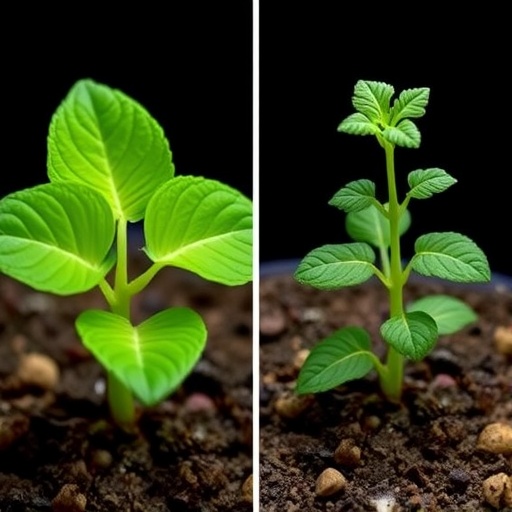
In a finding that is sending ripples through the plant science community, researchers have created the first mutants defective in the Arg/N-degron protein degradation pathway in a major crop species, and the results defy the expectations built over nearly two decades of work in the laboratory weed Arabidopsis thaliana. The study, published in the open-access journal Plant Direct, reveals that a cellular machinery long assumed to work identically across related plants behaves in strikingly divergent ways in Brassica rapa, the species that gives the world turnips, pak choi, and Chinese cabbage. The work carries a blunt message for agricultural science: knowledge harvested from model organisms cannot be transplanted into crops on faith, even when the crops in question belong to the very same botanical family as the model.
The Arg/N-degron pathway is one of the most elegant regulatory circuits in biology. It belongs to the ubiquitin/proteasome system, the cellular recycling machinery that tags unwanted proteins with ubiquitin molecules and delivers them to the proteasome for destruction. What makes the N-degron pathway special is how it decides which proteins deserve destruction: it reads the very first amino acid residue at a protein’s N-terminus, along with any biochemical modifications attached to it, as a kind of molecular bar code. Certain N-terminal residues act as destabilizing marks, so-called degrons, that trigger ubiquitylation and rapid degradation. In plants, the pathway involves a relay of enzymes. Plant cysteine oxidases first oxidize N-terminal cysteine residues in an oxygen-dependent reaction; enzymes called Arg-tRNA-protein transferases, or ATEs, then attach arginine to oxidized cysteines as well as to N-terminal aspartate and glutamate; and finally, an E3 ubiquitin ligase named PROTEOLYSIS6, or PRT6, recognizes the arginine-marked proteins and condemns them to the proteasome.
The pathway’s claim to fame came from studies showing that it functions as the oxygen-sensing apparatus of plants. Its best-characterized substrates are a family of five transcription factors, the group VII ETHYLENE RESPONSE FACTORS, or ERFVIIs, which serve as master switches of the hypoxia response program. Because ERFVIIs carry N-terminal cysteines, they are destabilized and destroyed when oxygen is plentiful, but when flooding or waterlogging deprives plant tissues of oxygen, the cysteine oxidation step fails, the transcription factors accumulate, and the plant launches a coordinated survival program. Arabidopsis prt6 mutants, unable to degrade their ERFVIIs, are famously tolerant of waterlogging. The same mutation in barley confers similar benefits, and overexpression of stabilized ERFVII homologs improves waterlogging tolerance in maize and wheat. Arabidopsis prt6 mutants have also shown enhanced tolerance to salt and drought, and pathway mutants display altered responses to pathogens. All of this made PRT6 an enticing target for engineering flood-proof crops.
That is precisely why the new results from an Irish research team are so provocative. Working with Brassica rapa, a diploid Brassica crop whose genome was sequenced more than a decade ago and for which a TILLING collection of chemically mutagenized lines exists, the researchers hunted for mutations in the Arg/N-degron pathway components. Like Arabidopsis, B. rapa encodes two Arg-transferases, Br ATE1 and Br ATE2. But unlike Arabidopsis, where ATE genes exist as single copies, the triplicated B. rapa genome carries three PRT6 homologs. Using the Ro18 TILLING population, the team identified alleles carrying premature stop codons in both ATE genes and in all three PRT6 genes, then backcrossed the lines to clean up the genetic background before combining mutations.
The first shock came from the Arg-transferase double mutant. In Arabidopsis, plants lacking both ATE1 and ATE2 survive, albeit with mild defects in leaf morphology, shoot branching, and the timing of senescence. In B. rapa, the equivalent Br ate1 ate2 double homozygotes, recovered at the expected Mendelian frequency of one quarter from segregating populations, were dramatically abnormal. They germinated as smaller seeds, produced seedlings with stunted roots and shortened hypocotyls and pale, underdeveloped cotyledons, and then simply stopped. No double homozygous mutant seedling ever developed beyond the seedling stage. The single mutants, by contrast, looked essentially normal, indicating that the two Arg-transferases perform redundant but essential functions during early B. rapa development. The authors suggest a molecular explanation rooted in gene duplication: B. rapa harbors eleven putative homologs of the ZPR proteins, negative regulators of meristem-maintaining HD-ZIP III transcription factors, and four of these begin with the Met-Cys sequence characteristic of oxygen-dependent N-degron substrates, compared with only one in Arabidopsis. Accumulation of these repressors in an arginylation-defective mutant could shut down the shoot apical meristem much as it does in severe Arabidopsis meristem mutants. Notably, the phenotype echoes the embryonic lethality seen in mice lacking their single ATE1 gene, hinting that arginylation’s developmental importance is more conserved across eukaryotes than the Arabidopsis data alone would suggest.
Because the ATE double mutant died young, the team turned to PRT6 to probe the pathway’s stress functions. They built a double mutant, Br prt6.2/3, knocking out the two most highly expressed of the three PRT6 homologs while leaving the weakly expressed Br PRT6.1 intact. These plants grew normally, but biochemical assays confirmed the pathway was genuinely impaired. When the researchers transiently expressed artificial reporter proteins in which luciferase was fused downstream of ubiquitin so that specific N-terminal residues would be exposed after proteolytic cleavage, reporters beginning with arginine or aspartate accumulated to high levels in the double mutant but not in wild-type controls, while a methionine-starting reporter was unaffected. Crucially, molecular markers of the hypoxia response, including genes encoding a homeobox transcription factor, a plant cysteine oxidase, and an ERFVII-like factor, were constitutively elevated in the double mutant seedlings, exactly what one would expect if the ERFVII transcription factors were piling up instead of being degraded.
Then came the second shock, and it is the one with the greatest agricultural implications. In Arabidopsis, loss of PRT6 makes plants more tolerant of low oxygen. In B. rapa, the opposite occurred. After two weeks of waterlogging, chlorophyll readings taken with a SPAD meter showed that the double mutant lines had suffered more damage than either wild-type control. Similarly, when seven-day-old seedlings were subjected to sixteen hours of darkness under anaerobic conditions and then allowed to recover, the mutants fared worse than wild type. The constitutive activation of hypoxia genes, in other words, did not protect the crop; it appeared to hurt it. The team also tested salt stress, where Arabidopsis prt6 mutants show clear tolerance advantages, and found no difference at all between the B. rapa mutants and wild types at any of three sodium chloride concentrations. The absence of a salt phenotype could reflect residual activity of the third, unmutated PRT6 gene, but it stands in sharp contrast to the model-plant playbook.
Immunity told a subtler story. The researchers challenged seedlings with flg22, a peptide derived from bacterial flagellin that triggers pattern-triggered immunity, the first layer of plant innate defense. RNA sequencing revealed that wild-type and mutant plants mounted broadly similar transcriptional responses, with nearly 5,600 differentially expressed genes in each genotype and a statistically robust overlap of 4,783 genes changing in the same direction with similar magnitude. Yet 714 genes responded only in the wild type and 1,059 only in the mutant. Genes downregulated exclusively in the wild type were enriched for photosynthesis and chloroplast functions, while genes responding uniquely in the mutant were enriched for Golgi apparatus and intracellular vesicle transport, hinting that PRT6 might help reprogram chloroplast activity during immune signaling and that protein traffic may be perturbed in its absence. Despite these transcriptional differences, functional immune assays showed nothing: flg22-induced growth inhibition was equivalent across genotypes, apoplastic reactive oxygen bursts measured with a luminol-peroxidase luminescence assay were indistinguishable, and lesion sizes after inoculation with the necrotrophic fungus Sclerotinia sclerotiorum, a serious pathogen of oilseed rape, were the same in mutants and wild types. The Arabidopsis literature would have predicted defense defects; the crop showed none.
Why would a pathway so conserved in its components behave so differently in two members of the same family, whose lineages split roughly 43 million years ago? The authors argue that the divergence likely lies not in the machinery itself but in its substrates and downstream targets. Evolution can act directly on protein N-termini, gaining or losing destabilizing residues, or through species-specific proteases that cleave proteins to expose new destabilizing N-termini. Every such change rewires which proteins the pathway controls, and with them, which physiological processes it influences. A duplicated genome, as in Brassica, multiplies the opportunities for such rewiring. The result is a pathway with conserved parts but species-specific wiring, a distinction invisible to anyone working only in Arabidopsis.
The practical lesson is already resonating. Oilseed rape, cabbage, broccoli, and turnip together represent enormous agricultural value, and flooding alone causes catastrophic yield losses worldwide. Breeding or editing strategies based on the Arabidopsis model would have predicted that disabling PRT6 activity in a Brassica crop would buy waterlogging tolerance. The new data suggest such a strategy could backfire in B. rapa, underscoring recent calls in the plant science community for systematic validation of model-plant findings directly in crops. The B. rapa prt6.2/3 lines, which grow normally while carrying a demonstrably impaired N-degron pathway, now offer researchers a genuine crop-system platform for dissecting these functions further. In a field racing to translate laboratory discoveries into climate-resilient agriculture, this study is a vivid reminder that the map is not the territory, and that in biology, the fine print of evolution is written one N-terminus at a time.
Cite Scienmag News
Alan Morgan. (September 6, 2026). Arg/N-Degron Pathway Evolves Differently in Brassica rapa and Arabidopsis. Scienmag. https://scienmag.com/arg-n-degron-pathway-evolves-differently-in-brassica-rapa-and-arabidopsis/
Alan Morgan. "Arg/N-Degron Pathway Evolves Differently in Brassica rapa and Arabidopsis." Scienmag, 6 September 2026, https://scienmag.com/arg-n-degron-pathway-evolves-differently-in-brassica-rapa-and-arabidopsis/. Accessed 6 September 2026.
Alan Morgan. "Arg/N-Degron Pathway Evolves Differently in Brassica rapa and Arabidopsis." Scienmag. September 6, 2026. https://scienmag.com/arg-n-degron-pathway-evolves-differently-in-brassica-rapa-and-arabidopsis/


