


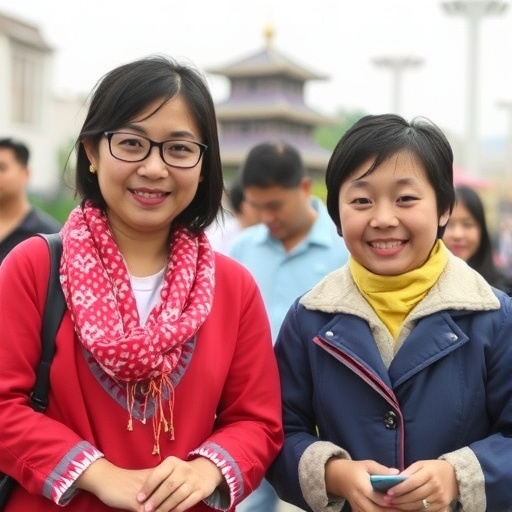
In recent years, South Korea has witnessed a notable increase in the number of marriage immigrants, particularly among women from other countries seeking to find a partner. This phenomenon, referred to as “marriage migration,” has significant implications for the country’s demographic landscape and social fabric. As the traditional family structure evolves, understanding the dynamics of these marriage immigrants, particularly their educational backgrounds, has become critical. A new study by Huh and Winden titled “Educational selectivity of marriage immigrants in South Korea: how bride immigrants differ” sheds light on this topic, revealing insightful trends and patterns that could reshape our understanding of this social phenomenon.
The research conducted by Huh and Winden focuses on educational selectivity among marriage immigrants in South Korea, with a detailed examination of the various factors that influence the educational qualifications of these individuals. The study argues that education plays a pivotal role in shaping not only the immigrants’ opportunities for integration but also their social mobility after settling in Korea. This raises important questions surrounding the intersections of education, gender, and migration, particularly considering the societal pressures and expectations that marriage immigrants may face in their new environments.
One of the key findings of the research is the stark contrast between the educational backgrounds of Korean men and their foreign brides. While many Korean women attain high levels of education and have established careers, the majority of marriage immigrants come from backgrounds with lesser educational attainment. This disparity underscores a critical aspect of the marriage market dynamics in South Korea, where educational status can significantly impact marriage prospects. The study highlights that the educational selectivity witnessed among these marriage immigrants is not merely a byproduct of individual choices but is deeply embedded within the broader societal structures that influence migration patterns.
The implications of these findings are profound, especially considering the cultural context of South Korea, where educational attainment is highly valued. For marriage immigrants, the journey does not end with finding a partner; it also involves navigating a complex landscape of cultural adaptation and social integration. Many immigrants enter South Korea with the hope of a better life, yet they often encounter significant barriers, including language proficiency, cultural differences, and societal expectations that can hinder their ability to thrive in their new surroundings. As such, understanding their educational trajectories becomes essential in addressing these challenges.
One pivotal dimension that emerges from Huh and Winden’s analysis is how education influences the social mobility of these marriage immigrants. Women with higher educational qualifications often report a more positive integration experience, experiencing greater acceptance and more opportunities in the labor market. This improved social standing can lead to better familial support structures and increased overall well-being. In contrast, those with lower educational attainment may face obstacles that severely limit their engagement with society, perpetuating cycles of marginalization and isolation.
Moreover, the study emphasizes the pressing need for policy interventions targeting marriage immigrants in South Korea. It suggests that social policies must be reframed to not only accommodate the unique needs of these individuals but also to empower them through educational programs and social services. Enhancing access to education, language training, and vocational support can significantly improve the life chances of marriage immigrants and help integrate them into Korean society more effectively.
Furthermore, the research highlights discrepancies in how various groups of marriage immigrants experience educational selectivity. For example, the study examines the differences between immigrants from neighboring Asian countries and those from more distant regions. The varying cultural norms, educational systems, and socio-economic conditions of these countries contribute to the different integration experiences of these women. This diversity underscores the importance of nuanced approaches that take into account the unique circumstances of each group rather than treating all marriage immigrants as a homogeneous entity.
In addition to education, the study contributes to a broader discourse on gender roles and expectations within marriage. It reveals that women who migrate for marriage may bear the brunt of traditional gender norms, which can limit their agency in personal and professional spheres. Therefore, addressing issues of gender inequality is crucial in facilitating better outcomes for marriage immigrants in South Korea. The insights provided by Huh and Winden could serve as a foundation for future research aimed at improving the life experiences of these immigrants and challenging the socio-cultural barriers they encounter.
While the educational opportunities available to marriage immigrants are paramount, it is also important to consider the role of networks and community support systems. The presence of strong community ties has been shown to facilitate better adaptation and integration for marriage immigrants. The existence of supportive social networks can counteract the isolation many face, providing them with resources and companionship that might otherwise be lacking in their new environments.
Significantly, the study opens the door for further investigations into the psychological aspects of migration and marriage. The stressors associated with immigration, alongside the pressures of adapting to a new culture while adhering to longstanding cultural norms from their home countries, can significantly impact the mental health of marriage immigrants. Understanding these psychological dimensions presents an opportunity for comprehensive support strategies that take into account not just the educational needs but also the emotional and mental well-being of these individuals.
As the demographic shifts continue in South Korea, there is a pressing need for ongoing conversations surrounding the frameworks of marriage, migration, and integration. Huh and Winden’s research serves as a crucial starting point for these discussions, illuminating key issues related to educational selectivity and the distinct experiences of bride immigrants. Their findings promise to inform future policies and programs aimed at fostering a more inclusive environment for individuals navigating the complexities of life as marriage immigrants.
In conclusion, the educational selectivity of marriage immigrants in South Korea reveals not only patterns of disparity but also hints at broader societal implications. By exploring how educational backgrounds shape the experiences of these individuals, the study lays the groundwork for impactful changes in immigration and social policy. As South Korea continues to evolve demographically, understanding the intricacies of marriage migration will be paramount in fostering a society that values diversity and inclusion, ultimately enriching the cultural tapestry of the nation.
Huh and Winden’s work embodies a significant contribution to the discourse on migration, education, and gender roles in contemporary society. It is a timely reminder that in an increasingly interconnected world, we must critically assess the structures that shape our understanding of marriage, migration, and the socio-economic contexts in which they operate.
Huh, Y., Winden, M. Educational selectivity of marriage immigrants in South Korea: how bride immigrants differ.
J Pop Research 42, 25 (2025). https://doi.org/10.1007/s12546-025-09375-0
Cite Scienmag News
Courtney Benton. (August 30, 2025). Marriage Immigrants in South Korea: Education Disparities. Scienmag. https://scienmag.com/marriage-immigrants-in-south-korea-education-disparities/
Courtney Benton. "Marriage Immigrants in South Korea: Education Disparities." Scienmag, 30 August 2025, https://scienmag.com/marriage-immigrants-in-south-korea-education-disparities/. Accessed 3 September 2026.
Courtney Benton. "Marriage Immigrants in South Korea: Education Disparities." Scienmag. August 30, 2025. https://scienmag.com/marriage-immigrants-in-south-korea-education-disparities/


