


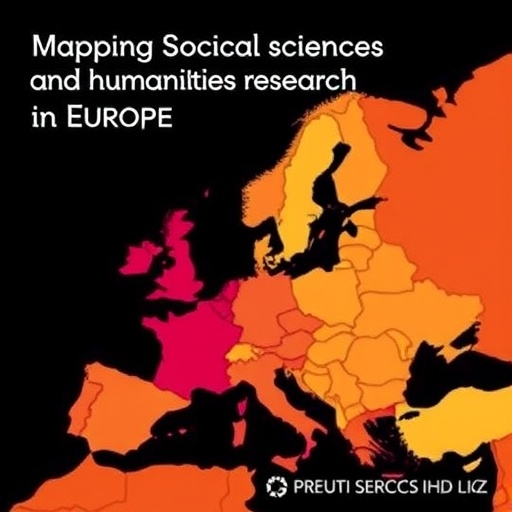
In the ever-evolving landscape of research, social sciences and humanities hold a unique position, manifesting the complexities of human society and its cultural, historical, and social dynamics. A recent article shed light on this landscape from a European perspective, delving deep into the intricacies of science mapping and bibliometrics. This compelling study by Scholkmann, Wollscheid, and Karlstrøm not only provides insights into the methodologies that can be adopted for analyzing trends in this field but also highlights the significant findings that emerge from an extensive review of existing literature.
Science mapping has emerged as a critical tool in the research community, allowing for the visualization of relationships and networks within academic literature. In recent years, the application of bibliometrics in social sciences and humanities has gained traction, offering researchers a quantitative approach to understanding the development and dissemination of knowledge. This article embarks on an exploration of these methodologies, emphasizing their relevance and applicability in contemporary research.
The authors argue that the social sciences and humanities are often misrepresented when compared to the natural sciences, largely due to the diverse methodologies and theoretical frameworks employed. By employing advanced bibliometric techniques, the article seeks to rectify this imbalance, offering a more comprehensive view of how these fields contribute to the collective knowledge ecosystem. The inherent value of humanities research, in particular, lies in its capacity to interpret human behavior, social structures, and cultural expressions, thus making it indispensable in today’s complex world.
Moreover, the research highlights the trends within the publication patterns across various social sciences and humanities disciplines in Europe. Through meticulous mapping of citation networks and collaborative patterns, the authors provide a visual representation of how different research domains intersect, revealing an intricate web of knowledge sharing. This synthesis of empirical data serves as a foundational basis for understanding the evolution of academic inquiry in these fields.
An essential component of the article is its focus on the implications for policy-making and funding in the arena of social sciences and humanities research. The authors argue that a robust understanding of the existing literature and current research trends will better inform decision-makers about where to allocate resources and how to promote interdisciplinary collaboration. This is particularly relevant in times where funding is limited and the demand for impactful research continues to grow.
Furthermore, the research identifies critical gaps in the existing literature that necessitate further exploration. The authors call for more interdisciplinary studies that bridge the gap between various humanities and social sciences fields. By fostering collaborations between researchers from different backgrounds, the potential for groundbreaking insights increases exponentially. This collaborative approach not only enriches the research outputs but also enhances the societal relevance of the findings.
The publication also engages in a critical analysis of the challenges and limitations faced by researchers in these fields. Issues such as publication bias, the influence of high-impact journals, and the difficulties in obtaining funding are all meticulously addressed. The authors provide evidence of how these challenges shape the research landscape, ultimately affecting the visibility and impact of social sciences and humanities research.
In a fascinating exploration of the trends over recent years, the article examines how emerging technologies are transforming research methodologies in the humanities and social sciences. The advent of digital tools and online platforms has facilitated access to vast repositories of data, enabling researchers to perform complex analyses that were previously unattainable. This digital revolution is reshaping traditional research paradigms and inviting new perspectives on longstanding questions.
The authors further emphasize the growing importance of interdisciplinary approaches in tackling pressing global challenges such as climate change, public health, and social justice. By integrating insights from various fields, researchers can develop more holistic strategies for addressing these multifaceted issues. This recognition of the interconnectedness of knowledge not only enriches the academic discourse but also amplifies the impact of research on society.
As the article progresses, it deftly navigates the role of emerging European research collaborations and networks aimed at enhancing the visibility and impact of social sciences and humanities research. Initiatives that promote collaboration, funding opportunities, and dissemination of knowledge are crucial for fostering a vibrant research environment. Strengthening these ties can facilitate knowledge exchange and create a supportive ecosystem for scholars.
Moreover, the discussion extends to the future trajectories of social sciences and humanities research, exploring potential avenues for growth and development in light of evolving societal needs. The authors envision a research landscape where traditional boundaries blur, allowing for innovative inquiries that reflect the complexities of contemporary life. This forward-looking perspective underscores the dynamic nature of research and its capacity to adapt to new contexts.
In conclusion, the article authored by Scholkmann, Wollscheid, and Karlstrøm serves as a pivotal contribution to the discourse surrounding research in social sciences and humanities. By leveraging science mapping and bibliometrics, the authors illuminate the intricate networks of knowledge that exist within these fields. Their findings not only advance our understanding of the publication landscape but also propose a roadmap for future research initiatives. This work reaffirms the vital role that social sciences and humanities play in shaping our understanding of the world, urging researchers, policymakers, and educators to recognize the profound significance of these domains within the academic community.
Scholkmann, A., Wollscheid, S., Karlstrøm, H. et al. Research on social sciences and humanities: a European perspective based on science mapping and bibliometrics.
Discov Educ 4, 398 (2025). https://doi.org/10.1007/s44217-025-00538-y
Cite Scienmag News
Courtney Benton. (October 9, 2025). Mapping Social Sciences and Humanities Research in Europe. Scienmag. https://scienmag.com/mapping-social-sciences-and-humanities-research-in-europe/
Courtney Benton. "Mapping Social Sciences and Humanities Research in Europe." Scienmag, 9 October 2025, https://scienmag.com/mapping-social-sciences-and-humanities-research-in-europe/. Accessed 3 September 2026.
Courtney Benton. "Mapping Social Sciences and Humanities Research in Europe." Scienmag. October 9, 2025. https://scienmag.com/mapping-social-sciences-and-humanities-research-in-europe/


