

Wednesday, August 19, 2026
Science
No Result
View All Result
  • Login
  • HOME
  • SCIENCE NEWS
  • CONTACT US
  • HOME
  • SCIENCE NEWS
  • CONTACT US
No Result
View All Result
Scienmag
No Result
View All Result
Home Science News Psychology & Psychiatry

MANF in the lateral septum controls ER function during chronic stress

July 9, 2026
in Psychology & Psychiatry
Reading Time: 2 mins read
0
MANF in the lateral septum controls ER function during chronic stress

MANF in the lateral septum controls ER function during chronic stress

65
SHARES
587
VIEWS
Share on FacebookShare on Twitter
ADVERTISEMENT

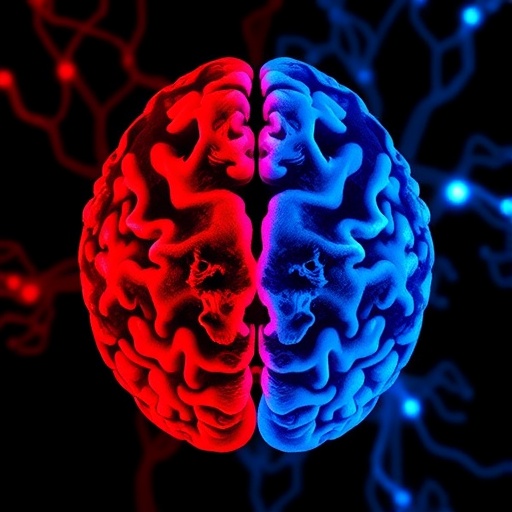
In a groundbreaking new study published in Translational Psychiatry, researchers have uncovered a critical molecular player in how the brain adapts to chronic stress. The team led by Ye, Duan, and Pei has identified the protein MANF (mesencephalic astrocyte-derived neurotrophic factor) within the lateral septum as a dynamic regulator of endoplasmic reticulum (ER) function during prolonged stress exposure. This discovery provides fresh insights into the cellular machinery underlying stress resilience and vulnerability.

The lateral septum, a brain region integral to emotional and stress-related behaviors, has long been implicated in modulating responses to adversity. However, the molecular details governing its adaptive processes remained elusive until now. MANF is known for its protective roles against ER stress, a condition in which the protein-folding capacity of the ER is overwhelmed, often leading to cellular dysfunction. The new research reveals that MANF expression in the lateral septum fluctuates in response to chronic stress, thereby influencing the ER’s ability to maintain homeostasis.

Mechanistically, the authors show that under sustained stress conditions, MANF acts as a dynamic modulator of ER stress pathways by facilitating proper protein folding and mitigating the accumulation of misfolded proteins. This regulation is vital because persistent ER stress can trigger inflammatory cascades and neuronal damage, contributing to psychiatric disorders such as depression and anxiety. By maintaining ER function, MANF supports neuronal integrity and helps the brain adapt to ongoing stress challenges.

The study employed sophisticated molecular techniques combined with behavioral analyses in animal models subjected to chronic stress paradigms. These experiments demonstrated that both upregulation and downregulation of MANF within the lateral septum impact stress-related behaviors and ER stress markers, underscoring its dual role as both sensor and effector in this context. Intriguingly, targeting MANF pathways may offer novel therapeutic avenues for stress-related mental health conditions.

Additionally, the research contributes to a growing body of evidence linking ER stress to neuropsychiatric pathology. Previous investigations have emphasized global brain ER stress responses, but this work elucidates how localized regulation within specific neural circuits like the lateral septum fine-tunes the overall stress response. This circuit-specific modulation represents a conceptual advance in understanding brain plasticity under chronic stress.

The implications of these findings are broad, suggesting that enhancing MANF function could bolster resilience to long-term stress. Given the pervasive impact of stress on mental health worldwide, unlocking molecular targets such as MANF opens exciting possibilities for developing interventions that fortify neural defenses against stress-induced damage.

In conclusion, this pioneering study uncovers how MANF dynamically regulates endoplasmic reticulum function in the lateral septum, orchestrating adaptive responses to chronic stress. The integration of molecular neurobiology with behavioral neuroscience heralds a new era in decoding the complex biology of stress resilience and mental health.


Subject of Research: The role of MANF in regulating endoplasmic reticulum function in the lateral septum during chronic stress response.

Article Title: MANF in the lateral septum dynamically regulates endoplasmic reticulum function in chronic stress response.

Article References:
Ye, J., Duan, C., Pei, H. et al. MANF in the lateral septum dynamically regulates endoplasmic reticulum function in chronic stress response. Transl Psychiatry (2026). https://doi.org/10.1038/s41398-026-04258-1

Image Credits: AI Generated

DOI: https://doi.org/10.1038/s41398-026-04258-1

Tags: brain regional regulation of stresscellular response to prolonged stressChronic stress brain adaptationchronic stress impact on ER functionendoplasmic reticulum stress regulationER function during chronic stresslateral septum role in stress responseMANF protein in lateral septummolecular pathways in stress vulnerabilityneuronal protection against ER stressneurotrophic factors and stress adaptationstress resilience molecular mechanisms
Share26Tweet16
Previous Post

Small-Scale Ocean Turbulence Impacts Climate Beyond Surface Waters

Next Post

Stopping GLP-1RA Linked to Increased Depression and Anxiety in Type 2 Diabetes

Related Posts

Nationwide study links community-acquired infections to onset of mental disorders
Psychology & Psychiatry

Nationwide study links community-acquired infections to onset of mental disorders

August 19, 2026
Preclinical Depressive Symptoms and Plasma Metabolic Signatures Linked to Parkinson’s Disease
Psychology & Psychiatry

Preclinical Depressive Symptoms and Plasma Metabolic Signatures Linked to Parkinson’s Disease

August 19, 2026
GLP-1 Receptor Activation Suppresses Pathological Defensive Aggression Through DMPAG in Mice
Psychology & Psychiatry

GLP-1 Receptor Activation Suppresses Pathological Defensive Aggression Through DMPAG in Mice

August 18, 2026
Randomized fMRI Trial Reveals How Ketamine Alters Rumination-Linked Brain Dynamics
Psychology & Psychiatry

Randomized fMRI Trial Reveals How Ketamine Alters Rumination-Linked Brain Dynamics

August 18, 2026
IL-6 Signaling Impairs Tregs and Promotes Pathogenic Th1-Like Cells in Depression
Psychology & Psychiatry

IL-6 Signaling Impairs Tregs and Promotes Pathogenic Th1-Like Cells in Depression

August 18, 2026
Depression Disrupts Time’s Arrow and Rewires Causal Brain Connectivity
Psychology & Psychiatry

Depression Disrupts Time’s Arrow and Rewires Causal Brain Connectivity

August 18, 2026
Next Post
Stopping GLP-1RA Linked to Increased Depression and Anxiety in Type 2 Diabetes

Stopping GLP-1RA Linked to Increased Depression and Anxiety in Type 2 Diabetes

  • Mothers who receive childcare support from maternal grandparents show more

    Mothers who receive childcare support from maternal grandparents show more parental warmth, finds NTU Singapore study

    27656 shares
    Share 11059 Tweet 6912
  • University of Seville Breaks 120-Year-Old Mystery, Revises a Key Einstein Concept

    1061 shares
    Share 424 Tweet 265
  • Bee body mass, pathogens and local climate influence heat tolerance

    682 shares
    Share 273 Tweet 171
  • Researchers record first-ever images and data of a shark experiencing a boat strike

    546 shares
    Share 218 Tweet 137
  • Groundbreaking Clinical Trial Reveals Lubiprostone Enhances Kidney Function

    531 shares
    Share 212 Tweet 133
Science

Embark on a thrilling journey of discovery with Scienmag.com—your ultimate source for cutting-edge breakthroughs. Immerse yourself in a world where curiosity knows no limits and tomorrow’s possibilities become today’s reality!

RECENT NEWS

  • Thermal justice could make urban heat adaptation fairer as cities grow hotter
  • Aging Alters Skin Gene Activity, Fueling Inflammation
  • IOF Names New Editor-in-Chief for Osteoporosis International’s European Office
  • Nearly Half of Intoxicating Hemp Instagram Posts Use Youth Marketing; 2.5% Warn

Categories

  • Agriculture
  • Anthropology
  • Archaeology
  • Athmospheric
  • Biology
  • Biotechnology
  • Blog
  • Bussines
  • Cancer
  • Chemistry
  • Climate
  • Earth Science
  • Editorial Policy
  • Marine
  • Mathematics
  • Medicine
  • Pediatry
  • Policy
  • Psychology & Psychiatry
  • Science Education
  • Social Science
  • Space
  • Technology and Engineering

Subscribe to Blog via Email

Success! An email was just sent to confirm your subscription. Please find the email now and click 'Confirm Follow' to start subscribing.

Join 5,150 other subscribers

© 2025 Scienmag - Science Magazine

Welcome Back!

Login to your account below

Forgotten Password?

Retrieve your password

Please enter your username or email address to reset your password.

Log In
No Result
View All Result
  • HOME
  • SCIENCE NEWS
  • CONTACT US

© 2025 Scienmag - Science Magazine
