Friday, October 30, 2026
Science
No Result
View All Result
  • Login
  • HOME
  • SCIENCE NEWS
  • CONTACT US
  • HOME
  • SCIENCE NEWS
  • CONTACT US
No Result
View All Result
Scienmag
No Result
View All Result
Home Science News Medicine

Machine learning model flags unstable carotid plaques from routine clinical data

October 28, 2026
in Medicine
Ophelia Keating
By Ophelia Keating Scienmag Editorial Profile - Health Services Research
Reading Time: 3 mins read
0
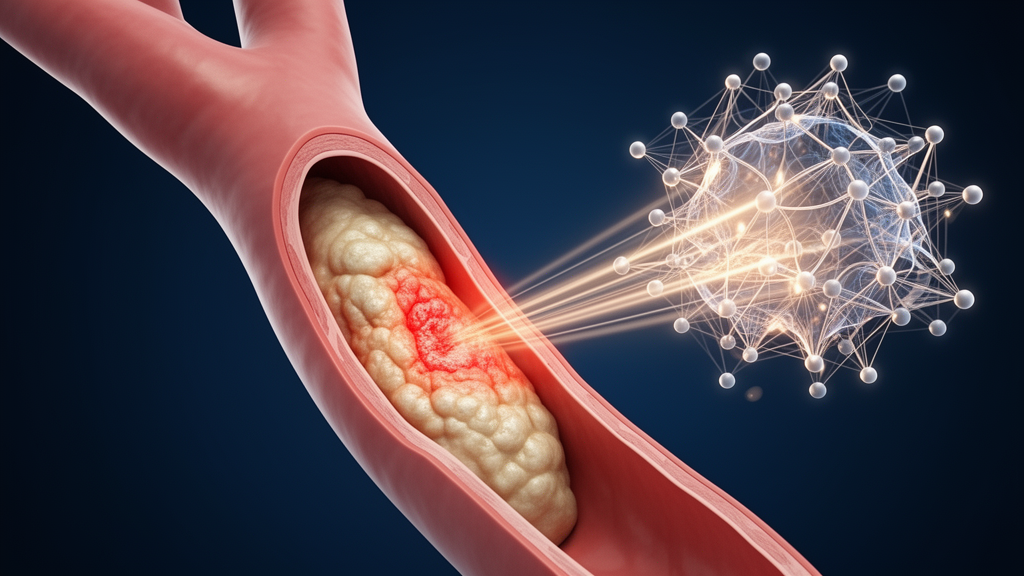
Machine learning model flags unstable carotid plaques from routine clinical data

Machine learning model flags unstable carotid plaques from routine clinical data

65
SHARES
587
VIEWS
Share on FacebookShare on Twitter
ADVERTISEMENT

Researchers have built machine learning models that predict whether a carotid plaque is likely to become unstable, using only routinely collected clinical data from patients at a single hospital in China. The work, published as a peer-reviewed research article in BMC Cardiovascular Disorders, reports that a model based on the light gradient boosting machine (LightGBM) algorithm delivered the strongest performance among four machine learning approaches tested.

The study was a retrospective analysis of data from 449 patients with carotid plaques treated at The Affiliated Hospital of Qingdao University between July 2022 and November 2024. The patients were randomly divided into a training set and a testing set at a 7:3 ratio, meaning roughly seven in ten records were used to teach the models and the remaining three in ten were held back to test how well they generalized to unseen cases.

Four machine learning algorithms were used to establish prediction models. The researchers then evaluated each model’s predictive performance using the area under the receiver operating characteristic curve (AUC), calibration curves, and decision curve analysis (DCA), a combination that captures both discrimination and clinical usefulness.

LightGBM came out on top. In the training set it achieved an AUC of 0.921 (95% confidence interval: 0.887–0.956) and an accuracy of 0.837. In the testing set it reached an AUC of 0.864 (95% CI: 0.784–0.944) with an accuracy of 0.811. The somewhat lower testing-set figures reflect performance on data the model had never seen during training, and the confidence intervals indicate the uncertainty around those point estimates.

To understand what drove the predictions, the team applied SHAP (SHapley Additive exPlanations), a technique that quantifies each feature’s contribution to a model’s output. This analysis identified C-reactive protein (CRP), leukocytes, high-density lipoprotein (HDL), platelets, neutrophils, the lymphocyte-to-monocyte ratio (LMR), fibrinogen, low-density lipoprotein (LDL), and monocytes as the key contributors to the model’s predictive performance. Many of these are markers of inflammation and lipid metabolism, measured in blood tests that are already part of standard clinical workups.

Beyond discrimination, the calibration curves and decision curve analysis both supported the favorable predictive performance of the models, according to the authors.

The authors conclude that machine learning–based predictive models offer a valuable approach for evaluating the risk of carotid plaque instability by utilizing routinely collected clinical data, and that such models hold potential as decision-support tools to guide personalized treatment planning. Because the inputs are ordinary laboratory values rather than specialized imaging, the approach could in principle be integrated into existing hospital workflows.

Several caveats are worth noting. The study was retrospective and drew on patients from a single center over a roughly two-and-a-half-year window, so performance at other hospitals and in other populations remains to be established. The reported AUCs and accuracies describe how well the models ranked and classified patients in this dataset; they do not by themselves demonstrate that using the models changes clinical decisions or patient outcomes. The article was shared early as a citable, peer-reviewed accepted version carrying a permanent DOI, subject to further edits before the final Version of Record.

By pairing strong discrimination with SHAP-based explanations of which blood markers matter most, the Qingdao team’s LightGBM model offers a transparent starting point for clinicians weighing which patients with carotid plaques may need closer monitoring or more aggressive intervention.

Subject of Research: Machine learning prediction of carotid plaque instability from routine clinical data

Article Title: A study on analyzing risk factors for carotid plaque instability using machine learning models

Article References: Zhang, T., Ma, H., Sun, X., Li, G., Li, Y., & Guo, M. (2026). A study on analyzing risk factors for carotid plaque instability using machine learning models. BMC Cardiovascular Disorders. https://doi.org/10.1186/s12872-026-06931-1

Image Credits: AI Generated

DOI: 10.1186/s12872-026-06931-1

Keywords: carotid plaque, machine learning, LightGBM, SHAP, AUC, retrospective study, C-reactive protein, cardiovascular risk, BMC Cardiovascular Disorders, predictive modeling, decision curve analysis, Qingdao University

Cite Scienmag News

Ophelia Keating. (October 28, 2026). Machine learning model flags unstable carotid plaques from routine clinical data. Scienmag. https://scienmag.com/machine-learning-model-flags-unstable-carotid-plaques-from-routine-clinical-data/


Ophelia Keating. "Machine learning model flags unstable carotid plaques from routine clinical data." Scienmag, 28 October 2026, https://scienmag.com/machine-learning-model-flags-unstable-carotid-plaques-from-routine-clinical-data/. Accessed 30 October 2026.

Ophelia Keating. "Machine learning model flags unstable carotid plaques from routine clinical data." Scienmag. October 28, 2026. https://scienmag.com/machine-learning-model-flags-unstable-carotid-plaques-from-routine-clinical-data/
Tags: AI-driven diagnosis of carotid artery plaquesAUCBMC Cardiovascular DisordersC-Reactive Proteincardiovascular riskcarotid plaqueCarotid plaque instability predictionclinical data-based stroke risk assessmentcomparison of machine learning algorithms in cardiologydecision curve analysisdecision curve analysis for clinical usefulnessLightGBMLightGBM algorithm for medical diagnosticsMachine learningmachine learning in cardiovascular diseasemachine learning model validation in healthcarepredictive analytics for cerebrovascular riskpredictive modelingQingdao Universityretrospective studyretrospective study of carotid artery diseaseROC curve analysis in medical predictionsroutine clinical data for plaque stabilitySHAP
Share26Tweet16
Previous Post

Cross-validation choices can quietly reshape which variables Lasso selects in Cox models

Next Post

Hip arthroscopy leaves femoral head position unchanged on 3D CT analysis

Related Posts

ZNF207 shields glutamine transporter ASCT2 from degradation to fuel liver cancer growth
Cancer

ZNF207 shields glutamine transporter ASCT2 from degradation to fuel liver cancer growth

October 30, 2026
Most Ethiopian HIV patients on dolutegravir therapy show good knowledge, survey finds
Medicine

Most Ethiopian HIV patients on dolutegravir therapy show good knowledge, survey finds

October 30, 2026
Serum and urine protein biomarkers may sharpen prostate cancer detection beyond PSA
Medicine

Serum and urine protein biomarkers may sharpen prostate cancer detection beyond PSA

October 30, 2026
One gene locus flags atrial fibrillation risk after major surgery, UK Biobank study finds
Medicine

One gene locus flags atrial fibrillation risk after major surgery, UK Biobank study finds

October 30, 2026
Deep-learning CT reconstruction sharpens calcium visibility in phantom tests, but dose evens the score
Medicine

Deep-learning CT reconstruction sharpens calcium visibility in phantom tests, but dose evens the score

October 30, 2026
Pennywort Leaf Extract Lowers Blood Sugar in Diabetic Rats, Study Finds
Medicine

Pennywort Leaf Extract Lowers Blood Sugar in Diabetic Rats, Study Finds

October 30, 2026
Next Post
Hip arthroscopy leaves femoral head position unchanged on 3D CT analysis

Hip arthroscopy leaves femoral head position unchanged on 3D CT analysis

  • Mothers who receive childcare support from maternal grandparents show more optimized

    Mothers who receive childcare support from maternal grandparents show more parental warmth, finds NTU Singapore study

    27656 shares
    Share 11059 Tweet 6912
  • University of Seville Breaks 120-Year-Old Mystery, Revises a Key Einstein Concept

    1061 shares
    Share 424 Tweet 265
  • Bee body mass, pathogens and local climate influence heat tolerance

    682 shares
    Share 273 Tweet 171
  • Researchers record first-ever images and data of a shark experiencing a boat strike

    546 shares
    Share 218 Tweet 137
  • Groundbreaking Clinical Trial Reveals Lubiprostone Enhances Kidney Function

    531 shares
    Share 212 Tweet 133
Science

Embark on a thrilling journey of discovery with Scienmag.com—your ultimate source for cutting-edge breakthroughs. Immerse yourself in a world where curiosity knows no limits and tomorrow’s possibilities become today’s reality!

RECENT NEWS

  • Microbial Sources and Stress Shape the Hidden Endophytes of an Invasive Plant
  • Firebreaks Leave Lasting Scars in Grasslands While Wildfire Heals Fast
  • Regularisation and voluntary return reproduce precarity for irregularised migrants in Spain and the UK
  • ZNF207 shields glutamine transporter ASCT2 from degradation to fuel liver cancer growth

Categories

  • Agriculture
  • Anthropology
  • Archaeology
  • Athmospheric
  • Biology
  • Biotechnology
  • Blog
  • Bussines
  • Cancer
  • Chemistry
  • Climate
  • Earth Science
  • Editorial Policy
  • Marine
  • Mathematics
  • Medicine
  • Pediatry
  • Policy
  • Psychology & Psychiatry
  • Science Education
  • Science News
  • Social Science
  • Space
  • Technology and Engineering

Subscribe to Blog via Email

Enter your email address to subscribe to this blog and receive notifications of new posts by email.

Join 5,150 other subscribers

© 2025 Scienmag - Science Magazine

Welcome Back!

Login to your account below

Forgotten Password?

Retrieve your password

Please enter your username or email address to reset your password.

Log In
No Result
View All Result
  • HOME
  • SCIENCE NEWS
  • CONTACT US

© 2025 Scienmag - Science Magazine

Discover more from Science

Subscribe now to keep reading and get access to the full archive.

Continue reading