


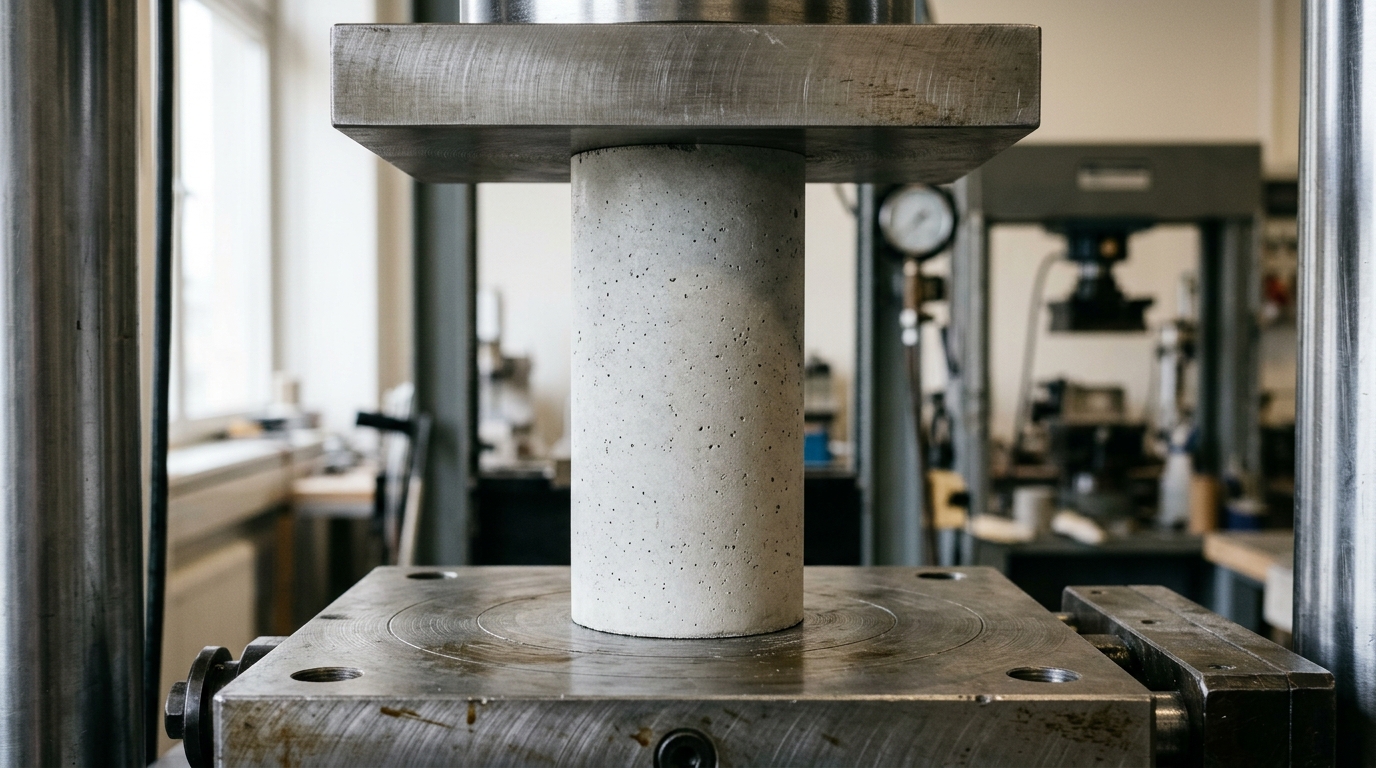
A comparative engineering study published in the journal AI in Civil Engineering demonstrates that optimized gradient boosted machine learning models can accurately forecast the compressive strength of high-performance concrete while dramatically reducing computational overhead compared to multi-layered artificial neural networks. High-performance concrete constitutes a sophisticated composite material engineered with chemical admixtures and supplementary cementitious materials such as blast furnace slag, fly ash, and silica fume to achieve enhanced mechanical resilience and reduced water-to-binder ratios. Because conventional laboratory testing of cast specimens requires labor-intensive preparation and prolonged curing periods that can exhibit notable variability between controlled testing environments and actual construction operations, researchers have increasingly sought automated computational approaches. By evaluating eight distinct supervised regression algorithms on standardized empirical mixture benchmarks, the research team established that ensemble decision tree frameworks, specifically Extreme Gradient Boosting and Gradient Boosting Regressor, provide superior predictive accuracy and operational efficiency when predicting final structural capacity across complex heterogeneous mixture formulations.
The investigation utilized the widely referenced Concrete Compressive Strength dataset sourced from the University of California, Irvine machine learning repository, originally compiled by Professor I-Cheng Yeh of Chung-Hua University. The dataset comprises 1030 distinct physical test instances characterized by eight continuous material input attributes and one dependent outcome variable representing compressive strength in megapascals. The input parameters capture the quantitative composition of the mixture per cubic meter, including cement content ranging between 102 and 540 kilograms per cubic meter, blast furnace slag spanning from zero to 359.40 kilograms per cubic meter, and fly ash from zero to 260.00 kilograms per cubic meter. Additional physical components documented across the database include water content between 121.75 and 247.00 kilograms per cubic meter, superplasticizer dosage varying from zero to 32.20 kilograms per cubic meter, coarse aggregate ranging from 708 to 1145 kilograms per cubic meter, fine aggregate spanning 594 to 992.60 kilograms per cubic meter, and curing duration extending from 1 to 365 days, which together define specimen performance across diverse structural contexts.
To guarantee strict analytical uniformity and avoid introducing numerical distortion across algorithms sensitive to feature magnitudes, the researchers implemented a rigorous data preprocessing workflow before initiating model training. Each continuous parameter was standardized using a standard scaling transformation, converting individual feature distributions to achieve a uniform mean of zero and a unit variance of one. The dataset was subsequently partitioned into an independent training set comprising ninety percent of available records and a held-out testing subset encompassing the remaining ten percent, using a constant random state to preserve experimental reproducibility. Model development was implemented in Python using core computational libraries including scikit-learn, NumPy, SciPy, pandas, matplotlib, and seaborn. To mitigate the risk of overfitting while optimizing algorithmic architectures, hyperparameter tuning was systematically executed across broad predefined search spaces using Grid Search combined with a five-fold cross-validation scheme that partitioned the training pool into five distinct validation subsets for iterative performance appraisal.
The experimental framework systematically benchmarked eight distinct supervised machine learning algorithms representing diverse mathematical paradigms, including the Gradient Boosting Regressor, Extreme Gradient Boosting, Random Forest, Support Vector Regression, Artificial Neural Networks, Multilayer Perceptron, Lasso Regression, and K-Nearest Neighbors. Tree-based ensemble methods iteratively assemble sequential decision trees that learn from the residual errors of preceding estimators or aggregate predictions across parallel bootstrap samples to suppress prediction variance. Neural network architectures, by contrast, deploy interconnected layers of artificial neurons that adjust weighted synaptic connections through backpropagation and gradient descent to capture continuous non-linear representations across multi-dimensional feature spaces. Instance-based estimators such as K-Nearest Neighbors compute prospective strength values by assessing Euclidean or Manhattan distance proximities to stored training instances, while penalized linear approaches such as Lasso enforce regularized feature shrinkage to suppress non-contributing parameters.
Following hyperparameter calibration and cross-validation, model performance was evaluated on the independent testing dataset using standardized statistical metrics, encompassing the coefficient of determination, mean squared error, root mean squared error, and mean absolute error. The Extreme Gradient Boosting model demonstrated the highest predictive precision among all evaluated algorithms, achieving a coefficient of determination of 0.9349, a mean squared error of 12.59, a mean absolute error of 2.498, and a root mean squared error of 3.55. The Gradient Boosting Regressor followed closely as the second most accurate framework, delivering a coefficient of determination of 0.9209 alongside a mean squared error of 15.30 and a root mean squared error of 3.91. Random Forest similarly exhibited robust predictive capability with an R2 value of 0.8936 and a mean squared error of 27.59, confirming the pronounced operational advantage of ensemble architectures over single-model linear and localized distance-based estimation techniques.
In contrast to the high fidelity demonstrated by ensemble decision trees, neural network configurations and traditional statistical regressors displayed measurable limitations in predictive capacity. The authors noted that while neural architectures exhibited competent baseline learning capabilities, their elevated error rates indicate persistent difficulties in resolving subtle physical interactions among mixture components without disproportionately complex network topologies. Non-ensemble methods demonstrated even steeper performance degradations: Support Vector Regression yielded an R2 value of 0.7703, K-Nearest Neighbors achieved an R2 of 0.7224, and Lasso Regression posted the lowest accuracy across the entire evaluation benchmark, producing an R2 score of only 0.5611 accompanied by an elevated mean squared error of 113.77.
Computational efficiency assessments revealed significant disparities in processing demands across the investigated model architectures, establishing critical benchmarks for prospective industrial implementations. The Multilayer Perceptron exhibited the highest training duration, requiring 4.64 seconds to complete parameter convergence, followed by the Artificial Neural Network at 1.16 seconds, reflecting the substantial computational cost inherent in adjusting multi-layered connection weights. Conversely, Extreme Gradient Boosting achieved exceptional training efficiency by finalizing model optimization in only 0.12 seconds, demonstrating a balanced pairing of rapid execution speed and high predictive precision. The Gradient Boosting Regressor required 0.84 seconds, while Random Forest and Support Vector Regression finished training in 0.42 seconds and 0.09 seconds, respectively. Instance-based K-Nearest Neighbors and regularized Lasso recorded negligible training times of 0.00 seconds because their core algorithms avoid iterative numerical optimization during training, though this computational brevity was offset by their markedly inferior prediction accuracy.
To explore the underlying physical and mathematical associations within the mixture dataset, the researchers conducted detailed linear and non-linear correlation analyses using Pearson correlation coefficients and Kendall’s tau rank matrices. The Pearson correlation analysis revealed that cement content exhibited the strongest positive linear relationship with compressive strength, posting a coefficient of 0.49, while curing age demonstrated a positive linear correlation of 0.32. Conversely, water content exhibited a moderate negative linear correlation of negative 0.28, reflecting how surplus moisture increases internal porosity and compromises hydration efficiency. Supplementary materials revealed weaker linear associations, with blast furnace slag recording a positive coefficient of 0.12 and fly ash displaying a marginal negative correlation of negative 0.06. In parallel, Kendall’s tau evaluation captured non-linear interactions, identifying curing age as the dominant positive rank-order influence at 0.45, followed by cement at 0.32 and superplasticizer dosage at 0.24, while reinforcing the adverse impact of water content with a rank correlation of negative 0.19.
To resolve the internal decision mechanisms governing tree-based predictions and quantify individual component influences, the research team implemented Shapley Additive Explanations using the TreeExplainer module across the cross-validation folds. Operating within an additive feature attribution framework derived from cooperative game theory, the SHAP analysis assigned definitive contribution scores to each physical component across all training instances. Curing age emerged as the most decisive input factor governing final compressive strength predictions, exhibiting a dominant mean absolute SHAP value of positive 8.18. Cement content represented the second most influential predictor, yielding a mean SHAP value of positive 6.92, which affirms its fundamental catalytic role in concrete hydration kinetics. Water content posted a substantial mean SHAP value of positive 4.76, reflecting its dual physical role in activating chemical hydration while imposing strength penalties when present in disproportionate volumetric ratios.
The remaining supplementary admixtures and aggregate fractions exhibited more subtle yet measurable contributions within the overarching SHAP interpretability assessment. Blast furnace slag contributed a moderate positive influence with a mean SHAP value of positive 3.39, corroborating its functional utility as a secondary cementitious binder in specialized high-performance mixtures. Fine aggregate content registered a mean contribution value of positive 1.64, while superplasticizer additions yielded a mean impact of positive 1.54, illustrating their capacity to enhance mixture rheology and workability without reducing mechanical resistance. In contrast, fly ash exhibited a modest mean SHAP attribution score of positive 0.99, and coarse aggregate contributed the smallest marginal predictive impact at positive 0.73, indicating that while bulk coarse aggregates provide essential structural volume, variations in their specific mass loading exert minimal direct control over compressive strength variations relative to active binder components.
Evaluating model stability across the cross-validation iterations demonstrated the practical necessity of systematic parameter tuning. Across five distinct cross-validation folds on the training dataset, the Gradient Boosting Regressor maintained an average R2 score of 0.9290 with a low standard deviation of 0.0128, while Extreme Gradient Boosting achieved a mean R2 of 0.9289 with a standard deviation of 0.0135, demonstrating remarkable resistance to variations in training data splits. The Artificial Neural Network recorded a respectable mean training R2 of 0.8960, whereas Random Forest averaged 0.8637 with an increased standard deviation of 0.0223. Conversely, Lasso regression showed pronounced instability, recording a mean R2 of 0.6144 accompanied by a standard deviation of 0.0346, and K-Nearest Neighbors achieved a mean R2 of 0.7524 with a standard deviation of 0.0300, emphasizing that unoptimized linear or localized neighbor models remain highly vulnerable to underlying data partition variances.
Despite the high predictive accuracy demonstrated by optimized boosting algorithms, the authors identified several material and environmental limitations inherent in the historical dataset that warrant further investigation. The experimental records utilized in the study did not capture dynamic curing ambient temperatures, relative humidity fluctuations, or transient thermal profiles generated by the heat of hydration during early binder hydration, all of which directly govern concrete microstructure formation in real-world construction environments. Furthermore, systematic hyperparameter grid searching across multi-dimensional spaces imposed considerable computational demands, prompting the authors to highlight automated machine learning frameworks such as TPOT and Auto-Sklearn as potential avenues for future workflow optimization. Prospective research initiatives will also evaluate deeper ensemble architectures including CatBoost and LightGBM alongside fiber optic thermal sensors to establish real-time, sensor-driven predictive control for high-performance concrete mix design.
Subject of Research: Machine learning prediction and interpretability analysis of high-performance concrete compressive strength
Article Title: Optimized machine learning algorithms with SHAP analysis for predicting compressive strength in high-performance concrete
Article References: Abioye, S. O., Babatunde, Y. O., Abikoye, O. A., Shaibu, A. N., & Bankole, B. J. (2025). Optimized machine learning algorithms with SHAP analysis for predicting compressive strength in high-performance concrete. AI in Civil Engineering, 4(1), Article 16. https://doi.org/10.1007/s43503-025-00061-x
Image Credits: AI Generated
DOI: 10.1007/s43503-025-00061-x
Keywords: Machine Learning, High-Performance Concrete, Compressive Strength, XGBoost, Gradient Boosting, SHAP Analysis, Civil Engineering, Structural Materials, Optimized, machine, learning, algorithms
Cite Scienmag News
Teresa Odom. (November 9, 2026). Machine Learning Accurately Predicts High Performance Concrete Strength Using Tree Algorithms. Scienmag. https://scienmag.com/machine-learning-accurately-predicts-high-performance-concrete-strength-using-tree-algorithms/
Teresa Odom. "Machine Learning Accurately Predicts High Performance Concrete Strength Using Tree Algorithms." Scienmag, 9 November 2026, https://scienmag.com/machine-learning-accurately-predicts-high-performance-concrete-strength-using-tree-algorithms/. Accessed 9 November 2026.
Teresa Odom. "Machine Learning Accurately Predicts High Performance Concrete Strength Using Tree Algorithms." Scienmag. November 9, 2026. https://scienmag.com/machine-learning-accurately-predicts-high-performance-concrete-strength-using-tree-algorithms/




