


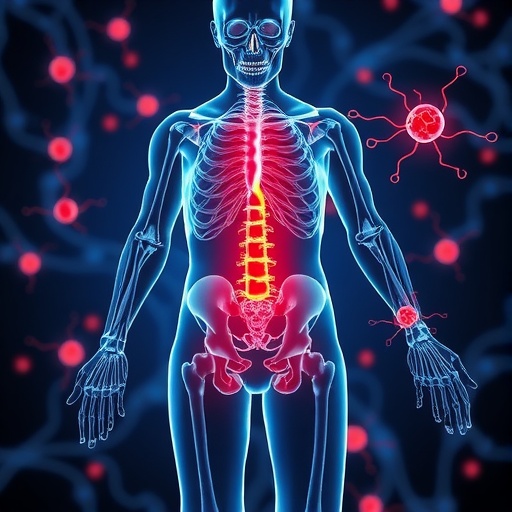
Osteoarthritis (OA) represents a substantial global health challenge that predominantly affects the elderly population, leading to significant morbidity and diminished quality of life. As scientists endeavor to unravel the complexities of this degenerative joint disease, recent research highlights a pivotal interplay between the lymphatic system and synovial inflammatory cells, thereby opening new avenues for potential therapeutic interventions. A consensually recognized hallmark of OA is the inflammation within the synovial joints, compounded by the gradual degradation of cartilage and other joint tissues. Yet, emerging evidence suggests a multifaceted relationship between the lymphatic system and the inflammatory process prevalent in OA, steering scientists toward novel molecular therapies.
The lymphatic system, often overshadowed in discussions of inflammatory diseases, plays a crucial role in maintaining homeostasis and facilitating immune responses. Unlike the circulatory system, the lymphatic system is responsible for removing excess interstitial fluid, transporting immune cells, and serving as a conduit for antigen presentation. This newly appreciated role of the lymphatic system in OA pathogenesis compels researchers to study its interactions with synovial inflammatory cells more comprehensively. By doing so, they hope to unveil molecular mechanisms that contribute to disease progression and flare-ups experienced by patients.
Synovial tissue, comprising a specialized membrane lining the joints, becomes a battleground during the inflammatory processes seen in OA. It houses a variety of immune cells, including macrophages, T cells, and B cells, which become activated in response to joint injury and inflammation. However, the dynamics of these cells can obscure our understanding of their contributions to the disease. The recent findings discussed in the work of Zeng et al. shed light on how synovial inflammatory cells communicate with lymphatic vessels, profoundly impacting disease outcomes.
The intriguing crosstalk between these two systems may hinge on the presence of specific signaling molecules and cytokines. For example, chemokines — inflammatory cytokines released by various cells — draw immune cells into the synovial space, perpetuating inflammation. Interestingly, lymphatic endothelial cells may play a critical role in modulating this recruitment by producing lymphangiogenic factors, which can either exacerbate or ameliorate inflammatory responses in OA. Understanding these precise interactions is vital to developing targeted therapies that disrupt deleterious crosstalk while enhancing protective pathways.
Moreover, the research articulates how alterations in the lymphatic drainage system may contribute to the exacerbation of synovial inflammation. Defects in lymphatic function can lead to an accumulation of pro-inflammatory cells and molecules in the joint space, thereby perpetuating a vicious cycle of inflammation and tissue damage. As researchers delve deeper, they aim to decipher how the manipulation of the lymphatic system may offer a therapeutic strategy for mitigating OA-related symptoms.
Given the systemic nature of OA and its implications for overall joint health, the advent of cell-based therapies looms as a promising frontier. Scientists are exploring the potential for using lymphatic endothelial cells in conjunction with other cell types to enhance tissue regeneration and modulate inflammatory responses. For instance, stem cell therapies capable of influencing lymphatic function could hold transformative potential in alleviating joint pain and promoting cartilage repair.
In addition to direct therapeutic applications, the implications of this research extend into the realm of diagnostics. By investigating the molecular signatures of lymphatic endothelial cells and their interaction with synovial inflammatory cells, researchers may develop novel biomarkers for tracking disease progression and therapeutic efficacy. This could lead to personalized medicine approaches tailored to the specific inflammatory profiles unique to each patient suffering from osteoarthritis.
Furthermore, it is critical to recognize that a comprehensive understanding of these molecular mechanisms requires a multidisciplinary approach. By combining insights from immunology, molecular biology, and rheumatology, researchers can elucidate the complexities of the OA inflammatory milieu. This collaborative framework also fosters innovation, as scientists look to explore cutting-edge techniques like single-cell RNA sequencing to detail the cellular landscapes within the synovial space.
Moving forward, the broader medical community should acknowledge the importance of addressing underlying molecular mechanisms rather than solely focusing on symptomatic relief. While pain management and physical therapy remain essential components of OA treatment, the integration of lymphatic modulation strategies could revolutionize how we approach therapeutic interventions. By reducing inflammation at its source and promoting tissue regeneration, we may significantly alter the disease trajectory for millions affected globally.
As the gap between scientific research and clinical application narrows, the findings from Zeng et al. remind us of the intricate relationships that govern joint health. The road ahead is laden with challenges, yet the prospects for innovative therapies inspired by these discoveries provide a beacon of hope. As this field continues to advance, we must remain vigilant, encouraging more studies to delve into the depths of lymphatic system involvement in osteoarthritis and beyond.
Eventually, as we gather more evidence supporting the significance of the lymphatic system in OA, potential therapeutic interventions could very well become a staple in clinical practice. The interplay between the layers of complexity in inflammatory processes and lymphatic function may redefine how we perceive and treat not just osteoarthritis, but perhaps many other inflammatory diseases as well. As scientists continue their relentless pursuit in revealing the molecular secrets of these systems, the promise of improved patient outcomes emerges on the horizon.
In conclusion, the exploration of the relationship between lymphatic systems and synovial inflammatory cells in osteoarthritis represents a significant leap forward in our understanding of this pervasive condition. As we harness the insights gained from the intricate molecular interactions discussed by Zeng et al., the potential for novel interventions that target inflammation, promote healing, and enhance patient quality of life becomes increasingly tangible. With ongoing research and collaboration across disciplines, we stand on the cusp of a new era in osteoarthritis treatment, where hope and healing can merge to transform lives.
Zeng, W., Xiang, J., Liu, Y. et al. Crosstalk between lymphatic system and synovial inflammatory cells in osteoarthritis: molecular mechanisms and potential cell-based therapies.
J Transl Med 23, 1032 (2025). https://doi.org/10.1186/s12967-025-07080-3
Cite Scienmag News
Ophelia Keating. (October 5, 2025). Lymphatic System and Inflammatory Cells in Osteoarthritis. Scienmag. https://scienmag.com/lymphatic-system-and-inflammatory-cells-in-osteoarthritis/
Ophelia Keating. "Lymphatic System and Inflammatory Cells in Osteoarthritis." Scienmag, 5 October 2025, https://scienmag.com/lymphatic-system-and-inflammatory-cells-in-osteoarthritis/. Accessed 4 September 2026.
Ophelia Keating. "Lymphatic System and Inflammatory Cells in Osteoarthritis." Scienmag. October 5, 2025. https://scienmag.com/lymphatic-system-and-inflammatory-cells-in-osteoarthritis/


