

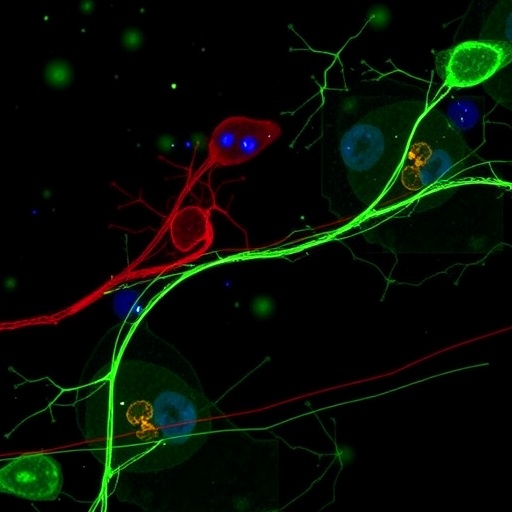
A newly identified mutation in the LRRK2 gene, known as P1446L, has been found to drive the degeneration of dopaminergic neurons through a complex interplay involving neuroinflammatory and apoptotic pathways. This groundbreaking discovery, recently published in npj Parkinson’s Disease, sheds light on the mechanistic underpinnings of Parkinson’s disease at a molecular level, offering promising avenues for therapeutic intervention.
The LRRK2 gene, which encodes leucine-rich repeat kinase 2, has long been implicated in the pathogenesis of Parkinson’s disease, the neurodegenerative disorder characterized primarily by the loss of dopamine-producing neurons in the substantia nigra. Mutations in LRRK2 represent the most common genetic cause of both familial and sporadic Parkinson’s disease. The P1446L mutation, however, represents a distinct variant that has only recently been associated with a particularly aggressive neurodegenerative phenotype.
At the center of this mutation’s damaging effects is its ability to hyperactivate a signaling cascade mediated by DAPK1 (death-associated protein kinase 1), a kinase previously known for its role in programmed cell death and inflammation. The study conducted by Ding and colleagues meticulously delineates how the LRRK2 P1446L mutation exacerbates microglial neuroinflammation, which in turn promotes neuronal apoptosis, culminating in the deterioration of dopaminergic circuits critical for motor control and cognitive functions.
Microglia, the resident immune cells of the central nervous system, typically perform surveillant and protective roles, but when aberrantly activated, they release pro-inflammatory cytokines and reactive oxygen species, creating a neurotoxic environment. The researchers demonstrate that the mutation leads to sustained activation of microglia through DAPK1 signaling, which amplifies the inflammatory milieu. This chronic state of neuroinflammation provokes damage to surrounding neurons, particularly those dependent on dopamine signaling pathways.
Furthermore, the molecular crosstalk between DAPK1 and LRRK2 revealed in this study is pivotal. The mutation appears to enhance the kinase activity of LRRK2, which positively regulates DAPK1 expression and function. This bidirectional interaction intensifies apoptotic signaling cascades within vulnerable dopaminergic neurons. The data suggest that phosphorylation events driven by hyperactive LRRK2 and DAPK1 converge to destabilize mitochondrial integrity and activate caspase-dependent apoptotic pathways.
The implications of these findings extend beyond genetic forms of Parkinson’s disease, as neuroinflammation and apoptosis are central themes in the disease’s broader pathophysiology. Understanding the molecular nexus linking LRRK2 mutations to microglial dysregulation offers a conceptual framework to devise therapeutic strategies aimed at mitigating inflammation-induced neuronal loss. Small-molecule inhibitors targeting DAPK1 or modulating LRRK2 kinase activity could provide dual benefits by dampening harmful inflammation and protecting neuronal viability.
In their experimental approach, Ding et al. employed a combination of cell culture models, genetic manipulations, and animal studies to trace the effects of the P1446L mutation. Advanced imaging and biochemical assays corroborated the increased kinase activities and subsequent cascade effects, providing robust mechanistic evidence. Remarkably, the authors observed that pharmacological inhibition of DAPK1 significantly reduced microglial activation and rescued dopaminergic neurons from apoptosis, supporting DAPK1 as a promising drug target.
Beyond establishing the pathogenic role of the P1446L mutation, the study also highlights the intricate balance required in neuroimmune interactions. Microglia’s transition from a protective to a destructive phenotype represents a critical tipping point in Parkinsonian neurodegeneration. The specificity of the mutation-induced dysregulation suggests that therapeutic interventions might need to be tailored precisely, addressing not only neuronal resilience but also modulating glial responses.
This research adds another layer to the growing complexity of Parkinson’s disease etiology, where a combination of genetic mutations, cellular stressors, and immune responses collectively precipitate the debilitating symptoms. The identification of molecular actors like DAPK1 as essential mediators linking genetic mutations to neurodegenerative cascades exemplifies the sophistication of current neurobiological research.
The discovery also prompts consideration of how early diagnostic markers associated with increased DAPK1 activity or LRRK2 mutation-specific signatures could aid in identifying at-risk individuals before clinical symptoms manifest. Early intervention is widely recognized as critical in neurodegenerative diseases, and molecular insights such as these pave the way toward precision medicine.
Moreover, by contributing to the understanding of dopaminergic neurodegeneration, these findings may influence the development of biomarkers based on inflammatory profiles or apoptotic markers detectable in cerebrospinal fluid or peripheral blood. Such advancements could revolutionize how Parkinson’s disease is monitored and managed over time.
The intersection between kinase signaling pathways, neuroinflammation, and neuronal cell death revealed in the study underscores a broader trend in neuroscience, where interdisciplinary approaches merge molecular biology, immunology, and clinical neurology. Efforts to develop kinase inhibitors have historically faced challenges due to off-target effects and toxicity, but the specificity identified here might allow for more refined drug designs.
In conclusion, the work by Ding and colleagues represents a significant leap in understanding Parkinson’s disease pathophysiology through the lens of the LRRK2 P1446L mutation. Their demonstration that this mutation triggers dopaminergic neurodegeneration via DAPK1-mediated microglial activation and neuronal apoptosis not only elucidates disease mechanisms but also opens new paths for therapeutic exploration and clinical translation.
As neurodegenerative disorders continue to impose significant health burdens globally, such mechanistic insights provide hope for the development of disease-modifying treatments. Future studies will be vital to validate these findings in human subjects and to explore the therapeutic potential of targeting the LRRK2-DAPK1 axis in reducing or halting Parkinson’s disease progression.
Subject of Research: Parkinson’s disease pathogenesis, LRRK2 mutation, neuroinflammation, dopaminergic neurodegeneration
Article Title: The LRRK2 P1446L mutation triggers dopaminergic neurodegeneration via DAPK1-mediated microglial neuroinflammation and neuronal apoptosis
Article References:
Ding, L., Shu, H., Chen, M. et al. The LRRK2 P1446L mutation triggers dopaminergic neurodegeneration via DAPK1-mediated microglial neuroinflammation and neuronal apoptosis. npj Parkinsons Dis. (2025). https://doi.org/10.1038/s41531-025-01234-2
Image Credits: AI Generated


