

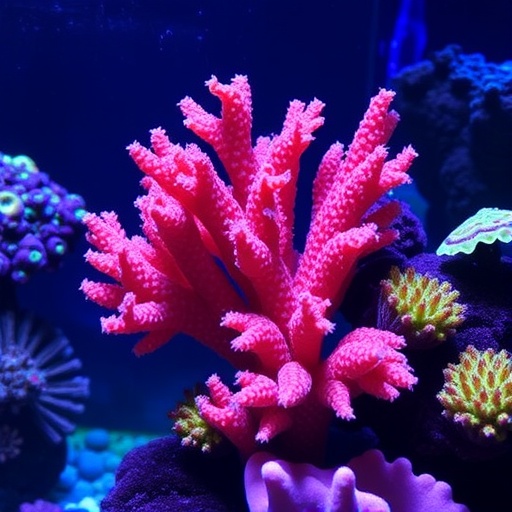
In an era marked by unprecedented climate challenges and ecological degradation, researchers are increasingly focusing on innovative approaches to preserve and restore coral reefs—some of the planet’s most vital ecosystems. A new study led by scientists including Ow Yong, W.L., Ow, Y.X., and Cazenave-Gassiot, A., published in the esteemed journal Coral Reefs, provides crucial insights into the physiological responses of various coral species to low light conditions. This research addresses a significant question in marine biology: how can we enhance the ex situ culture of corals to support restoration efforts, particularly in extreme reef environments?
Coral reefs, often dubbed the “rainforests of the sea”, are biodiverse ecosystems that not only support a wide range of marine life but also provide critical services to human communities. They protect coastlines from erosion, support fisheries, and are central to tourism economies. However, these ecosystems are facing dire threats from pollution, climate change, and ocean acidification, leading to widespread coral bleaching and loss of biodiversity. As such, understanding the physiological needs of corals is vital for their survival and restoration.
The study focuses on three specific coral species, examining how reduced light levels, which can occur due to water turbidity and other environmental factors, affect their physiological responses. Using a combination of field observations and laboratory experiments, the researchers assessed how these corals adapt to low-light conditions, which is increasingly relevant in the wake of rising sea temperatures and altered marine environments.
One of the key findings from the research is that different coral species exhibit varying levels of resilience to low-light conditions. This variation underscores the complexity of coral responses to environmental changes, which can influence their ability to survive and thrive in increasingly challenging conditions. By characterizing these responses, the researchers aim to identify which species may be better suited for restoration projects, particularly in areas that have been heavily degraded.
In addition to studying the corals themselves, the research highlights the importance of the symbiotic relationship between corals and their algal partners, known as zooxanthellae. These algae play a critical role in photosynthesis, providing energy to the corals. The study reveals how different light levels impact not only the corals’ health but also their symbionts, providing insights into how these mutualistic relationships may be affected by changing environmental conditions.
Moreover, the research emphasizes the potential for ex situ culture techniques—growing corals in controlled environments away from their natural habitat—as a tool for enhancing restoration efforts. By understanding the specific light requirements and adaptive mechanisms of coral species, scientists can optimize culture conditions to promote growth and resilience. This could lead to more effective coral farming practices, which are essential for large-scale restoration projects.
The implications of this study extend beyond academic inquiry—they speak directly to the future of coral conservation strategies. Given the alarming rates of coral decline, the need for innovative restoration and management practices has never been more urgent. The insights gained from the researchers’ work can help inform policies and conservation strategies aimed at mitigating the impacts of environmental change on coral reefs.
As the authors note, integrating this knowledge into broader marine conservation initiatives could significantly enhance the prospects for coral recovery. By prioritizing species that demonstrate higher adaptability to low-light conditions, restoration efforts can be tailored to increase their chances of success in challenging environments.
In the face of ongoing environmental challenges, the need for collaborative efforts among scientists, policymakers, and local communities is paramount. The findings from this research provide a valuable framework for stakeholder discussions around coral restoration, encouraging partnerships that can lead to innovative solutions and practices adapted to specific local conditions.
Ultimately, this study underlines the resilience and adaptability that is inherent in nature, emphasizing that with the right knowledge and techniques, we can support the recovery of coral reefs. This restores not only the ecological balance but also preserves the myriad benefits that coral ecosystems provide to humanity and the planet at large.
As awareness of the fragility of coral ecosystems grows, initiatives like those highlighted in this research are essential. They remind us that through science and collaboration, we can forge a path towards more sustainable interactions with our ocean environments. Every effort counts in the battle against ongoing ecological decline, as each small success contributes to the collective goal of safeguarding our blue planet for future generations.
As the research community continues to push the boundaries of our understanding, studies like this serve as a clarion call for action and investment in marine conservation. The findings emanating from this work will undoubtedly reverberate through the fields of marine biology, ecology, and conservation, catalyzing further exploration into resilient marine ecosystems.
In conclusion, the exploration conducted by Ow Yong and colleagues presents a glimpse into a future where we may reclaim and rejuvenate our coral reefs. By harnessing scientific insights to drive conservation practices, we can aspire to protect not only the corals themselves but the vast array of life they support.
Subject of Research: Physiological responses of coral species to low light conditions for restoration efforts.
Article Title: Characterising photo-physiological responses of three coral species to low light for enhancing ex situ culture and the restoration of extreme reefs.
Article References: Ow Yong, W.L., Ow, Y.X., Cazenave-Gassiot, A. et al. Characterising photo-physiological responses of three coral species to low light for enhancing ex situ culture and the restoration of extreme reefs. Coral Reefs (2025). https://doi.org/10.1007/s00338-025-02798-4
Image Credits: AI Generated
DOI: https://doi.org/10.1007/s00338-025-02798-4
Keywords: Coral reefs, ex situ culture, restoration, low light, physiological responses, marine biology.


