


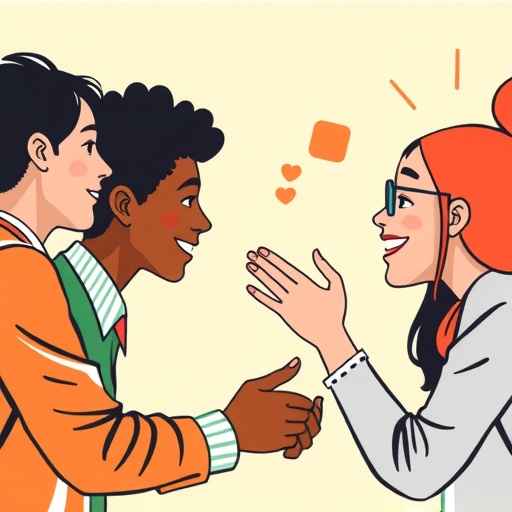
In the complex web of human social interactions, cooperation plays a pivotal role in sustaining close relationships, effective work teams, and resilient communities. Recent scientific investigations have begun to unveil the nuanced ways in which simple behaviors, often dismissed as trivial, can significantly influence our social dynamics and collective functioning. A groundbreaking study conducted collaboratively by researchers from SWPS University and Tel Aviv University offers compelling evidence that what we commonly consider “niceness” is not merely a polite veneer but a vital ingredient that enhances social connectedness and fosters cooperative behavior.
The research addresses a fundamental question that resonates through psychology and sociology: Can small, everyday acts of kindness and warmth genuinely influence large-scale social outcomes? In daily encounters—from casual exchanges in the supermarket to collaborative problem-solving in organizational settings—individuals consistently make choices to exhibit niceness, neutrality, or rudeness. While such choices may seem inconsequential, the study suggests that these micro-interactions accumulate to create meaningful shifts in social capital, affecting both individual well-being and collective productivity.
Niceness, in this context, has been operationalized as a constellation of behaviors such as using a warm tone of voice, smiling genuinely, expressing sincere gratitude, and actively listening to others. Prior research has established that such behaviors contribute positively to mental health, increasing feelings of belonging while reducing risks associated with loneliness and depression. This new study extends those findings by demonstrating how niceness not only benefits interpersonal relationships but also fortifies the cooperative fabric in group settings through enhanced social connectedness.
In the first phase of their research, the team surveyed a diverse sample of 463 participants aged between 18 and 67. Participants were asked to self-report their tendencies toward everyday niceness via statements measuring behaviors like polite communication and warmth. Simultaneously, the study gauged participants’ sense of social connectedness—the degree to which individuals feel integrated within their social surroundings—and their general attitudes towards cooperation. Analytical results revealed a statistically significant correlation: greater niceness predicted stronger social connectedness, which in turn was associated with a higher willingness to engage cooperatively in various social and work-related contexts.
To probe causality beyond correlation, the researchers designed a controlled experimental study involving 164 first-year university students organized into 52 task-oriented teams. These teams were randomly assigned into two conditions: one encouraged to engage in niceness during teamwork, and the other instructed to focus solely on task completion without attention to interpersonal niceties. Those in the niceness condition were guided to employ warm vocal tones, smile, listen attentively, and foster an inviting atmosphere, whereas the control group maintained neutral or assertive demeanors with minimal social engagement.
The outcomes were illuminating. Teams practicing niceness reported markedly higher satisfaction with their collaborative efforts compared to control teams. Beyond subjective satisfaction, participants in the niceness condition displayed more positive attitudes toward future cooperation and an enhanced sense of belonging within their groups. This finding underscores the hypothesis that the emotional and social benefits derived from niceness can translate into a tangible increase in cooperative motivation, yielding potentially improved group performance and cohesion.
From a methodological perspective, this study employed rigorous experimental controls to isolate the impact of niceness from task-focused behavior, ensuring the observed effects stemmed from variations in social demeanor rather than differences in task complexity or team composition. The use of self-report measures alongside behavioral manipulations allowed for a multidimensional understanding of how niceness operates within social systems, opening avenues for future research on its neurobiological correlates and long-term impacts.
Beyond immediate effects, the research highlights that niceness functions both directly and indirectly in fostering cooperation. Directly, it improves interpersonal satisfaction and the subjective experience of teamwork. Indirectly, it bolsters social connectedness—a crucial mediator that has been linked in broader literature to elevated trust, longevity of social ties, and community resilience. By strengthening social bonds, niceness thus creates a virtuous cycle where cooperative attitudes and behaviors are more readily adopted and sustained.
This paradigm shift challenges longstanding stereotypes in professional and social psychology that paint niceness as a potential liability in competitive or high-efficiency environments. The study’s findings contest the notion that warmth and assertiveness are mutually exclusive. Instead, niceness may amplify motivation and collective goal achievement by cultivating psychological safety and mutual respect, which are foundational to effective team functioning, creative problem-solving, and conflict resolution.
Importantly, these implications extend beyond academic settings to resonate with organizational leadership, educational frameworks, and public policy. Incorporating niceness as a deliberate strategy could enhance social capital and cooperation at multiple societal levels. Practical applications may include training programs that emphasize emotional intelligence and prosocial communication, redesigning workplace culture to reward inclusive behavior, and fostering community initiatives that prioritize relational warmth.
The study also invites a reconsideration of everyday social habits. Simple gestures such as a smile, a thank-you, or an empathetic listening ear may appear insignificant in isolation but, as this research suggests, they accumulate into large-scale social benefits. These findings emphasize the power of micro-behaviors to effect meaningful change in both personal and collective domains, offering a hopeful perspective amidst increasing social fragmentation.
Finally, this research supports an integrated view of human sociality, where emotional expression and cooperative intent coalesce to sustain healthy social ecosystems. In a world challenged by polarization and fragmented relationships, embracing and promoting niceness could be both a pragmatic and ethical imperative. It underscores the potential for ordinary kindness to transform social landscapes, making cooperation not only desirable but also more attainable and enduring.
Cite Scienmag News
Courtney Benton. (May 30, 2025). Looking to boost collaboration? Try practicing kindness. Scienmag. https://scienmag.com/looking-to-boost-collaboration-try-practicing-kindness/
Courtney Benton. "Looking to boost collaboration? Try practicing kindness." Scienmag, 30 May 2025, https://scienmag.com/looking-to-boost-collaboration-try-practicing-kindness/. Accessed 4 September 2026.
Courtney Benton. "Looking to boost collaboration? Try practicing kindness." Scienmag. May 30, 2025. https://scienmag.com/looking-to-boost-collaboration-try-practicing-kindness/


