
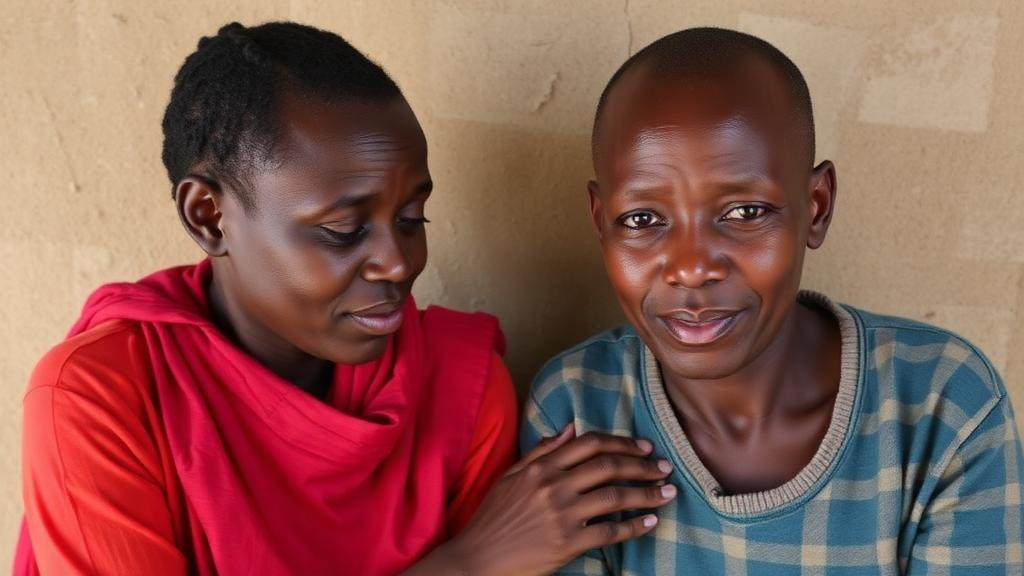
A major systematic review has pulled back the curtain on one of the quietest crises in global health: how people living with HIV in low- and middle-income countries manage the double or triple burden of hypertension and diabetes at the same time. Published in PLOS One, the study by Andrew K. Tusubira of Makerere University and colleagues, including Carl May and Susannah Mayhew, synthesizes thirteen qualitative studies drawn from six African countries and involving 458 participants. Its central finding is sobering. Patients are not failing to care for themselves out of ignorance or indifference; rather, they are working extraordinarily hard to compensate for fragmented health systems, and that invisible labor carries a measurable cost in what researchers call treatment burden.
The review comes at a pivotal moment. Thanks to the global scale-up of antiretroviral therapy, people with HIV are living far longer, and as they age, chronic non-communicable diseases such as high blood pressure and type 2 diabetes have become common companions of the virus. In wealthier countries, integrated clinics and electronic records help clinicians coordinate care across conditions. In many low- and middle-income settings, however, HIV services were built as vertical programs, often donor-funded and physically separate from the general clinics that handle hypertension and diabetes. Patients must therefore stitch together their own care across institutions that rarely talk to each other, a phenomenon the researchers mapped using the Normalization Process Theory, a framework that describes how people incorporate complex healthcare work into everyday life.
Methodologically, the team cast a wide net. They searched Medline, EMBASE, PsycINFO, Global Health, Scopus, Web of Science, CINAHL, the WHO Global Index Medicus, African Journals Online, and Google Scholar for primary studies conducted in low- and middle-income countries and published between January 2013 and March 2026, accepting any study design or data collection method. Two reviewers independently screened the records, extracted data, and appraised study quality, resolving disagreements through discussion. Thirteen qualitative studies from six African countries made the final cut, seven rated high quality and six moderate. The researchers then applied thematic synthesis to distill the self-care practices described across the studies and assessed how much confidence could be placed in each finding using the GRADE-CERQual approach, which grades qualitative evidence by coherence, adequacy, and relevance. The review was prospectively registered with PROSPERO under registration CRD42023463738.
Five themes emerged with moderate-to-high confidence in the evidence, and together they sketch a portrait of patients as improvising physiologists of their own bodies. The first theme concerns sense-making: how people interpret what HIV, hypertension, and diabetes actually are, why they coexist, and what their medications do. Participants in the underlying studies often developed folk explanations for their conditions, and these interpretations directly shaped whether they took pills as prescribed, adjusted doses, or prioritized one illness over another. Where education from health workers was thin or contradictory, patients filled the explanatory vacuum themselves, sometimes with consequences for adherence and blood pressure or glucose control.
The second theme is perhaps the most structurally revealing: divergent treatment approaches between HIV care on one side and hypertension or diabetes care on the other. HIV services, honed by two decades of global investment, typically offer free drugs, regular viral load monitoring, peer support groups, and appointment systems designed for lifelong follow-up. Care for hypertension and diabetes in the same settings is frequently episodic, sometimes fee-based, and prone to drug stockouts. Patients described the jarring experience of receiving meticulous, almost solicitous attention in the HIV clinic and then encountering long queues, missing medicines, and brief consultations in the chronic disease clinic. The review shows that people notice this asymmetry acutely, and it colors their trust in the entire health system.
Against that backdrop, the third theme documents genuine efforts to adopt health-promoting behaviors. Participants reported dietary changes, attempts to exercise, reductions in alcohol and salt, and other lifestyle modifications, even when food insecurity or demanding work schedules made such changes difficult. The review’s authors emphasize that these behaviors were not simply individual choices but responses shaped by what patients could afford, what their families ate, and what neighborhoods allowed. A patient who understands that salt raises blood pressure still cannot follow that advice if the only affordable foods available are salted or processed. Self-care, in other words, is embedded in material conditions that clinical advice alone cannot overcome.
The fourth theme addresses the psychological weight of multimorbidity. Coping with psychosocial distress emerged as a core self-care practice in its own right: managing fear of complications, stigma related to HIV status, anxiety about drug interactions, and the fatigue of attending multiple appointments at multiple sites. Some participants drew strength from faith communities, family networks, or peer groups attached to HIV clinics, resources that rarely have equivalents for hypertension or diabetes. The review suggests that psychosocial support is not a luxury add-on but a functional component of chronic disease management, and that its absence for non-HIV conditions leaves patients with fewer tools to sustain long-term treatment.
The fifth theme, navigating healthcare insecurities, captures the tactical ingenuity patients deploy to keep treatment going. People described borrowing money for transport and fees, rationing pills when supplies ran short, traveling long distances to alternative facilities, and timing clinic visits around harvests and wages. These are patient-initiated compensatory strategies, and the review identifies them as a distinct source of treatment burden: work that is prescribed by no clinician, recorded in no file, and yet essential to survival. Burdens also arose from the prescribed healthcare tasks themselves, from the disparities between HIV and non-communicable disease services, and from the gap-filling efforts patients undertook to make up for systemic shortfalls in hypertension and diabetes care.
The implications for policy are direct. The authors argue that strengthening consistent education about illnesses and medications, expanding psychosocial support, and providing practical lifestyle guidance can improve equitable, integrated care and make effective self-care achievable rather than heroic. Integration, in this framing, is not merely co-locating services but harmonizing the patient experience so that a person with HIV and diabetes does not inhabit two different health systems with two different standards of care. The review also issues a clear call for future research: quantify the self-care workload and treatment burden that multimorbid patients carry, and evaluate integrated care models that reduce that workload rather than assuming patients will absorb it indefinitely.
For a global health community increasingly focused on the intersection of infectious and chronic disease, the study offers both a warning and a roadmap. The warning is that the success of HIV treatment has created a growing population whose needs outstrip the vertical systems built for the epidemic’s first decades. The roadmap is the patients themselves, whose sense-making, coping, and navigation strategies reveal precisely where systems fail and where modest investments, in drug supply reliability, in clear communication, in support groups open to all chronic conditions, could yield outsized returns. What the review makes unmistakable is that self-care in resource-constrained settings is not the absence of care but a substitute for it, performed daily by millions of people whose work deserves to be seen, measured, and lightened.
Subject of Research: Self-care practices and treatment burden among people living with HIV and hypertension or diabetes comorbidities in low- and middle-income countries
Article Title: Self-care practices of people living with HIV and hypertension or diabetes comorbidities in low-and-middle income countries: A systematic review
Article References: Tusubira, A. K., Ssemata, A. S., Katahoire, A. R., May, C., Nalwadda, C. K., Nyirenda, M., & Mayhew, S. (2026). Self-care practices of people living with HIV and hypertension or diabetes comorbidities in low-and-middle income countries: A systematic review. PLOS One, 21(10), e0360076. https://doi.org/10.1371/journal.pone.0360076
Image Credits: AI Generated
DOI: 10.1371/journal.pone.0360076
Keywords: HIV, hypertension, diabetes, self-care, treatment burden, multimorbidity, low- and middle-income countries, systematic review, Normalization Process Theory, integrated care, qualitative research, global health
Cite Scienmag News
Tiffany Hanley. (October 10, 2026). Living with HIV and Diabetes: Self-Care Struggles in Poorer Nations Revealed. Scienmag. https://scienmag.com/living-with-hiv-and-diabetes-self-care-struggles-in-poorer-nations-revealed/
Tiffany Hanley. "Living with HIV and Diabetes: Self-Care Struggles in Poorer Nations Revealed." Scienmag, 10 October 2026, https://scienmag.com/living-with-hiv-and-diabetes-self-care-struggles-in-poorer-nations-revealed/. Accessed 10 October 2026.
Tiffany Hanley. "Living with HIV and Diabetes: Self-Care Struggles in Poorer Nations Revealed." Scienmag. October 10, 2026. https://scienmag.com/living-with-hiv-and-diabetes-self-care-struggles-in-poorer-nations-revealed/